Oura Inc. filed its S-1 registration statement with the US Securities and Exchange Commission on September 3, 2026, setting up a listing on the Nasdaq Global Select Market under the ticker symbol OURA. It’s a milestone moment for a company that began in Finland in 2013 as a small hardware project focused on sleep tracking and has since become the dominant name in an entire wearable category. Goldman Sachs, Morgan Stanley, and J.P. Morgan are leading the offering, with Allen & Company and Jefferies also on the underwriting roster — and, notably, Robinhood Markets is included among the additional underwriters, a detail widely read as a deliberate signal that Oura wants everyday retail investors, not just institutional funds, to have a shot at buying in.
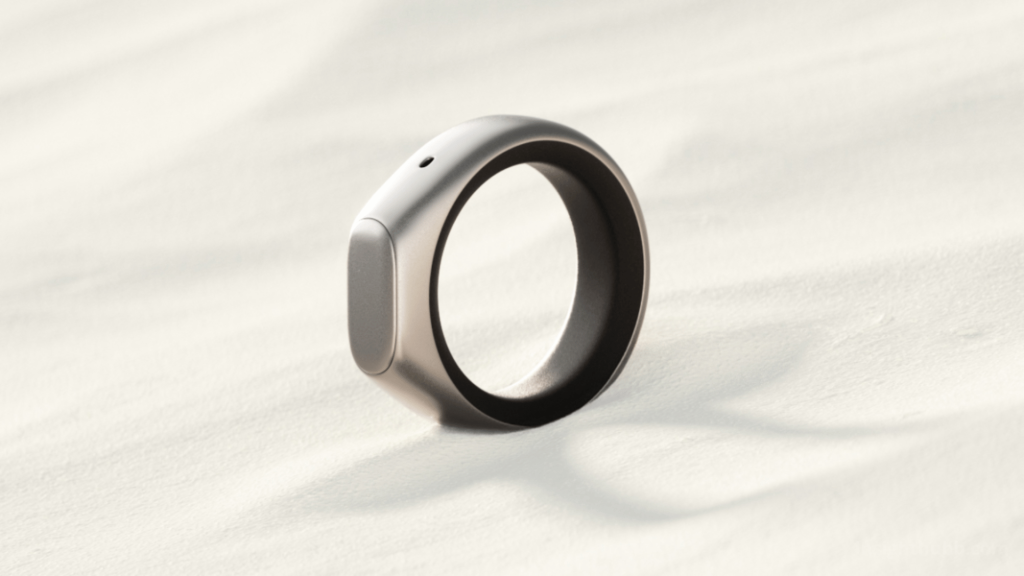
Ahead of the public filing, reports pegged the company’s target valuation above $16 billion, a striking figure for a device that’s essentially a titanium band worn on a single finger.
The Numbers Behind the Ring
Oura’s financials, laid bare in the filing, show a business that scaled unusually fast. For the twelve months ending June 2026, the company generated roughly $1.4 billion in total revenue and $59 million in net income — a genuine swing into profitability. For the nine-month period ending in June, revenue climbed 74% year-over-year to $1.21 billion, while net income for that stretch reached $60.77 million, compared with just $1.57 million in the same period a year earlier.
Paid membership doubled to 5 million over the period, and the company shipped 3.1 million rings in those nine months alone. Oura reports an approximately 85% weighted-average 12-month membership retention rate, a figure that suggests most people who commit to a subscription stick with it well beyond the initial novelty. Rings themselves sell in the $350 to $400 range, with the subscription layered on top covering the personalized health insights that have become central to Oura’s pitch.
Why a Ring Reads the Body Better Than a Watch, According to Oura
Part of Oura’s public case for its own technology, and by extension its valuation, rests on a specific physiological argument: finger-based sensors, the company says, produce photoplethysmography (PPG) signals up to 100 times stronger than sensors mounted on the wrist. PPG is the optical technique most wearables use to estimate heart rate and blood oxygen by measuring how light reflects off blood flow just beneath the skin. Fingers, according to Oura’s technical materials, simply carry a much richer blood-flow signal than wrists do, which the company credits for its claimed 99% heart rate accuracy.
That argument matters commercially because it’s the core reason Oura gives for why a ring, rather than a watch, deserves to be considered the more serious health-tracking form factor — a claim rivals including Samsung’s Galaxy Ring and a growing field of smaller ring makers are actively contesting.
A Growth Curve That Kept Bending Upward
Oura’s revenue trajectory reads almost like a hockey stick when laid out year by year. Full fiscal year 2025 revenue, for the twelve months ended September 30, 2025, came in at $907.9 million — nearly double fiscal 2024’s $406.8 million. CEO Tom Hale told CNBC the company has been “on a tear,” pointing to an 80% subscription renewal rate among members as evidence the growth isn’t just a function of aggressive customer acquisition, but of people genuinely sticking around after they buy in. Oura has landed on the CNBC Disruptor 50 list four separate times, ranking No. 14 in this year’s edition.
Ahead of the IPO, the company also completed a corporate restructuring, transferring its parent entity to a Delaware corporation, Oura Inc., on March 31, 2026, while keeping the original Finnish entity, Oura Health Oy, as a wholly owned subsidiary — a standard maneuver for companies preparing to list on a US exchange while preserving their operational roots.
The Smaller Ring That Set Up the Bigger Filing
Oura’s growth story got a hardware boost earlier this year with the May 2026 launch of the Oura Ring 5, which the company markets as the world’s smallest smart ring — roughly 40% more compact than its earlier generations. Alongside the new hardware, Oura rolled out a wave of software features, including GLP-1 Insights for members tracking metabolic health, an expanded Lab Uploads feature for syncing bloodwork, and Live Activity Tracking, all designed to work across the Ring 5 as well as the company’s existing Generation 3 and 4 devices. The message behind that decision was clear: Oura wants its growing base of paying subscribers, not just its newest customers, to benefit from each fresh feature release.
What a Public Listing Actually Changes
Oura’s roadshow and final pricing haven’t been announced yet, and the offering remains subject to SEC review and prevailing market conditions, but the company is targeting a Nasdaq debut sometime in September 2026. A public listing won’t change what the ring does on your finger tomorrow morning, but it will change how closely the company’s performance gets scrutinized going forward — quarterly earnings calls, analyst coverage, and public financial disclosures replace the relative privacy of operating as a venture-backed company. For an industry still working out whether smart rings are a genuine mainstream health category or a well-marketed niche, Oura’s Wall Street debut will serve as one of the clearest public tests yet of just how much investors believe that finger-worn sensors are here to stay.