Tesla’s latest earnings report had something for both its believers and its critics. On one side, the company said it will start selling its driverless Cybercab to customers before the end of 2026 and has begun producing its Optimus humanoid robot. On the other, its profit dropped sharply, and a key self-driving milestone slipped once again.
The Numbers
Tesla’s business stood still on revenue but lost ground on profit:
- Revenue: $28.04 billion, roughly flat compared with $28.09 billion a year earlier, and slightly below analysts’ expectations of about $28.13 billion
- Net income: $787 million, down 43% from $1.37 billion in the same quarter of 2025
- Vehicle deliveries: 486,532, about 6,000 more than the previous quarter but fewer than a year ago
- Automotive revenue: $20.56 billion, down 3%
According to TechCrunch, expenses rose sharply because of heavy spending on artificial intelligence, Optimus and autonomous driving. Lower sales of regulatory credits, which Tesla sells to other automakers, also hurt profits.
Bright Spots: Services and Cash
Not everything was down. Tesla’s services business, which includes Full Self-Driving (FSD) subscriptions, Supercharging, insurance and parts, grew 33% to $4.6 billion. It generated a record $734 million in gross profit.
FSD is becoming a bigger part of the business. Active FSD subscriptions reached 1.74 million, and more than 75% of new vehicles are ordered with a paid FSD subscription, according to autoevolution. Musk joked that people are now “buying FSD with a car attached, not the other way around.”
Tesla also beat expectations on cash. It generated $1.53 billion in free cash flow, while analysts had expected it to burn cash. Capital spending came in at $4.73 billion, well below estimates, and Tesla lowered its full-year spending forecast from $25 billion to $20 billion.
Still, investors weren’t impressed. Tesla shares fell more than 5% in after-hours trading.
The Weak Spot: Energy
Tesla’s energy business, which sells solar panels and Megapack batteries, had an unexpectedly tough quarter. Revenue fell 16% to about $2.8 billion. Tesla blamed tariff-related refunds to customers, TechCrunch reported.
Cybercab: For Sale by Year’s End
The most surprising news came from Lars Moravy, Tesla’s vice president of engineering. On the earnings call, he said Tesla will start selling the Cybercab to customers by the end of 2026.
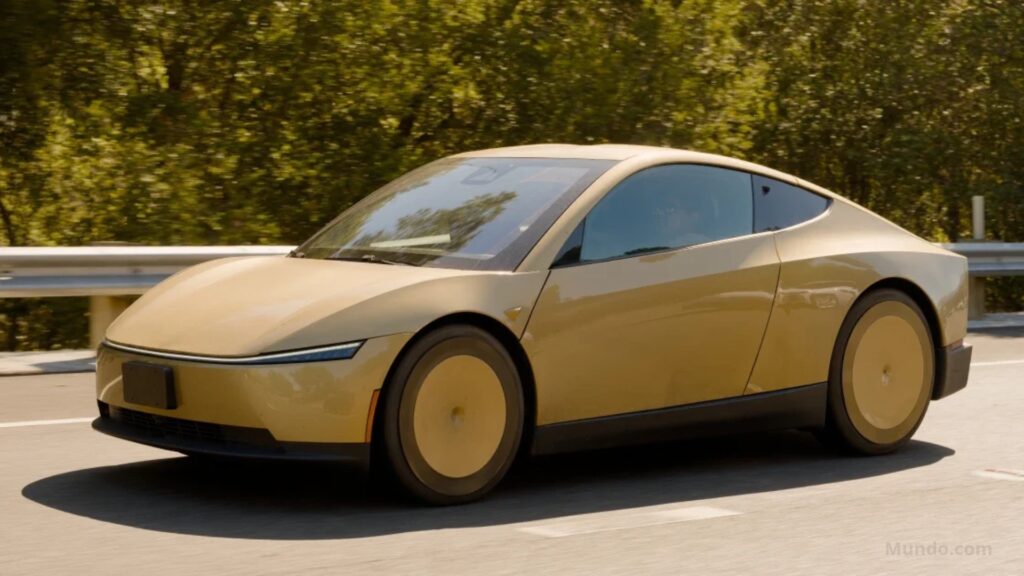
The Cybercab is a gold-colored, two-seat autonomous vehicle with no steering wheel or pedals. Until now, every Cybercab built has gone to Tesla’s own robotaxi fleet, which recently began operating on public streets in Austin, Texas. Moravy said Tesla will start small and scale up as it learns more about running autonomous fleets.
Musk made clear that the Cybercab isn’t meant to be a typical personal car. “Cybercab is primarily going to be something that is offered as like transport as a service,” he said, comparing it to Tesla models like the Model 3, Model Y and Roadster, which are designed for people who want to own their cars.
Tesla hasn’t announced a price.
A Regulatory Hurdle
Selling the Cybercab may not be simple. Federal safety rules require manual controls such as brake pedals and mirrors. Automakers certify their own vehicles, and Tesla did so for the Cybercab, but the National Highway Traffic Safety Administration (NHTSA) opened an investigation into the vehicle last month, just hours after it began operating in Austin, TechCrunch reported.
NHTSA says it will review the process and data Tesla used to certify the Cybercab. The outcome could decide whether the vehicle can legally operate. The Department of Transportation has proposed removing manual-control requirements for vehicles designed to drive themselves, but that change isn’t final.
Optimus Robots Enter Production
Tesla has also started producing Optimus, its humanoid robot, at its factory in Fremont, California, in a space once used to build cars.
“The bots coming off this line are the first production-quality bots that we have manufactured,” Tesla wrote in its shareholder letter. Musk called it “early production” and warned that the ramp-up will be slow and bumpy. He still claimed Tesla will reach 20,000 Optimus units per week by the end of 2027, an extremely ambitious target.
FSD Delayed Again
The unsupervised version of Full Self-Driving, which would let Tesla owners use FSD without watching the road, has been pushed back again. Musk said in April it would “probably” arrive in the fourth quarter of 2026. Now Tesla expects it in the second quarter of 2027.
That creates an unusual situation: if both timelines hold, companies that buy Cybercabs could run them as robotaxis before everyday Tesla owners get unsupervised FSD in their own cars.
Other Updates
- Tesla Semi: Now in volume production, with the top version rated for up to 500 miles at a full 82,000-pound load.
- Robotaxi miles: Nearly 2 million cumulative unsupervised robotaxi miles.
- Superchargers: More than 2,100 new stalls added, up 14% from a year earlier.
- Long-term goal: Musk said Tesla aims to build 5 million vehicles a year by 2030.
Why It Matters
Tesla is asking investors to look past a shrinking profit and focus on its future in robotaxis and robots. The Cybercab sales plan and Optimus production are real steps forward, but both face major hurdles, from federal regulators to the challenge of mass-producing humanoid robots.
For now, Tesla remains mostly a car company, and its car business isn’t growing. The next few quarters will show whether its AI bets can start paying off.