Ohio’s largest school voucher program has suffered a major legal setback. On October 15, a three-judge panel of the 10th District Court of Appeals ruled unanimously that EdChoice, the state’s taxpayer-funded voucher program, violates the Ohio Constitution.
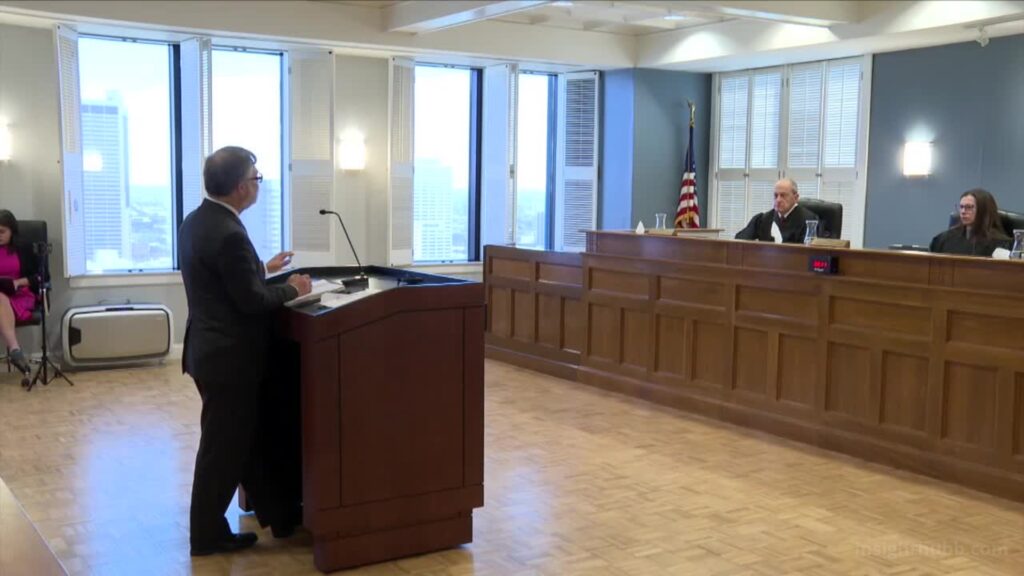
The decision doesn’t end the program right away. EdChoice will keep operating while the state appeals to the Ohio Supreme Court. But it adds new uncertainty for thousands of families who use vouchers to pay private school tuition, and it raises the stakes in one of the country’s biggest school choice battles.
What Is EdChoice?
EdChoice is a voucher program that’s been around for nearly 30 years. It gives families state money to pay for tuition at private schools, including religious schools. In 2023, Ohio expanded it to universal eligibility, meaning any family can qualify regardless of income, according to the Associated Press, via Education Week.
The program has grown into a major expense. The judges noted that the state has spent $2.5 billion in the budget on private schools, according to News 5 Cleveland.
What the Court Decided
The Ohio Constitution requires the state to provide “a thorough and efficient system of common schools.” The appeals court found that EdChoice violates that requirement.
Judge David Leland, who wrote the opinion, said that EdChoice, “as presently structured and funded, secures with taxpayer funds a competing system of uncommon schools.”
The court’s reasoning focused on how the program affects public schools. It found three main problems:
- Private schools choose their students. Participating schools have broad discretion over admissions, so it’s the school, not the family, that decides whether a voucher can be used there.
- Participating schools are concentrated in cities. That leaves many rural families with few or no private options.
- Public school funding suffers. The court said the program could make voters less willing to approve local school levies.
Leland wrote that these effects reinforce each other, “creating a downward spiral of reduced enrollment, reduced revenue, and increased fiscal pressure on schools.”
The ruling upheld a June 2025 decision by Franklin County Common Pleas Judge Jaiza Page. Importantly, the court did not say that all vouchers are unconstitutional. Its decision applies to EdChoice as it is currently structured and funded.
Who Brought the Case?
The lawsuit was filed in 2022 by a coalition called Vouchers Hurt Ohio, which includes hundreds of public school districts, along with parents, students and the Ohio Coalition for Equity & Adequacy of School Funding. News 5 Cleveland reports that more than 300 districts joined.
The plaintiffs argued that EdChoice created a separately funded private school system with little oversight and contributed to the resegregation of some districts, since most voucher users are not students of color.
Dan Heintz, a school board member in the Cleveland Heights-University Heights district, the first to join the lawsuit, said his district was “uniquely damaged” by the voucher system.
What Supporters Say
Supporters of EdChoice say they expected the case to go to the state’s highest court and remain confident.
Keith Neely, an attorney with the Institute for Justice, which represents a group of EdChoice families, said supporters “always knew” the case would reach the Ohio Supreme Court. He argued that the program empowers families to make decisions for their children.
Ohio House Speaker Matt Huffman downplayed the ruling’s broader impact. “The decision of one of 12 courts of appeal in Ohio will not affect that,” he said, referring to school choice in the state.
What Happens to Families Now
For now, nothing changes. EdChoice continues to operate during the appeal, and families currently using vouchers can keep using them.
Families considering applying for the next school year should keep an eye on the case, but there’s no immediate reason to change plans. Private schools that accept vouchers can also continue enrolling students under the program while the legal process plays out.
The state is appealing to the Ohio Supreme Court, which has a Republican majority. News 5 Cleveland reports that the court is likely to take up the case in its next term or two, so a final decision could still be some time away.
A Political Issue, Too
The ruling has also become part of Ohio’s political debate ahead of the elections. Republican gubernatorial candidate Vivek Ramaswamy supports EdChoice and said students shouldn’t be “trapped in a failing school district” when a better option exists. Democratic candidate Amy Acton criticized the cost of vouchers, calling it “over $2 billion and counting,” and called for fully funding the state’s bipartisan school funding plan.
Why It Matters
Ohio is one of several states that have expanded school choice in recent years, and courts across the country are weighing whether those programs fit within state constitutions. If the Ohio Supreme Court upholds the ruling, it could force major changes to how EdChoice works, and other states could take notice.
If the high court reverses it, the decision would strengthen universal voucher programs at a time when school choice is expanding nationwide. Either way, the final word will come from the Ohio Supreme Court.