Nine years after it was first shown, Tesla’s next-generation Roadster has finally been revealed. And it’s even wilder than promised. At an event livestreamed on October 15 from SpaceX’s facility in McGregor, Texas, Tesla showed a Roadster that can launch to 60 mph in under a second, jump and flip using cold-gas thrusters, and briefly lift off the ground.
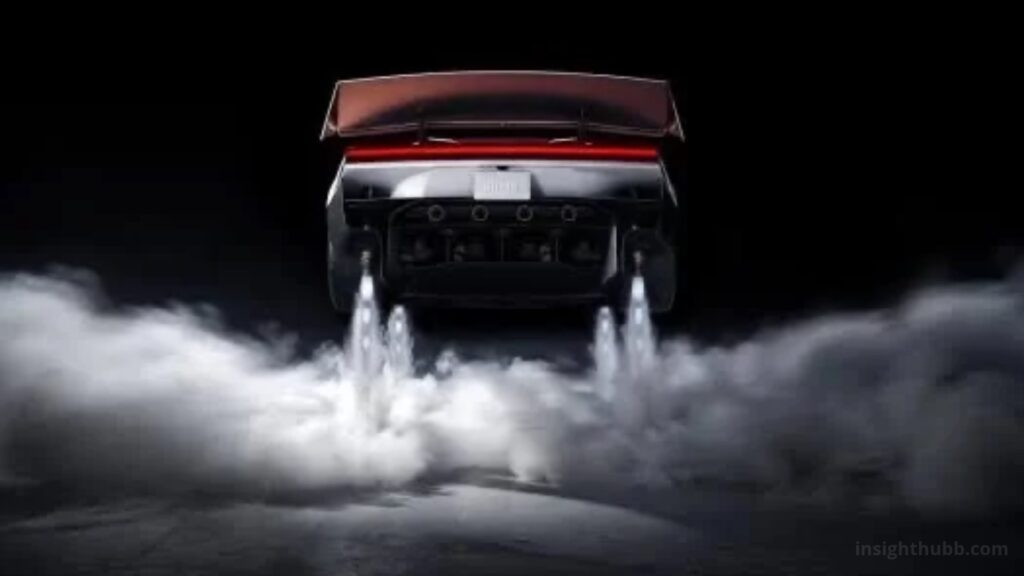
“Flying cars are real,” Elon Musk said after one of the demonstrations, according to Drive Tesla Canada.
There’s a catch, of course. The most extreme versions won’t be road legal, prices haven’t been announced, and production isn’t scheduled to start until 2028.
A Long, Long Wait
The Roadster has become one of the auto industry’s most famous delays. Tesla first unveiled the second-generation Roadster in 2017 and promised a 0-60 mph time of 1.9 seconds, a 620-mile range, a top speed above 250 mph, seating for four and production in 2020.
Instead, the project was pushed back repeatedly as Tesla focused on the Model Y and Cybertruck. Even this year’s reveal slipped several times, from April to August to October 1, before finally taking place in mid-October, according to Electrek.
Three Very Different Versions
Tesla will offer the Roadster in three configurations:
- Performance: The two-seat base model uses active aerodynamics and a suction system that pulls air from under the car to increase grip. Tesla claims 0-60 mph in under 1.6 seconds.
- Thrust: Adds rear-mounted cold-gas thrusters for even harder launches, cutting 0-60 mph to under 0.9 seconds. It will be a limited release.
- Rocket: A single-seat version with thrusters around the car that can lift it off the ground and control it in the air. Tesla claims 0-60 mph in under 0.59 seconds and a top speed above 230 mph. It’s invitation-only and not approved for public roads.
All versions are rated for more than 300 miles of range. Tesla didn’t share battery specifications.
How the “Flying” Works
The thrusters don’t use rocket fuel. Instead, they release compressed gas stored in carbon-fiber pressure vessels packed into the car’s available space. The amount of stored gas determines how long the car can “fly.”
Tesla claims the thrusters produce four to five times more force than the tires can handle. The suction fans are powerful enough to hold the car upside down, even when it’s not moving, Electrek reported. In Track Mode, the car lowers itself and deploys wings using actuators developed for Tesla’s Optimus robot, with downforce that Tesla says approaches Formula 1 levels.
Musk also teased an attempt at Evel Knievel’s famous Snake River Canyon jump.
Design and Interior
The Roadster looks very different from the 2017 prototype. Its new design draws on Tesla’s recent models and on aircraft such as the SR-71 Blackbird and F-35. Highlights include hidden headlights, a full-width taillight and flush aerodynamic details.
Inside, there’s a steer-by-wire yoke, a center touchscreen, two small driver displays and a fixed seat. Tesla uses magnesium, titanium and carbon fiber throughout.
Reservations and Price
Tesla hasn’t announced final prices for any version. But it has set reservation deposits:
- Performance: $50,000 in the U.S. ($70,000 in Canada)
- Thrust: $250,000 in the U.S. ($350,000 in Canada)
- Rocket: invitation only, no listed deposit
For the Performance model, Electrek reports that buyers pay $5,000 upfront and must pay the remaining $45,000 within 10 days, or the reservation is canceled. That matches the $50,000 deposit Tesla asked for in 2017.
Production is scheduled to begin in 2028. Musk reportedly said this time it’s “for real.”
What Changed From the Original Promise
Compared with 2017, the new Roadster is faster but more limited in some ways. Tesla’s priorities have clearly shifted from long-distance grand touring to extreme performance and spectacle. The quickest 0-60 times now beat the original promise by a wide margin, but range has dropped from 620 miles to “more than 300,” and the four-seat layout has become two seats, or just one in the Rocket.
The Skeptics
Not everyone is convinced. Electrek editor Fred Lambert wrote that the engineering appears real, but noted that the most dramatic stunts are only possible on the limited or invitation-only, non-road-legal trims. He also suggested that using the stunts could void the warranty, and doubted Tesla will sell more than a handful of the extreme versions.
The reveal also arrives amid speculation about closer ties between Tesla and SpaceX. CNBC reported that the SpaceX-developed Roadster fueled talk of a possible merger between Musk’s companies, though nothing has been announced.
Why It Matters
The Roadster won’t be a big seller, and it doesn’t need to be. Like the original Roadster in 2008, its job is to show what Tesla’s technology can do and to generate excitement for the brand.
Whether it actually reaches customers in 2028 is the real test. After nearly a decade of delays, buyers putting down $50,000 or more will want to see that the flying car finally arrives on time.