Snap opened preorders for its new consumer AR glasses, called Specs, on September 16, 2026, marking the company’s first real attempt at a mass-market augmented reality device after more than a decade and roughly $3 billion in cumulative AR investment. The launch event, held in Los Angeles, gave CEO Evan Spiegel a chance to demonstrate what he’s been describing internally for the past year as the company’s path “beyond the limits of smartphones.”
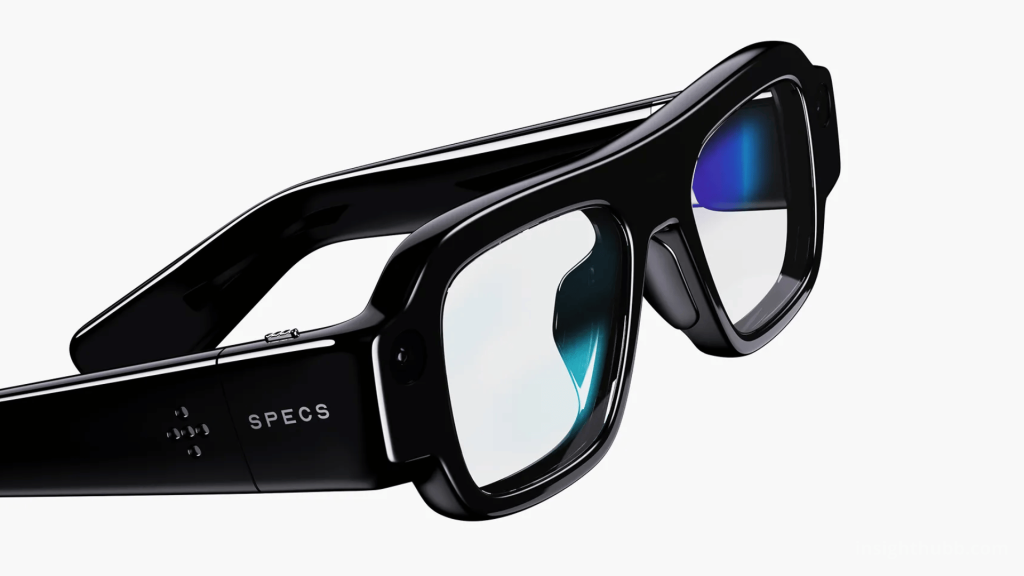
Specs are priced at $2,195, with a refundable $200 deposit required to reserve a unit. Shipments are expected to begin this fall. It’s a striking number by any measure — roughly 15 times more expensive than Snap’s original 2016 camera-only Spectacles, a product that ultimately cost the company around $40 million in unsold inventory.
No Puck, No Tether, Just Glasses
What separates this generation of Specs from most AR hardware on the market is what it doesn’t require. The glasses pack two Qualcomm Snapdragon processors directly into their frame — one dedicated to computer vision and hand tracking, the other running the actual augmented reality experiences Snap calls “Lenses.” That means no external compute puck clipped to a belt or pocket, and no wired or wireless tether to a separate phone, a design compromise several rival AR devices still rely on to keep their glasses themselves lightweight.
Snap says the new Specs weigh 132 to 136 grams, roughly 40% lighter than the previous developer-focused generation, though the company is careful to note that weight on a spec sheet doesn’t fully capture how a device feels after several continuous hours on someone’s face. The glasses use Swiss TR90 frame material and ship in two sizes, a 47mm Narrow Fit and a 52mm Wide Fit, with the lenses themselves removable and compatible with prescription inserts.
A Wider Window Into the Digital World
Specs use Snap’s proprietary liquid crystal on silicon (LCoS) display technology, delivering a 51-degree field of view and 16 million colors through a transparent waveguide — meaning the display overlays digital content onto the real world rather than blocking it out the way a fully opaque VR headset would. That field of view represents roughly a 30% larger display area than the previous developer-only generation, a meaningful jump for anyone who’s tried earlier AR glasses and found the digital overlay confined to an awkwardly small window in the middle of their vision.
Battery life is rated at up to four hours of mixed use, a figure that places real limits on how the device fits into a full day away from a charger, positioning Specs more as a tool for specific tasks and moments than an always-on companion worn from morning to night.
An “Anticipatory” AI Assistant Riding Along
Central to Snap’s pitch for Specs is a feature called Specs Intelligence, which the company describes as an “anticipatory AI service” built to help users manage tasks without needing to explicitly ask for help at every step. The AI features draw on partnerships with both OpenAI and Google, giving Snap access to established language and reasoning models rather than building every layer of the assistant from scratch. A built-in browser rounds out the software side, letting Specs pull information from the web directly rather than routing every request through a connected phone.
A Business Built to Operate on Its Own
Notably, Snap didn’t build Specs entirely within its existing corporate structure. The company spun out Specs Inc. as an independent subsidiary in January 2026, giving the hardware effort its own leadership team and, seemingly, room to operate with different financial expectations than Snap’s core advertising-driven social media business. That structure suggests Snap views Specs as a genuinely separate long-term bet rather than a feature extension of Snapchat — one that can be judged, and funded, on its own terms.
Journalist Alex Heath has reported that Snap is planning an initial production run of roughly 100,000 units, a deliberately limited launch for a first-generation product carrying this price tag. That’s a modest number next to smartphone launch volumes, and it signals Snap is treating this rollout as a careful, controlled test of real-world demand rather than a mass-market bet from day one.
The Question Nobody Can Fully Answer Yet
Snap is entering a market where consumer appetite for face-worn computers remains genuinely unproven at this price point. Meta and Apple are both developing competing AR wearables expected to arrive over the following year, and Snap’s own user base — younger and more casual than the professional and enthusiast crowd that’s historically bought expensive AR and VR hardware — adds another layer of uncertainty to how well a $2,195 device will actually sell. Snap has previously acknowledged, through a 2025 open letter from Spiegel, that Specs represents an attempt to move the company “beyond red-ocean competition” in its core advertising business, framing the glasses as strategically important well beyond their direct sales figures.
The Real Test Starts the Moment These Ship
Preorders opening is only the first checkpoint in a much longer story. The more meaningful test comes once actual units reach real customers this fall — whether four hours of battery life feels workable in daily use, whether the Lens ecosystem gives developers enough reason to build for a 100,000-unit launch audience, and whether Specs Intelligence proves genuinely useful rather than a novelty demoed once and rarely revisited. For a company whose core business runs on advertising and short-form video, Specs represents Snap’s most direct attempt yet to own a hardware platform rather than simply live on top of someone else’s — a bet expensive enough, in both dollars and reputation, that the coming months of real-world reviews will matter far more than anything shown on stage in Los Angeles.