Volvo Cars used a Strategy Update event in Stockholm on September 17, 2026, to unveil what the company itself describes as the largest and most ambitious range expansion in its 99-year history: 13 entirely new cars arriving by the end of 2030. “Our ambition is to be the leading premium car brand,” said CEO Håkan Samuelsson, adding a line that’s since been widely quoted across the automotive press: “Our showrooms will look very different in 2030.”
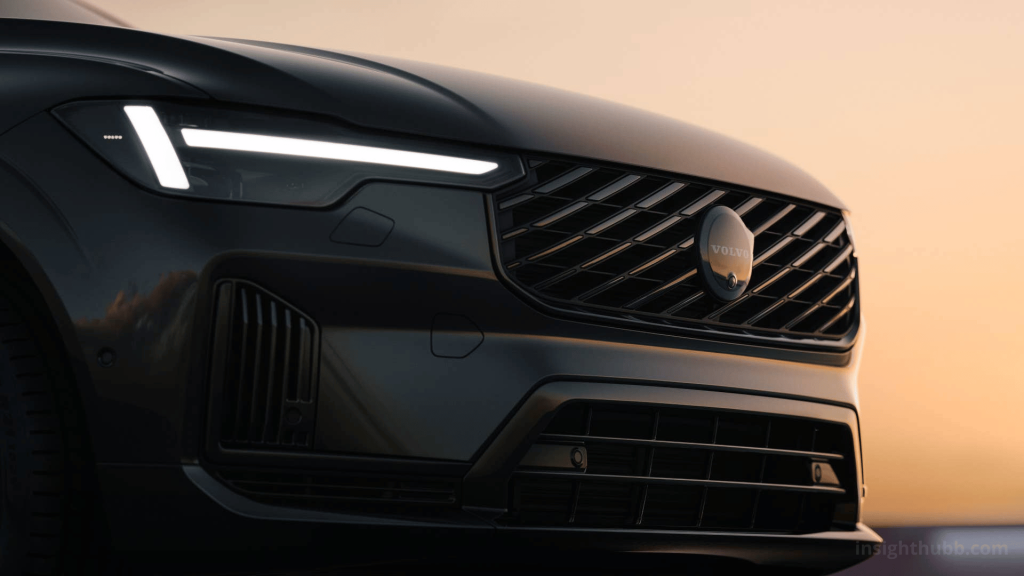
The announcement comes at a moment when Volvo, like most legacy automakers, has been navigating a genuinely uneven shift toward electrification — one where customer appetite for EVs varies sharply by country, and where a single global product strategy has increasingly struggled to serve every market equally well.
Splitting the World Into Two Product Strategies
Rather than building one lineup and selling it everywhere, Volvo’s new plan deliberately regionalizes its product development. Seven of the 13 new models are earmarked for what the company calls Western markets — the US, the UK, and continental Europe — while the remaining six are being developed specifically for China, in close collaboration with parent company Geely. Volvo has attributed this split directly to “technology restrictions, trade tariffs and diverging customer preferences,” framing the decision to build region-specific cars not as a compromise, but as something the company wants to actively turn into “a competitive advantage.”
The seven Western-market cars will be built on Volvo’s existing SPA2 and SPA3 architectures — the same underlying platforms already used by the EX90 large SUV, the ES90 saloon, and the newer EX60 SUV — running on the company’s HuginCore computing platform. Reusing established architecture rather than developing something entirely new is a deliberate cost-control choice: Volvo says the reduced engineering investment required is part of what makes a 13-car rollout achievable within a four-year window in the first place.
Saloons and Estates May Be Coming Back
Perhaps the most notable detail buried in Volvo’s announcement is a hint that traditional low-body cars — saloons and estates, in Volvo’s own terminology — could return to the brand’s lineup after years of SUVs dominating new product launches. Volvo classifies vehicles as either “high-body” (SUVs) or “low-body” (saloons and estates), and the company has confirmed that its European lineup will include a “full BEV line-up” by 2030 spanning both categories, rather than continuing to lean almost exclusively on SUVs.
Design chief Thomas Ingenlath, who recently returned to Volvo after a stint leading sister brand Polestar, has indicated that Europe specifically could see a renewed focus on these lower, more traditional body styles, in contrast to the larger vehicles being prioritized for the North American market. The timing carries a nice symbolic weight, too — Volvo, long recognized as one of the automotive world’s defining estate-car brands, celebrates its full centenary in 2027, making a return to that heritage body style feel less like nostalgia and more like a genuine full-circle moment.
A Powertrain Strategy Built Around Not Guessing Wrong
Rather than betting the entire plan on electric power alone, Volvo’s technology chief, Alexander Petrofski, described an approach built around flexibility at the individual model level. “An individual car will be offered with a BEV propulsion, a PHEV propulsion and a HEV [hybrid] propulsion,” Petrofski said, acknowledging that different European countries are electrifying at meaningfully different rates. Rather than forcing every market onto the same powertrain timeline, Volvo is choosing to offer the same physical car in multiple powertrain configurations, letting demand in each specific country determine which version actually sells best there.
That flexibility extends to Volvo’s near-term lineup as well. The company separately confirmed a new long-range plug-in hybrid system landing on the XC60 and XC90 early next year, delivering up to 124 miles of electric-only range on the XC60 and 99 miles on the XC90 — both substantial jumps from the shorter electric ranges these plug-in hybrids have historically offered, and both arriving alongside a facelifted version of the smaller XC40.
Leaning Harder on Geely for the Chinese Market
The six new models destined solely for China will be developed in direct partnership with Geely, using shared platforms and a dedicated Chinese technology stack tailored to that market’s specific competitive landscape and regulatory requirements. Beyond those six standalone models, Volvo is targeting a broader deepening of Geely collaboration across its entire lineup, aiming for parts commonality of around 30% by 2030, up sharply from roughly 10% today. Volvo estimates that shift alone could reduce material costs by approximately 5% — a meaningful margin improvement for a company competing against both established German luxury rivals and a wave of aggressively priced Chinese electric brands simultaneously.
A New Way of Selling Cars, Not Just Building Them
Volvo’s announcement wasn’t confined to which cars are coming — the company also outlined a new business model built around what it calls “simplicity, transparency and precision.” That includes a shift toward more transparent pricing practices and a dedicated line of vehicles specifically configured for fast delivery, addressing a persistent frustration across the industry where custom-ordered cars can take months to reach a customer’s driveway. Volvo’s next all-new electric model is scheduled to launch in 2027, riding on the SPA3 platform specifically chosen for its ability to underpin lower, more traditionally shaped vehicles — with a concept car previewing that next design era expected in spring 2027, well ahead of the finished product’s arrival.
The Bet Volvo Is Actually Making
Stripped of the strategy-deck language, Volvo’s 13-car plan amounts to a bet that the company can double its market share in the fast-growing fully electric segment while simultaneously hedging against slower EV adoption with a genuinely competitive third-generation hybrid lineup — all without the enormous R&D bill that would come from building every one of those 13 cars on an entirely new platform. Whether saloons and estates genuinely return to Volvo showrooms, and in what form, remains unconfirmed beyond Ingenlath’s comments and the brand’s own body-style hints. For shoppers who’ve watched Volvo’s lineup narrow almost entirely into SUVs over the past decade, this is the clearest signal yet that the pendulum may be about to swing back — even if the details of exactly which cars are coming stay under wraps for now.