Most laptop launches lead with a chip name and a screen resolution. Lenovo’s IdeaPad Vibe, unveiled at the company’s Innovation World event during IFA 2026 in Berlin on September 3, leads with a paint chart instead. The laptop comes in seven Pantone-developed colors — Chill Blue, Zen Green, Spicy Gold, Radiant Coral, Dreamy Violet, Lowkey Grey, and Moody Blue — nearly double the four shades offered on comparable rivals in the same segment.
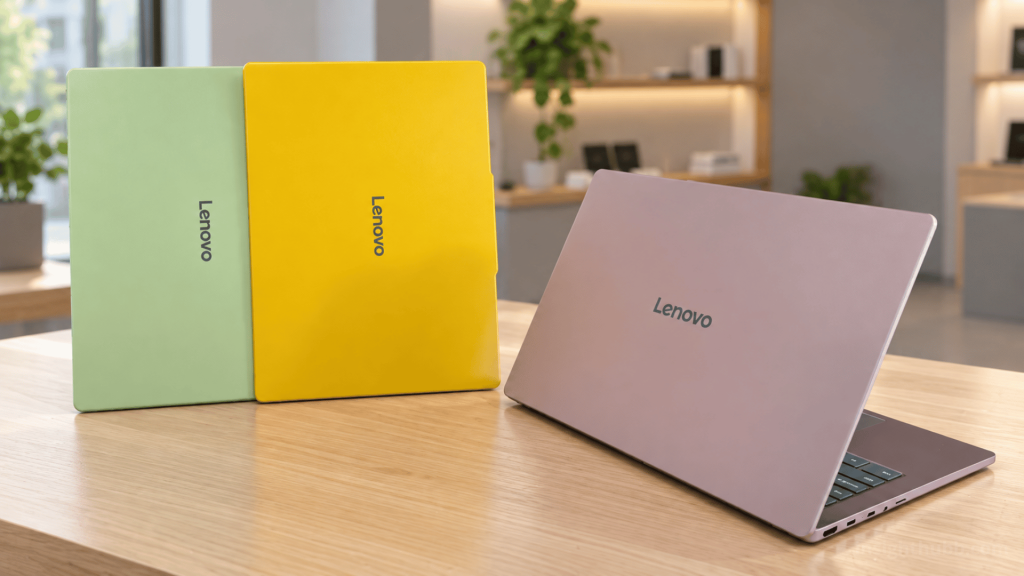
The color-first pitch is a deliberate positioning move. Lenovo is aiming the IdeaPad Vibe squarely at buyers who’ve been eyeing Apple’s MacBook Neo but want more personality, and more choice, than Apple’s typically restrained finish options allow. Optional color-matched keyboards extend that customization further, letting buyers coordinate the laptop’s exterior and typing surface rather than settling for a mismatched combination.
A Chip Decision That Breaks From the Obvious Choice
Where the IdeaPad Vibe gets more interesting from a technical standpoint is under the hood. Rather than defaulting to Intel, the laptop’s most direct rival in this segment, Lenovo built the Vibe around a mix of Qualcomm Snapdragon X and AMD Ryzen AI 400 processors, configurable up to 24GB of memory depending on the model. That’s a notable strategic choice at a moment when Intel’s newer Wildcat Lake chips are getting most of the attention from competing “thin and light” laptops launched around the same show — Lenovo is effectively betting that Qualcomm’s power efficiency and AMD’s AI performance serve its target buyer better than sticking with the most obvious silicon partner.
Qira Turns From a Feature Into an Ecosystem
Lenovo’s other headline move at IFA wasn’t a single product, but an expansion of Qira, the AI assistant Lenovo co-developed with its Motorola division. Qira is no longer confined to select flagship phones — it’s now rolling out to eligible Lenovo PCs equipped with at least 16GB of memory, giving laptop owners access to the same assistant previously reserved for premium Motorola handsets.
The wearable side of that expansion is arguably more interesting: the Moto Watch Ultra becomes the first Motorola smartwatch to support Qira, extending the assistant beyond phones and computers into a third device category entirely. Lenovo also struck a new integration deal with workflow automation company Workato, connecting Qira directly to Gmail, Google Calendar, Google Contacts, Slack, and Outlook’s mail and calendar tools — turning what started as a phone feature into something closer to a cross-platform productivity layer that follows a user across their entire device collection.
Concept Hardware That Points Further Down the Road
Beyond the products shoppers can actually buy this year, Lenovo used its Berlin showcase to preview where its laptop design thinking is headed next. Project AeroBlade is a fanless concept laptop, an ambitious engineering target given how much heat modern processors generate under sustained workloads. Project Swan is an expanding-screen concept, continuing Lenovo’s yearslong fascination with laptops that physically change shape and size depending on how a user wants to work. Neither is a shipping product yet, but both build on Lenovo’s track record of turning CES and IFA concepts into real hardware within a year or two — the company’s rollable ThinkBook Plus Gen 6, first shown as a concept, is already shipping today, giving these newer previews a real shot at reaching shelves rather than staying trade-show curiosities.
A Broader Hardware Wave, Not Just One Laptop
The IdeaPad Vibe was just one piece of what Lenovo brought to Berlin. The company also introduced a reimagined Yoga family built around Nvidia’s RTX Spark platform, aimed at on-device AI development and creative workflows that benefit from local processing rather than routing everything through the cloud. New ThinkCentre, ThinkBook, and ThinkVision products rounded out Lenovo’s commercial lineup, tied together under the same Qira umbrella, alongside new ThinkShield security offerings for business customers. Two Yoga tablets, the Yoga Tab Plus Gen 2 and Yoga Tab Gen 2, extended Lenovo’s multimodal computing push, letting users interact through pen, voice, vision, and touch across a single connected device family rather than treating each input method as a separate feature.
Colorful Doesn’t Mean Cheap — Here’s the Actual Ask
Lenovo has not yet published full pricing for every configuration in the IdeaPad Vibe lineup, though the company confirmed the laptop starts shipping in September 2026 in select markets. What’s clear from the specifications available so far is that Lenovo isn’t positioning the Vibe as a budget alternative — the Snapdragon X and Ryzen AI 400 chip options, paired with up to 24GB of memory, place it as a genuine premium contender rather than an entry-level machine wearing bright paint to stand out. For shoppers who’ve felt boxed in by the limited color palettes offered by MacBook-style ultraportables, the real test will be whether Lenovo’s software experience — and Qira’s expanding reach across phones, PCs, and now watches — feels as cohesive in daily use as it does across a trade-show floor.