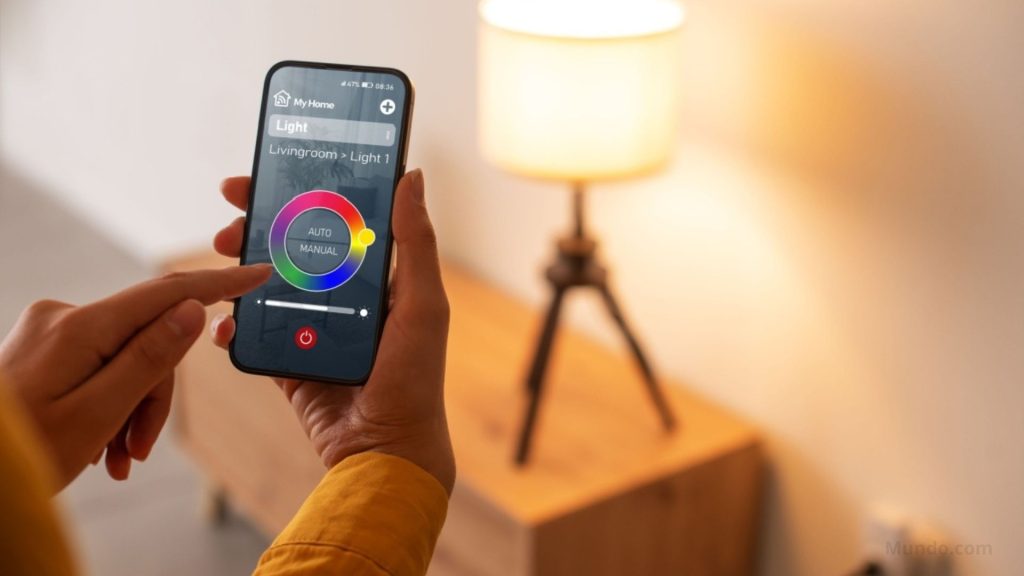
Aqara arrived at IFA 2026 in Berlin with a lighting-focused announcement that reaches well beyond a single smart bulb. On September 4, the company unveiled five new products spanning both indoor and outdoor use: the Floor Lamp T1, LED Downlight T2, LED Strip T2, Outdoor String Lights H1, and Permanent Outdoor Lights H1. Rather than treating each fixture as an isolated gadget, Aqara built the entire lineup to work as one connected system, capable of coordinating whole-room lighting scenes and automated routines that respond to how people actually move through their homes.
Every product in the new range supports both Thread and Zigbee connectivity and carries Matter certification, meaning none of it locks a household into a single smart home ecosystem. The lights integrate with Apple Home, Google Home, Amazon Alexa, SmartThings, Homey, and Home Assistant, giving buyers the freedom to mix Aqara’s hardware into whatever platform they’ve already committed to, rather than forcing a wholesale switch.
The Floor Lamp Built Like a Wall of Light
The standout piece in the new lineup is the Floor Lamp T1, a 1,420-millimeter side-emitting fixture engineered to wash an entire wall in ambient light rather than casting a single, localized glow. Inside it sits a high-precision 16-bit, 5-channel chip driving 18 individually controllable lighting zones, with a tunable white range spanning 2,000K to 9,000K and brightness reaching up to 1,000 lumens.
That level of granular control is what allows the lamp to produce smooth, gradual color transitions rather than the abrupt, blocky shifts common in cheaper smart lighting — a detail that matters most during automated routines, where a lamp might slowly warm from a cool daytime white into an amber evening tone over the course of several minutes rather than snapping instantly between two fixed settings.
Downlights and Strips Built for Rooms That Weren’t Designed Around Them
Not every home has the ceiling depth or wiring layout to accommodate bulky retrofit lighting, and Aqara’s LED Downlight T2 addresses that directly with a notably slim profile aimed at installations where ceiling space is genuinely limited. The LED Strip T2 extends the same Matter-enabled, tunable-white approach into flexible strip lighting, suited to under-cabinet runs, shelving, or accent lighting along architectural features that a rigid fixture couldn’t reach.
Outdoors, the Outdoor String Lights H1 and Permanent Outdoor Lights H1 bring the same connectivity standard to patios, gardens, and building exteriors, letting a household extend the same automated lighting logic used indoors — motion-triggered activation, scheduled dimming, scene-based color changes — out into spaces that have traditionally relied on simple timers or manual switches.
A Presence Sensor That Knows the Difference Between Empty and Still
Smart lighting is only as good as the automation triggering it, and Aqara used its IFA presence to spotlight an upgrade on that front as well. The Aqara Presence Multi-Sensor FP400, first shown at CES 2026 earlier this year, is now nearing release, with availability expected during September. The FP400’s core improvement addresses a persistent frustration with motion-based automation: distinguishing between a room that’s genuinely empty and one where someone is present but simply not moving much — reading, working at a desk, or watching television. That distinction determines whether lights stay on appropriately or shut off prematurely on someone sitting still, and Aqara says the FP400 is built specifically to get that call right more consistently than earlier presence sensors.
Locks Join the Same Ecosystem, With Apple Home Key Support
Lighting wasn’t the only category Aqara touched at IFA. The company also introduced the U250 Smart Lock, an upgrade to its popular U200 model, adding support for Apple Home and Apple Home Key — letting users unlock a front door directly with an iPhone or Apple Watch rather than a separate key fob or code pad. Notably, the U250 does not include ultra-wideband (UWB) support, a technology that enables hands-free, walk-up unlocking on some competing smart locks, meaning users will still need to actively tap their device rather than simply approaching the door. The lock is expected to arrive in the fourth quarter of 2026.
A Platform for the People Building the Automations
Perhaps the most forward-looking announcement at Aqara’s booth wasn’t a product at all, but a platform: Aqara Builder, a new global community hub aimed at smart home enthusiasts, developers, installers, and integrators. Rather than leaving customers to figure out complex automation setups entirely on their own, Aqara Builder is designed to host real-world projects, shared automation recipes, and design inspiration from other users who’ve already solved similar problems — treating advanced smart home setup as a collaborative, community-driven skill rather than something every household has to reinvent independently.
Why This Round of Announcements Reads Differently
Smart lighting has spent years selling itself on convenience — turning a light on from a phone instead of a switch. What Aqara’s IFA 2026 lineup signals is a shift toward something more ambitious: lighting systems and sensors sophisticated enough to understand a room’s actual state and adjust accordingly, without a person having to manually orchestrate every scene. Pricing for most of the new lighting products has not yet been disclosed, and individual release dates remain unconfirmed for several items in the lineup, but the direction is clear. For households already invested in Matter-compatible smart home gear, Aqara’s latest push offers a rare case where buying into one brand’s ecosystem doesn’t mean abandoning everything else already installed.