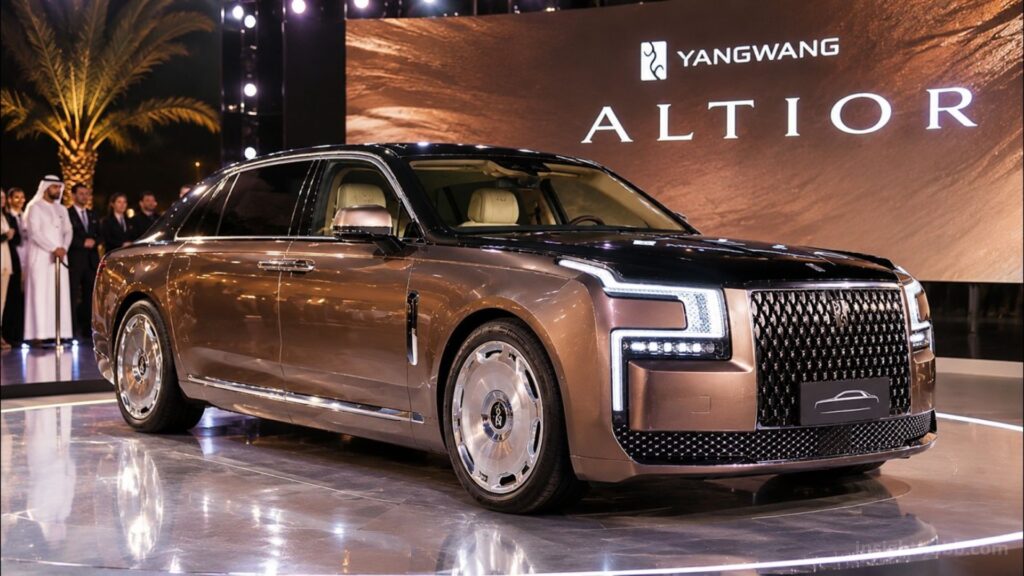
The YANGWANG ALTIOR interior is the centerpiece of a new electric luxury vehicle unveiled in Abu Dhabi. BYD’s flagship luxury brand announced the global debut on November 7, presenting a four-seat layout and an approach shaped by Chinese design traditions. The reveal puts passenger accommodation at the center of the vehicle’s identity.
That makes ALTIOR interesting beyond the familiar discussion of electric-car performance. Its proposition asks a different question: what should the inside of a high-end vehicle feel like when the passenger experience becomes the main design brief?
The answer involves more than adding expensive materials. A convincing luxury interior needs its space, controls and movement to feel coordinated. ALTIOR’s announcement offers a useful opportunity to examine that relationship, while leaving driving impressions and independent quality assessments for later testing.
Four seats give the cabin a clear purpose
According to YANGWANG, the cabin includes rear relaxation seats, a central executive console and a coordinated relaxation mode. Announced features also include a 39-speaker Dynaudio system, a powered 21.4-inch overhead screen and front and rear refrigerators. The material palette includes semi-aniline leather, wool floor mats and natural wood.
Our assessment is that the four-seat arrangement matters because it makes the vehicle’s priorities explicit. Each passenger receives a defined space instead of sharing a conventional rear bench.
For a prospective owner, however, personal space should be judged through the complete seating position. The relationship between the seat, armrest, footwell and controls matters more than any one measurement. A large cabin can still feel awkward if the passenger has to reach too far for everyday functions.
Entry is part of the interior experience
The company describes a coach-door arrangement, with the front doors opening up to 80 degrees and the rear doors up to 90 degrees.
A generous opening can create a striking arrival, but practical evaluation should begin in an ordinary parking situation. Can a passenger enter comfortably beside another vehicle? Is the opening convenient when carrying a bag? Does the seat position make it easy to sit down and stand up?
These are useful questions because the experience begins before someone settles into the cabin. A beautiful interior becomes more persuasive when access feels equally considered. A future demonstration should therefore include realistic spaces, not only a wide-open presentation area with every door fully extended.
Materials need to work as a composition
Luxury interiors often attract attention through individual details: a wood finish, a stitched surface or a carefully shaped control. Their lasting appeal depends on how those details work together.
A hypothetical buyer examining ALTIOR could look at the cabin under several lighting conditions. Does the color relationship remain balanced in daylight? Do reflections interfere with displays? Do frequently touched surfaces feel consistent with the overall design?
These observations would provide a more complete impression than examining close-up photographs alone. Promotional images can show craftsmanship clearly, but they cannot communicate every aspect of texture, temperature or tactile feedback. Direct inspection will be important for understanding how the announced material choices translate into the physical vehicle.
Relaxation should remain simple to manage
A coordinated relaxation setting sounds appealing because passengers may not want to adjust several systems separately. The practical challenge is to make the sequence understandable and easy to reverse.
For example, someone might want a more relaxed seat position while keeping the cabin lighting unchanged. Another passenger could prefer a quiet environment without activating every available comfort feature.
A useful interface would make those preferences manageable. During a future review, evaluators should examine how quickly a passenger can return to a normal seating position and whether the controls explain what will happen before a setting is activated. Convenience becomes meaningful when the person remains comfortable directing the experience.
Entertainment has to respect the journey
A large screen and an elaborate sound system can support a rich passenger experience, but successful integration involves restraint as well as capability.
Consider a journey shared by two rear passengers with different priorities. One may want to work, while the other wants entertainment. The quality of the cabin experience would depend on how well those activities coexist.
Future testing could examine screen positioning, control access and the ease of stopping or changing an activity. It would also be useful to assess the cabin when the entertainment systems are unused. An interior designed for relaxation should remain appealing without requiring a continuous display of its technology.
Practical storage remains relevant at the top end
Even a highly specialized luxury car needs to accommodate ordinary belongings. Phones, documents, glasses and bags should have places that feel natural and secure.
A prospective owner could evaluate the cabin using the items normally carried on a business or leisure journey. That exercise would reveal whether the available storage suits actual habits and whether essential objects remain accessible after the seat is adjusted.
The same principle applies to luggage. The usefulness of a vehicle depends partly on how comfortably it supports the complete trip, including the belongings that travel with its occupants. Beautiful presentation and practical accommodation should reinforce each other.
Why This Matters
ALTIOR’s debut adds a distinctive interior-focused proposition to the electric luxury market. Its appeal lies in the attempt to coordinate personal space, materials and comfort rather than rely on a single attention-grabbing feature.
The announcement does not provide enough information to assess local pricing, market-specific equipment or the complete ownership experience. Those details will matter as the vehicle moves beyond its premiere.
For now, ALTIOR offers a clear design direction: an electric luxury car organized around the people inside it. The most revealing next step will be a direct examination of how naturally that environment works during an ordinary journey.