Learning Curves AI education research is bringing a practical question into focus: how can schools and training programs help more people benefit from artificial intelligence? In an October 26 publication, Microsoft highlighted a collection of research-driven essays examining the journey from classrooms to early careers. The discussion gives educators a timely reason to consider how technology fits into learning rather than simply how quickly it can be introduced.
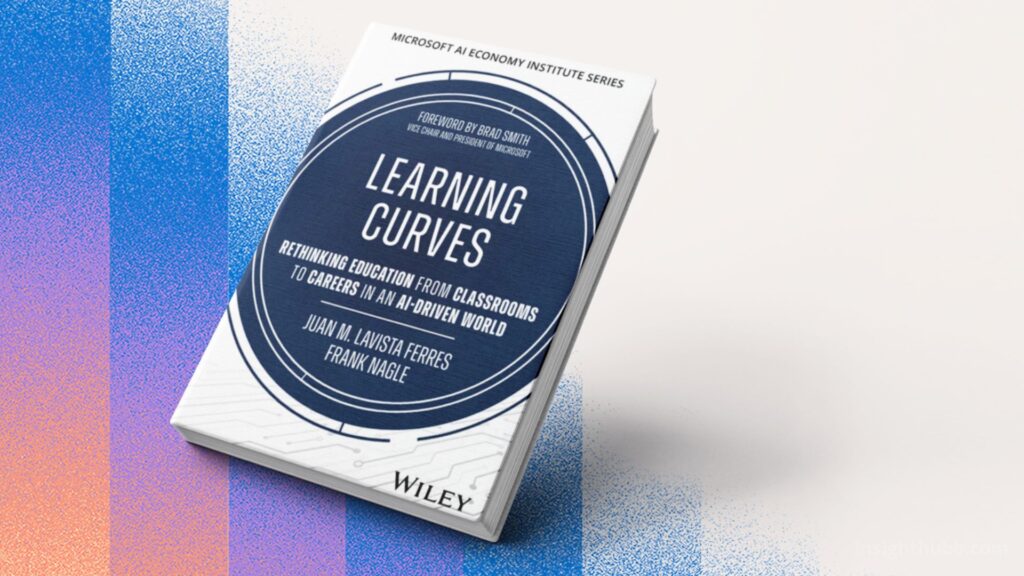
The collection draws on work by the second cohort of Senior Fellows at Microsoft’s AI Economy Institute. It considers school education, community and technical colleges, transitions into employment, and entry-level work. Microsoft’s account also highlights teacher preparation, local languages and alternative training pathways. These are the themes described by the publisher’s corporate contributor, rather than findings independently verified by InsightHubb.
Why the classroom-to-career connection matters
The useful opportunity is to build continuity between learning stages. A student might first encounter an AI assistant during a writing assignment, then use similar technology during vocational training and eventually at work. Each stage needs a clearer objective than learning which button to press.
An effective school exercise could ask learners to compare an AI explanation with a reliable reference and identify what is missing. A workplace exercise could ask trainees to evaluate a draft customer response against actual company instructions. The setting changes, but the underlying skill remains recognizable: understanding a task, checking evidence and taking responsibility for a conclusion.
These are suggested teaching applications, not outcomes measured in the announcement. They show how a broad discussion of AI literacy can be translated into activities with observable results.
Teacher preparation can begin with one lesson
Schools considering new tools could start by choosing a single lesson that already presents a difficulty. Perhaps students struggle to explain why an answer is wrong, or teachers spend too much time producing alternative practice examples.
The teacher would define the desired improvement before selecting the technology. A small trial could then compare the original activity with an adapted version, using the same learning objective and similar assessment criteria.
That approach creates a useful professional conversation. Colleagues can discuss the quality of student explanations, the amount of teacher correction required and whether the exercise worked for learners with different levels of confidence. A demonstration becomes more valuable when it produces evidence teachers can inspect together.
Local circumstances should shape the design
Consider a hypothetical training center where students share computers and use several home languages. An activity designed around continuous access to an individual device could be difficult to deliver even if the software itself performs well.
The center could instead organize paired work, provide a printed task outline and include time for spoken discussion. Students would still practice evaluating generated material, but the exercise would reflect the resources available.
The broader lesson is to identify the barrier before proposing the solution. A tool that saves time for an experienced writer may require substantial support for someone still learning to type or navigate a digital interface. Good planning makes those differences visible without treating learners as a single group.
Career readiness needs demonstrable work
For a learner preparing for employment, a completed project can make a claim about competence easier to evaluate. A useful portfolio entry might include the original brief, the assistance received, the checks performed and the final result.
For example, a trainee could prepare a simple inventory report using a fictional dataset. The assessment could ask whether the calculations are correct, whether the explanation matches the figures and whether the trainee can reproduce the essential steps without relying on a generated answer.
This would assess understanding as well as presentation. Employers and educators could see how the learner reasons through a problem, including when the learner decides that an AI suggestion needs correction.
Short courses need clear boundaries
A practical training program should tell participants what they will be able to do by the end. Broad promises about becoming ready for an AI-driven economy are difficult to assess. A narrower outcome, such as checking a generated spreadsheet summary against its source data, gives both instructor and learner a common target.
The same clarity helps when deciding which tools are necessary. A course may not need a different application for every activity. Consistent practice with a small set of tasks could provide a more manageable starting point.
This is an editorial recommendation for course design, not a description of a specific qualification introduced in the Microsoft publication. Readers should distinguish the discussion of education pathways from an announcement of enrollment, scholarships or guaranteed employment.
What readers can take from the publication
The announcement offers a constructive framework for an issue that can otherwise become dominated by product launches. Schools, colleges and employers can use it as a reason to ask how their learning activities connect and where students need more support.
The most productive next step is a concrete one: identify a task, define what successful independent understanding looks like and decide how assistance will be documented. That creates room for experimentation while keeping the learning objective visible.
For educators and learners, the positive possibility is broader participation in useful skills. Achieving it will depend on the details of teaching, access and assessment, rather than access to a chatbot alone.