The latest Toyota Hilux review shows a pickup that has changed carefully, not radically. For 2026, Toyota keeps the Hilux’s tough identity while adding more technology, electrified options and a cleaner interior.
The Hilux remains one of Toyota’s most recognized work vehicles. Its reputation is built on durability, off-road confidence and practical capability. That is why this update matters for drivers, fleets and buyers who expect strength first, but now want better comfort and lower-emission choices.
What Changed in the 2026 Toyota Hilux
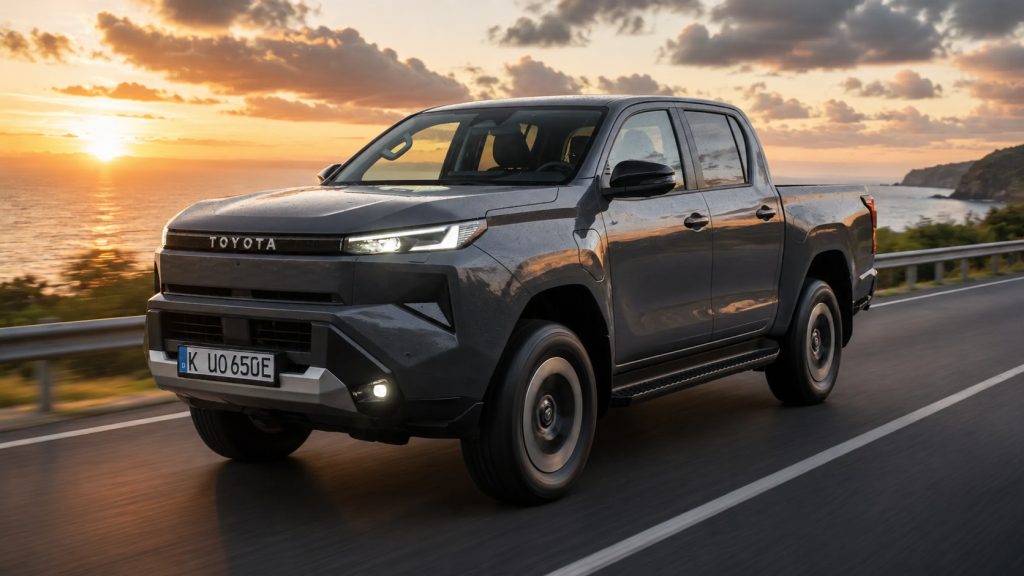
The ninth-generation Hilux receives a redesigned exterior with slimmer headlights, a stronger front look and a more modern cabin. Toyota has also moved the model toward a Double Cab body style in Europe, reflecting demand from business and private users.
Inside, the pickup gets a more digital layout. Toyota has added a 12.3-inch driver display and a central multimedia screen of up to 12.3 inches, depending on the version. The cabin also includes improved storage, updated controls and new connectivity features.
Another important change is electric power steering. This is a first for the Hilux in Western Europe and should make the pickup easier to handle at low speed. It also helps reduce steering kickback on rough roads.
Diesel Hybrid and Electric Power Join the Lineup
The main European diesel option uses a 2.8-liter engine with 48V mild-hybrid assistance. According to the information available, this setup produces 201 bhp and 369 lb ft of torque. It is paired with a six-speed automatic transmission.
Toyota says the Hilux Hybrid 48V keeps strong working ability. It can carry up to one tonne and tow braked trailers of up to 3,500 kg. That makes it the more practical choice for drivers who need the Hilux for heavy-duty work.
The biggest news is the first battery-electric Hilux. It uses a 59.2 kWh battery and front and rear eAxles for permanent all-wheel drive. Toyota lists a WLTP driving range of up to 159 miles, although real-world range will depend on load, terrain, weather and driving style.
What the Electric Hilux Means for Buyers
The electric Hilux gives Toyota an answer for companies that need zero-emission vehicles for specific work sites. It may suit airports, forestry operations, ports, local fleets or businesses with predictable daily routes.
However, it is not the best fit for every buyer. The electric model has a lower towing capacity than the diesel hybrid, at up to 1,600 kg. Its payload is also listed at around 715 kg, which is below the one-tonne figure many commercial pickup buyers expect.
UK pricing also places the EV as a more expensive option. The electric Hilux starts from £57,845 before any applicable plug-in van grant. By comparison, Top Gear lists the diesel range from £42,845, making the combustion version more affordable for many users.
Technology, Safety and Everyday Use
Toyota has expanded the Hilux’s safety and driver assistance package. Available features include Toyota Safety Sense updates, Blind Spot Monitor, Safe Exit Assist and a Driver Monitor Camera, depending on grade and market.
The pickup also gains connected services through the MyToyota app. These can help owners check information such as location, fuel level, charging status and trip data. For fleet managers, this could make the Hilux easier to monitor across daily operations.
Still, the Hilux is not trying to become a luxury pickup. Its appeal remains practical. The improved cabin, larger displays and extra safety features help modernize the experience, but its main selling point is still durability.
The Bottom Line
The 2026 Toyota Hilux feels like an evolution rather than a reinvention. It remains rugged, capable and familiar, but now offers more electrified choices for different types of buyers.
For most heavy-use drivers, the 48V diesel hybrid still looks like the stronger all-round option. The electric Hilux is more specialized, especially because of its limited range and lower towing capacity.
Even so, the arrival of an EV version is an important step. It shows how work-focused pickups are changing as companies face new emissions targets, urban restrictions and fleet requirements.