Samsung Electronics America has officially launched its first-ever credit card, the Samsung Galaxy Card, marking the company’s entry into the consumer finance space. Rather than simply offering another rewards card, Samsung is using the Galaxy Card to deepen the connection between everyday spending and its broader hardware and software ecosystem — rewarding customers more heavily for purchases made directly with Samsung or through its own digital wallet.
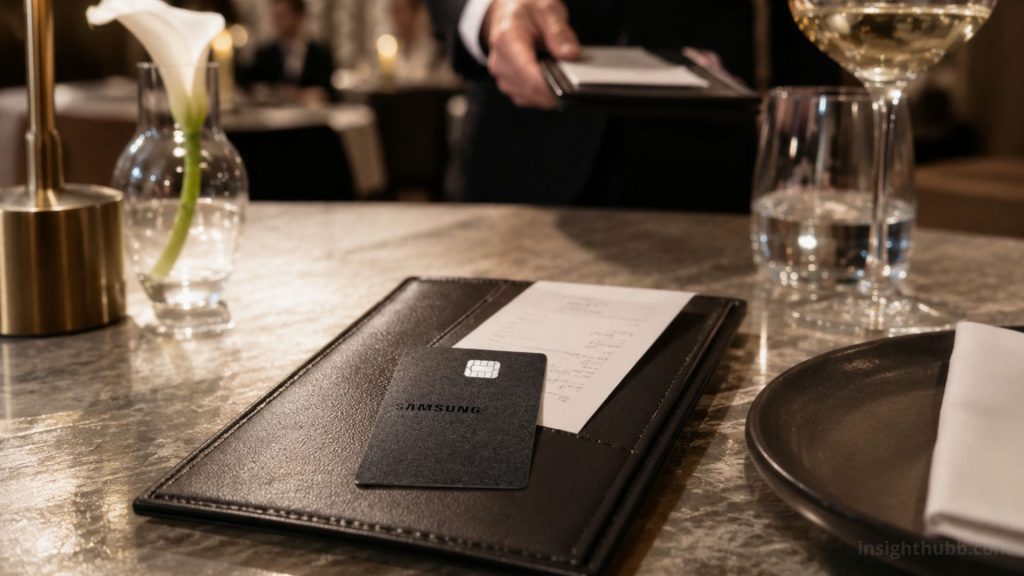
The card became available to apply for starting July 22, 2026, and comes with a straightforward welcome incentive: a $200 bonus for cardholders who spend $2,000 or more within the first 90 days of opening an account.
Issued by Barclays, Built for Everyday Spending
The Galaxy Card is issued by Barclays US Consumer Bank and runs on the Visa network, giving it broad acceptance rather than being limited to Samsung-branded retail. It’s available both as a virtual card for immediate use and as a physical card — a premium metal design finished with a black Samsung logo, aimed at giving the card a distinct, premium feel in a wallet.
The rewards structure is tiered depending on where the money is spent:
- 5% cashback on eligible purchases made directly through Samsung
- 3% cashback on purchases paid via Samsung Wallet
- 2% cashback on streaming subscriptions, including services like Netflix, Disney+, and Spotify
- 1% cashback on all other purchases
- 20% discount on a Samsung VIP Advantage subscription, plus an additional 5% cashback when signing up for or renewing it
That structure makes the card most rewarding for people already inside the Samsung ecosystem — buying phones, tablets, or accessories directly from the brand, or routing daily purchases through Samsung Wallet instead of a traditional card.
Deep Integration With Samsung Wallet and Knox
Beyond the rewards themselves, the card’s biggest differentiator is how tightly it plugs into Samsung’s existing software. Cardholders can store the Galaxy Card inside Samsung Wallet alongside other compatible cards, ID documents, boarding passes, and digital keys — consolidating day-to-day essentials into a single app that Samsung has been steadily expanding with new partners.
Security is handled through Samsung Knox, the company’s existing hardware and software security platform already used to protect Galaxy devices, extending that same protection to the new financial product.
Woncheol Chai, Executive Vice President and Head of the Digital Wallet team within Samsung’s MX (Mobile eXperience) business, framed the launch as a natural extension of the company’s broader push toward convenience. According to Chai, Samsung customers have long relied on its products to stay connected, relax, and be productive, and the Galaxy Card is designed to add real, everyday value on top of that relationship every time a customer pays.
A US-Only Launch, For Now
The most significant limitation is availability: the Samsung Galaxy Card is exclusive to the United States market at launch, with no confirmed timeline for international expansion. For a company with a massive global user base, restricting a product this consumer-friendly to a single market is notable, and it leaves open the question of whether — and when — markets like Latin America or Europe might see a similar offering.
For now, the launch positions Samsung alongside a small but growing group of hardware makers experimenting with financial products as a way to deepen customer loyalty, following a strategy other consumer tech brands have used to keep users spending — and staying — within their ecosystem.