Nissan announced on November 12 that its third-generation e-POWER technology has won the 2027 RJC Technology of the Year award. The recognition forms part of the 36th RJC Car of the Year awards organized by the Automotive Researchers’ and Journalists’ Conference of Japan.
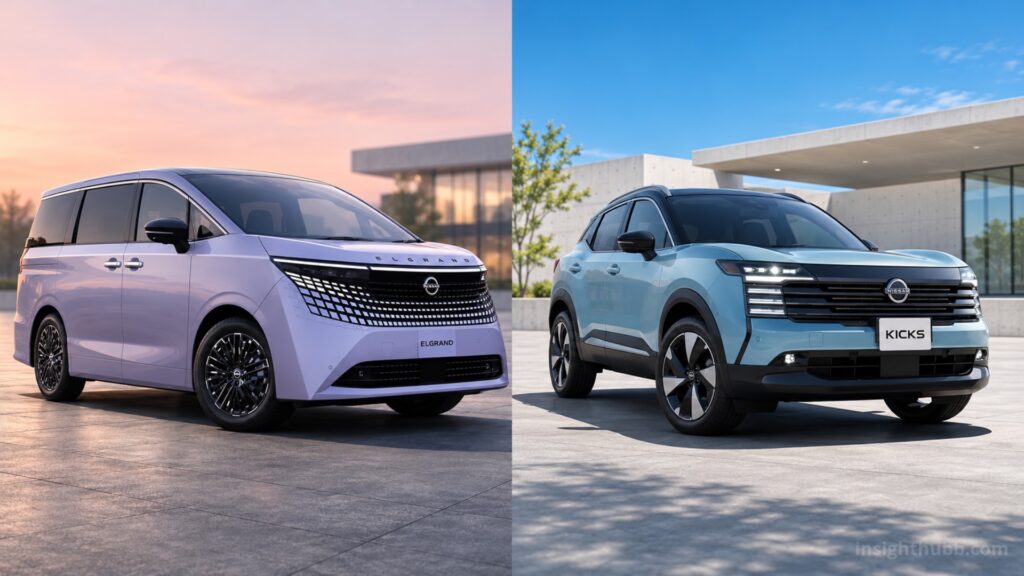
The announcement associates this generation of the technology with the all-new Kicks and Elgrand. For readers following developments in vehicle propulsion, the award provides a reason to investigate the system and the models connected with it.
For a prospective buyer, it also raises a practical question: how should an industry recognition influence the process of choosing a car?
An Award Highlights Something Worth Investigating
A technology award can help draw attention to a development that might otherwise be difficult to distinguish among many announcements. It offers a useful starting point, but the buying decision still needs personal context.
Two drivers can value the same vehicle differently. One may spend most of the week on short urban trips, while another regularly covers long distances. Their expectations for space, comfort, and response may differ too.
The most productive next step is therefore investigation. A buyer can use the recognition as a reason to learn more, then examine whether the relevant vehicle meets the needs that will define its everyday use.
A Technology Name Needs a Clear Explanation
Commercial names make a system recognizable, but they do not always make it understandable. Buyers should feel comfortable asking plain-language questions about any unfamiliar propulsion technology.
What energy sources does the vehicle use? What does the driver need to do to keep it operating? What changes across different driving conditions? What information does the instrument display provide?
Answers to those questions help turn a technical label into an ownership picture. They also reduce the risk of treating different configurations as interchangeable. A useful explanation should allow a person to imagine daily operation without requiring specialist knowledge or an extensive engineering vocabulary.
A Representative Test Drive Matters More Than One Impression
A short demonstration can produce enthusiasm while leaving important situations unexplored. A more useful drive includes conditions similar to those the owner expects to encounter regularly.
Moving away from a junction, joining a faster road, and maintaining a steady speed reveal different aspects of a vehicle. Transitions between acceleration and slowing down also deserve attention.
The aim is not to create an extreme challenge. It is to understand ordinary behavior. Buyers gain more from learning how a car feels in familiar circumstances than from concentrating on one dramatic moment designed to showcase a particular feature. Consistency can matter as much as an impressive first response.
Cabin Sound Should Be Judged in Context
Noise is a common point of interest when discussing propulsion systems. However, a quiet impression on one street does not necessarily describe the experience across different surfaces and speeds.
During a test drive, it helps to distinguish wind, tire, and mechanical sounds. Buyers can also notice whether conversation remains comfortable and whether changes in sound feel predictable.
This is partly personal. Different people are sensitive to different frequencies and patterns. Comparisons become more meaningful when conditions are reasonably similar. Rather than relying on a general claim about quietness, a prospective owner can ask whether the sound environment suits the journeys and expectations that matter to them.
Efficiency Figures Need Comparable Conditions
Published consumption figures can provide a reference when the testing method and vehicle specification are understood. Comparisons work best when they involve equivalent procedures and versions.
A personal trip can produce a different result because of traffic, temperature, speed, load, and other circumstances. One demonstration route should not become a promise for every future journey.
A useful ownership estimate starts with typical annual travel and considers reasonable scenarios. That allows efficiency to be viewed alongside purchase cost, equipment, maintenance, and other priorities. The goal is a practical picture of use, rather than a decision dominated by a single number detached from its context.
Local Availability Is Part of the Story
An international announcement does not establish the exact offer in every country. A technology can be associated with different launch schedules, specifications, and model names across markets.
Before making a purchasing decision, buyers should confirm the precise version available locally. Equipment, warranty terms, and service arrangements deserve the same attention as the headline feature.
Sharing a model name does not guarantee identical vehicles worldwide. Recognizing that distinction helps turn global news into better local questions. The announcement creates interest; the relevant market documentation explains what can actually be bought and supported. Both are necessary to form a useful comparison.
The Interior Still Shapes the Technology Experience
Even when an award focuses on propulsion, the owner interacts with the whole vehicle. Display clarity, control placement, seating, and visibility affect how accessible the technology feels.
A sophisticated system becomes easier to live with when it communicates the necessary information clearly. During a dealership visit, prospective buyers can examine whether the indicators make sense and whether frequent functions are easy to find.
The e-POWER recognition brings fresh attention to Nissan’s development work. For consumers, the opportunity is to use that curiosity to evaluate the complete car. A satisfying choice connects performance, comfort, understandable controls, and personal needs, allowing the award to inform the process without replacing the buyer’s own assessment.