Samsung has announced a December 10 release for its intelligent eyewear in the United States and South Korea. The announcement, published on November 12, also opened preorders and introduced a collection combining Samsung technology with designs from Gentle Monster and Warby Parker.
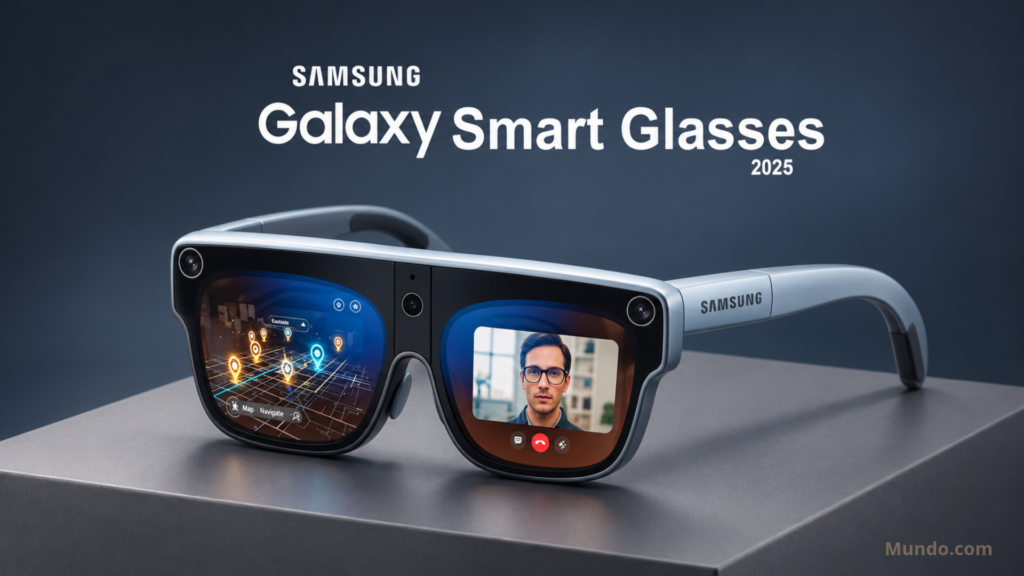
Developed in collaboration with Google and featuring Gemini, the collection includes 30 designs. Samsung describes capabilities such as hands-free assistance, questions about the surrounding environment, translation, and communication support.
The product category raises an interesting question: what happens when an AI assistant becomes something people wear throughout the day? The answer will depend on more than technical capabilities. Comfort, social expectations, and the quality of everyday interactions will matter too.
Smart Glasses Must Work as Glasses First
Choosing eyewear is unusually personal. A frame sits on the face, affects appearance, and must remain comfortable around the nose and ears. Small differences in shape can have a significant effect over time.
That makes design variety practically important. A frame that suits one person may feel awkward on another. People also have different preferences for work, travel, and casual activities.
For prospective buyers, this means a fitting deserves as much attention as a feature demonstration. An impressive assistant cannot compensate for a frame someone dislikes wearing. The product needs to feel like an accessory that belongs in the user’s routine, rather than a device they tolerate to access its functions.
Hands-Free Assistance Could Remove Small Interruptions
One appealing use for smart eyewear is asking a question without reaching for a phone. When someone is carrying objects, organizing materials, or moving between tasks, that could reduce the number of steps required to obtain information.
Consider a person assembling a display who needs a brief clarification. A useful voice interaction could help them continue working without setting everything down and opening an application.
However, speaking to a device is not equally convenient everywhere. A quiet library, shared office, and crowded street create different expectations. The best interaction is therefore contextual. Hands-free access is valuable when it simplifies the task and remains appropriate for the setting.
Questions About the Environment Need Thoughtful Interpretation
Being able to ask about something in view could support curiosity during travel, work, or informal learning. A person might want background information about an unfamiliar object or help understanding a visual detail.
The useful approach is to treat an answer as assistance that can lead to further investigation. An explanation may provide a helpful starting point without being a definitive identification.
This distinction becomes particularly important when an incorrect answer could have meaningful consequences. Users should remain able to check important information through an appropriate independent source. The educational opportunity lies in asking better questions at the moment curiosity appears, while maintaining the habit of verifying what matters.
Translation Is Most Useful When Expectations Are Clear
Travel often involves small language barriers: a menu description, a notice, or an unfamiliar expression. Assistance can make those encounters easier and help a person decide what to ask next.
Language, however, includes context and intention as well as individual words. Local expressions and ambiguous wording can complicate interpretation. Automatic translation is most helpful when users understand those limitations.
A practical benefit may be modest but meaningful. Understanding the general subject of a message can make a conversation less intimidating. The technology does not need to eliminate every communication difficulty to provide value; it needs to help the wearer participate with greater clarity and confidence.
Useful Notifications Depend on Good Boundaries
A device worn close to the face needs to handle interruptions carefully. Convenient access to updates can become distracting if too much information competes for attention.
Before enabling every available option, a user can decide which messages genuinely need immediate attention. Work communications, personal conversations, and routine updates may deserve different treatment.
It is also worth considering activities during which interruptions should stop altogether. A successful wearable should make it easy to return attention to people and surroundings. The goal is to create a helpful layer of assistance, not another stream of information that the wearer feels compelled to monitor continuously.
Privacy Is Part of the Shared Experience
Smart glasses are used around other people. That means their operation can affect conversations, meetings, and expectations in spaces where others may not understand what the device is doing.
Clear behavior helps build trust. When a function involves information from other people, explaining the intended use and respecting local rules can be as important as understanding the settings.
Users should also review permissions and account connections. Knowing which services receive information makes it easier to choose a configuration appropriate for personal or professional use. Privacy is therefore both a technical question and a matter of everyday conduct, involving how the wearer communicates with the people nearby.
What Buyers Should Evaluate After Launch
Because the release is scheduled for December, the announced experience should be distinguished from independent everyday testing. A demonstration can illustrate a feature; repeated use reveals how consistently it helps.
Prospective buyers should pay attention to extended comfort, audio clarity, activation methods, and how easily functions can be stopped. It will also be important to confirm compatibility and service availability for the relevant account and country.
Samsung’s announcement presents an appealing direction for wearable computing: assistance that is available while a person remains engaged with the physical world. Its practical value will come from solving specific problems smoothly and allowing the wearer to move on without unnecessary effort or distraction.