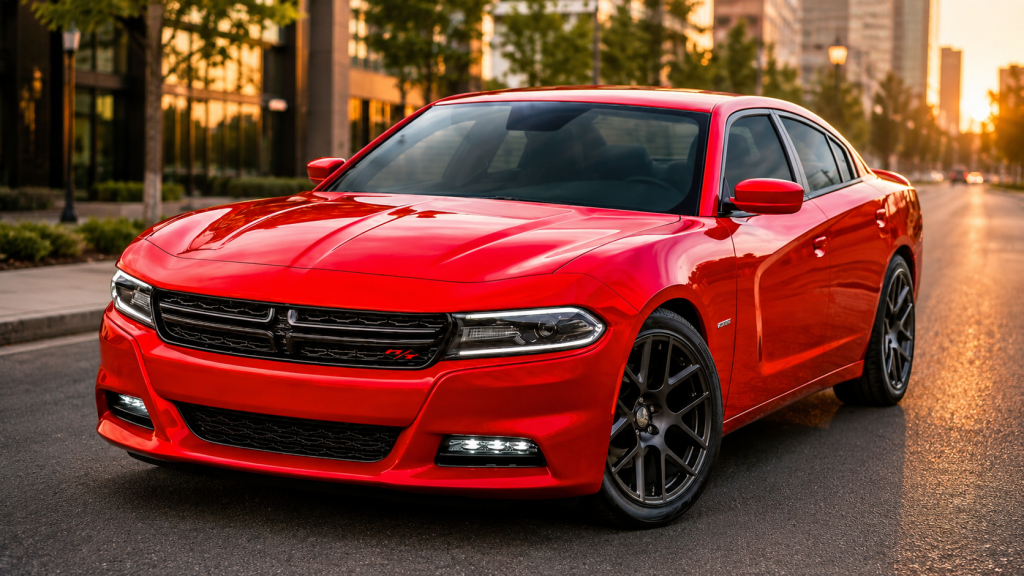
The Dodge Charger is heading to Europe, and it is bringing two very different powertrains with it. Dodge Europe has officially confirmed that both the all-electric Charger Daytona and the gasoline-powered Charger Sixpack will be sold in European markets.
What Makes This Lineup Different From Any Other European Launch
The combustion-powered Charger R/T Sixpack produces 420 hp, while the more potent Scat Pack version delivers 550 hp from a 3.0-litre twin-turbo six-cylinder engine. On the electric side, the Charger Daytona R/T generates 536 hp, and the top-of-the-range Daytona Scat Pack pushes that figure to 670 hp. Both coupe and four-door sedan body styles will be available across the lineup.
All versions come with standard all-wheel drive, which makes the Charger more practical in European weather conditions than some might expect from an American muscle car.
Fabio Catone, Head of Brand for Dodge in Europe, said the launch represents a chance to reintroduce an unmistakable American nameplate to buyers who value character and authenticity. According to Catone, “Charger has always been about standing apart, and that attitude is exactly what defines its return.”
How It Fits Into the European Market
The Dodge Charger is not a typical car for European roads. It is large, loud, and carries a personality that most European models do not attempt to replicate. The Charger has been part of American car culture for six decades, born in 1966 and built on a legacy of drag racing, fastback styling, and widespread pop culture appearances.
There is currently no direct competition for the Charger — gas or electric — in European showrooms, which means it would occupy a market segment largely on its own. That is both an opportunity and a challenge.
European deliveries are currently expected to take place sometime in the first quarter of 2027. Dodge says the Charger will be distributed through its import partner KW Automotive and its authorized dealer network, with spare parts handled by a company called Iron Parts.
The Detail That May Matter Most
The European launch comes as the Charger faces a difficult commercial period in the United States. In 2025, Dodge sold just 7,421 units of the electric Charger Daytona in the US, and sales fell sharply after the federal EV tax credit was eliminated. In the first quarter of 2026, only 240 Daytona units were sold in the American market.
European EV sales, by contrast, have continued to grow in recent quarters, which suggests the Charger Daytona could find a more receptive audience on the continent. Price remains an open question: Stellantis has not yet published a European price list, though the Charger is expected to cost more than the US starting price of $74,490 for the 2027 Daytona.
What Buyers in Europe Should Watch Next
Whether the Charger can build a genuine following in Europe will depend on competitive pricing, a reliable service network, and how well the brand communicates its identity to new audiences. The decision to offer both electric and gasoline-powered versions gives buyers more than one way to experience Dodge performance, while keeping the spirit of the nameplate intact.
For now, the Charger’s European chapter is just getting started. The full commercial picture — including final pricing, confirmed specifications per market, and dealer availability — is expected to become clearer as the planned 2027 delivery window approaches.