Ferrari’s first all-electric car finally has an American price, and it’s as eye-watering as you’d expect. The Ferrari Luce will start at $560,800 in the United States, with deliveries scheduled to begin in the second quarter of 2027, according to Car and Driver, as reported by autoevolution.
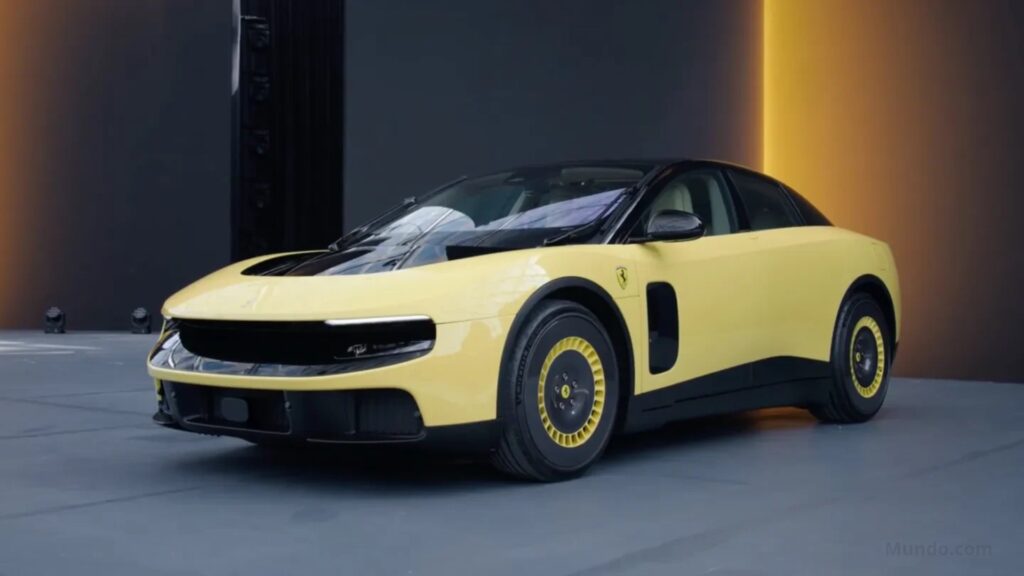
That makes the Luce one of the most expensive Ferraris in the current lineup, and far pricier than any other electric car on the road. But if you were hoping to get one, there’s a bigger problem than the price: Ferrari says its first two years of production are already spoken for.
A Price Above Ferrari’s Own SUV
To put the price in perspective, the Luce costs nearly $120,000 more than the Ferrari Purosangue, the brand’s four-door, V12-powered SUV. It’s also more expensive than the Rolls-Royce Cullinan, one of the most luxurious SUVs in the world.
Among electric performance cars, the gap is even bigger. The Porsche Taycan Turbo GT, one of the fastest EVs on sale, starts at $243,700 before options, less than half the Luce’s price.
Interestingly, the U.S. price came in lower than expected. In Europe, the Luce starts at €550,000 before customization, which works out to about $640,000 at current exchange rates, Motor1 reported. Autoevolution notes that the official U.S. price undercuts that conversion by nearly $80,000.
Already Sold Out
Price clearly isn’t scaring away Ferrari’s customers. According to autoevolution, Ferrari’s entire 2026 allocation of the Luce sold out in under two months after the car’s reveal, and order books already cover all of 2027.
Ferrari isn’t planning to build many. The company is targeting about 2,500 deliveries by 2030, or roughly 600 cars per year. That keeps the Luce rare and exclusive, two qualities Ferrari buyers value as much as performance.
Four Motors and More Than 1,000 HP
The Luce uses four electric motors, one at each wheel. The rear motors produce 355 kW each and the front motors 105 kW each, according to Motor1.
Total output is just over 1,000 horsepower. Autoevolution lists 1,035 hp, while Motor1 says the Luce can reach up to 1,050 hp in Launch Control mode. Drivers can choose different modes depending on how much power they want:
- Range Mode: 430 hp, top speed of 260 km/h (162 mph)
- Tour Mode: 617 hp
- Performance Mode: 986 hp, top speed of 310 km/h (193 mph)
Ferrari claims the Luce reaches 100 km/h (62 mph) in 2.5 seconds and 200 km/h (124 mph) in 6.8 seconds.
Battery, Range and Charging
The Luce is built on a dedicated electric platform with a 122 kWh battery that forms part of the car’s structure. The pack uses an 800-volt electrical system and is designed and assembled at Ferrari’s headquarters in Maranello, Italy, with battery modules developed alongside Korean supplier SK On.
Ferrari quotes a range of up to 329 miles (530 km) on the European WLTP cycle. U.S. EPA figures haven’t been announced and are typically lower. Fast charging tops out at 350 kW.
Ferrari also offers an eight-year, unlimited-mileage warranty on the electric powertrain.
At 2,260 kg (4,982 pounds), the Luce is the heaviest Ferrari ever made. To help offset that weight on the road, it uses active front aerodynamics and has the lowest drag coefficient of any Ferrari road car.
Five Seats and a Jony Ive Interior
Unlike most Ferraris, the Luce is a practical car. It seats five people, and because there’s no transmission tunnel, the middle rear passenger has more room than in a typical sports car.
The interior was co-designed by Ferrari’s Centro Stile and LoveFrom, the design studio founded by former Apple design chief Jony Ive and designer Marc Newson. Their influence shows in the aluminum and glass details, as well as the graphics and animations on the displays. Instead of giving the passenger their own screen, the central display can rotate toward whoever is using it.
What Does an Electric Ferrari Sound Like?
One of the biggest concerns about an electric Ferrari is the loss of the brand’s famous engine sound. Ferrari’s answer is unusual. Instead of playing fake engine noises, the Luce uses an accelerometer to pick up real vibrations from the electric motors and rear chassis. An algorithm then filters out unpleasant frequencies and amplifies the more musical ones.
The resulting sound can be heard inside and outside the car, and owners can turn it off entirely if they prefer silence, according to Motor1.
Why It Matters
The Luce is a turning point for one of the world’s most famous car brands. Ferrari built its reputation on engines, especially V12s, and many fans were skeptical about an electric Ferrari.
The early sales numbers suggest that wealthy buyers are willing to give it a chance, even at more than half a million dollars. Its success also matters beyond Ferrari: if the Luce proves that high-end EVs can sell out despite their price, other luxury brands may speed up their own electric plans.
For now, the Luce remains a car most people will only see in photos. But it marks the moment when even Ferrari went electric.