Honda is about to sell something it has never offered in Southeast Asia: a rugged, ladder-frame pickup truck. But the company isn’t building it from scratch. The new model will be based on the Mitsubishi Triton, one of the region’s best-known workhorses.
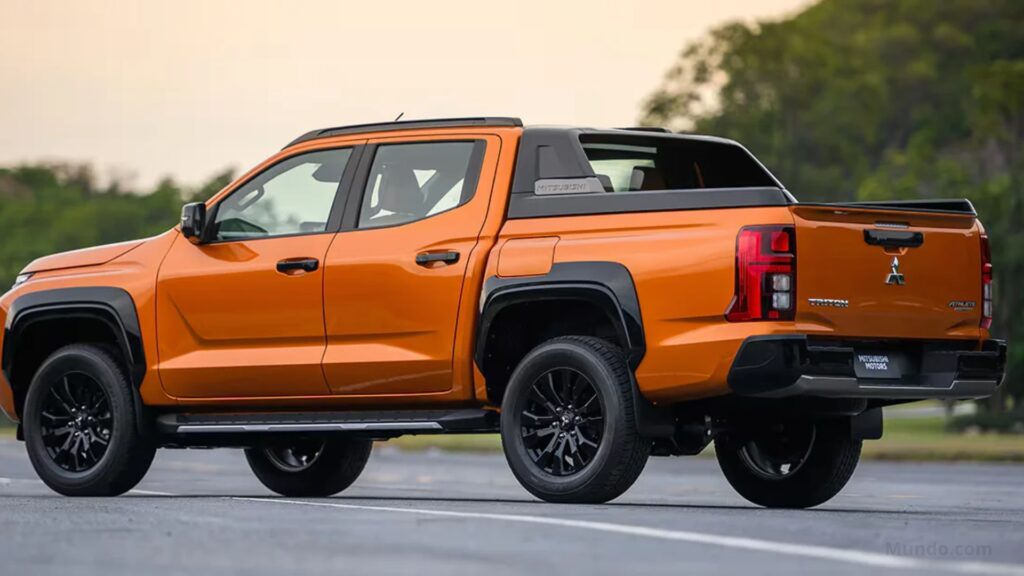
On October 22, 2026, Honda Motor Co. and Mitsubishi Motors Corp. announced that they had signed a memorandum of understanding (MOU) to develop a Honda pickup based on the Triton. The truck is scheduled to go on sale in ASEAN markets in 2028.
According to Honda’s announcement, it is “the first initiative between the two companies for complementary supply to each other’s product lineups.” Put simply, one automaker will supply a vehicle that the other sells under its own badge.
What Honda and Mitsubishi Announced
The official details are limited, but the key points are clear. Honda will develop a new model using the Mitsubishi Triton as its foundation. The Triton is a one-ton pickup built on a ladder frame, the traditional truck construction in which the body sits on a separate, heavy-duty chassis.
The new truck is aimed mainly at the ASEAN region, the Southeast Asian bloc that includes Thailand, Indonesia, Malaysia, the Philippines and Vietnam. Honda currently has no pickup truck in its ASEAN lineup.
Neither company has announced a name, design details, engine options or pricing for the Honda version. Honda also didn’t say exactly where the truck will be built. However, the announcement says the deal will help Mitsubishi increase production volume and improve capacity utilization at its plant in Thailand, where the Triton is produced.
Why the Triton Makes Sense
Pickups are a big business in Southeast Asia. People use them as work vehicles, as family transport and for everything in between, especially in Thailand, one of the world’s largest pickup markets outside North America.
Honda describes the Triton as one of Mitsubishi’s global strategic models, with particularly strong demand in ASEAN. The current generation debuted in 2023 in Thailand. At launch, Mitsubishi offered it with a 2.4-liter turbodiesel engine producing up to 204 PS and 470 Nm of torque in its most powerful version, according to Malaysian outlet Carlist.my.
Mitsubishi already shares the truck with another partner. Nissan’s latest Navara, sold in markets such as Australia and New Zealand, is also based on the Triton. With Honda joining in, the Triton platform will underpin pickups from three Japanese brands.
A Gap in Honda’s Lineup
For Honda, the deal fills an obvious hole. The company’s only pickup today is the Ridgeline, a unibody truck sold mainly in North America. The Ridgeline is built more like a crossover SUV, which makes it comfortable on the road. However, it isn’t designed for the heavy-duty work and tough conditions many ASEAN buyers expect.
Developing a body-on-frame pickup from the ground up would be expensive and time-consuming. Basing its truck on the Triton lets Honda enter the segment much faster. Honda’s announcement says the partnership will allow it to “quickly and efficiently enhance” its lineup.
Autoevolution reports that Honda will add its own styling touches while sharing everything under the body panels with Mitsubishi. That’s typical of this kind of arrangement, often called badge engineering: the mechanical parts stay the same, and the design and branding change.
What Mitsubishi Gains
The benefits go both ways. For Mitsubishi, selling Tritons to Honda means building more trucks in Thailand.
That matters because its Thai operations have room to spare. According to autoevolution, Mitsubishi’s Laem Chabang complex in Thailand can theoretically build about 420,000 vehicles a year. It produced only around 170,000 vehicles in 2025, roughly two-fifths of capacity, down from just over 310,000 in 2021.
Factories are expensive to run when they sit partly idle. Adding Honda-badged trucks to the production line could help Mitsubishi spread those costs over more vehicles.
The Bigger Partnership Behind the Deal
The pickup is the first concrete result of a partnership that began in 2024. On August 1, 2024, Honda, Mitsubishi and Nissan signed an MOU to study a strategic partnership. The three companies said they would use their respective products and technologies to strengthen their competitiveness.
That partnership has had a rocky history. Honda and Nissan later held talks about a full merger, but those discussions collapsed. Even so, the three companies have kept studying cooperation, including supplying vehicles to one another over the short, medium and long term, according to Honda’s announcement.
The Triton-based pickup shows what that cooperation can look like in practice. Instead of each company spending heavily to develop the same type of vehicle, they can share proven models and divide the costs.
Will It Come to North America?
For now, there’s no sign of that. The official announcement covers only ASEAN markets, and the Triton wasn’t developed with North American regulations or buyers in mind. Autoevolution suggests a U.S. or Canadian version is unlikely.
There has been speculation about Honda and Nissan sharing vehicles in North America, but nothing has been confirmed. Until the companies say otherwise, treat any talk of a Honda-badged body-on-frame truck for the U.S. as rumor.
Why It Matters
This deal reflects a broader trend in the auto industry. Developing new vehicles has become more expensive, especially as automakers spend heavily on electric cars, software and new technology at the same time. Sharing models lets companies keep their lineups competitive without paying the full cost of developing every vehicle themselves.
For Honda, the move gives it access to one of the largest and most important vehicle segments in Southeast Asia. For Mitsubishi, it helps keep a key factory busier. For buyers, it could mean more choice in a segment dominated by long-established names such as the Toyota Hilux, Isuzu D-Max and Ford Ranger.
Many questions remain. Honda hasn’t revealed how different its truck will look from the Triton, which engines it will offer or how it will be priced. Those details should become clearer as the 2028 launch approaches.