Samsung Electronics introduced its new “intelligent eyewear” at Galaxy Unpacked on July 22, 2026, framing it as the first step in a broader plan to make AI glasses a genuine companion device to the smartphone, rather than a niche gadget. On August 3, Samsung published an interview with James Choi, Executive Vice President and Head of the XR R&D Team within Samsung’s Mobile eXperience business, detailing the engineering choices behind the design.
Choi traced the project’s roots back to Galaxy XR, Samsung’s mixed-reality headset built with Google and Qualcomm. “Through our experience developing it, we learned how to design technology that people can comfortably wear on their faces,” he said. “We applied those insights to intelligent eyewear, focusing every engineering decision on comfort, fit, and everyday use.” Unlike a headset, glasses have to work as something people are willing to put on and keep on for hours in public — a much higher bar for comfort and design than most wearables face.
How Intelligent Eyewear Is Meant to Work
The glasses are built on Google’s Android XR platform and powered by Gemini, Google’s AI assistant, allowing them to respond to what the wearer sees and hears without requiring a screen to be involved. Samsung has been explicit that the goal isn’t to replace the smartphone. According to Choi, “our goal is not to replace the mobile phone, but to create AI glasses that help people use their phones less, while getting more value from the mobile experiences they rely on.”
In practice, that means voice-driven interaction, hands-free connectivity to a paired phone, and contextual AI assistance that responds to a wearer’s surroundings — checking a translation, identifying an object, or getting directions without pulling out a device. Shahram Izadi, Google’s Vice President and General Manager of Android XR, described the eyewear as combining “the best of Google’s AI and the Android ecosystem together with Samsung’s leadership in mobile hardware,” positioning the two companies’ roles as complementary rather than overlapping.
Fashion Meets Function
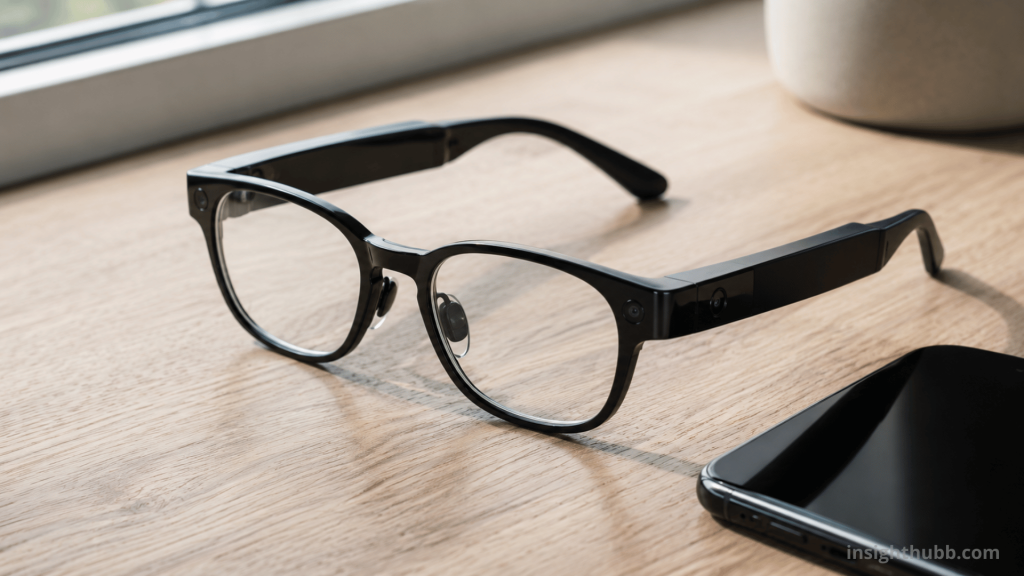
Samsung didn’t design the eyewear alone. The first two collections were created in partnership with eyewear brands Gentle Monster and Warby Parker, a deliberate move to avoid the styling problems that have hurt earlier smart glasses products. Gentle Monster’s design leans into a bold, fashion-forward black frame, while Warby Parker’s version takes a more understated, everyday-wear approach in brown. Hankook Kim, founder and CEO of Gentle Monster, said the partnership aimed to make the glasses “feel as emotionally expressive as it is technologically advanced.”
That framing reflects a broader industry lesson: earlier attempts at smart glasses, most notably Google Glass roughly a decade ago, struggled in large part because they looked and felt like technology first and eyewear second. Samsung and Google appear to be trying to avoid repeating that mistake by treating design partners as equal contributors rather than an afterthought.
What Comes Next
Samsung’s intelligent eyewear is scheduled to launch this fall in select markets, though the company has not yet released full pricing or a detailed specifications list. Google has separately said that privacy and public trust — not the underlying technology — represent the biggest hurdle to adoption, and has confirmed the glasses will include a reliable recording indicator light along with hardware designed to detect tampering, addressing concerns that dogged earlier camera-equipped wearables.
Why This Matters Beyond the Hype
Smart glasses have been promised as “the next big platform” for years without quite arriving, and Samsung and Google are betting that combining genuinely useful AI, mainstream fashion design, and tighter integration with existing phones can finally change that. Whether consumers are ready to wear a camera and microphone on their face throughout the day remains an open question — one that depends as much on public trust as on the underlying hardware. But with two of the largest players in mobile technology now aligned behind a single platform, intelligent eyewear looks less like an experiment and more like a genuine next step for how people interact with AI day to day.