Meta’s Connect 2026 conference, held at the company’s Menlo Park campus on September 23 and 24, made one strategic priority unmistakably clear: rather than betting everything on a single flagship AI wearable, Meta is trying to put AI-enabled eyewear on as many different faces, in as many different styles, as it possibly can. By the end of 2026, the company says it will offer more than 100 styles of AI glasses across its Ray-Ban, Oakley, and Meta-branded lineups — a dramatic expansion from where the product category stood even a year earlier.
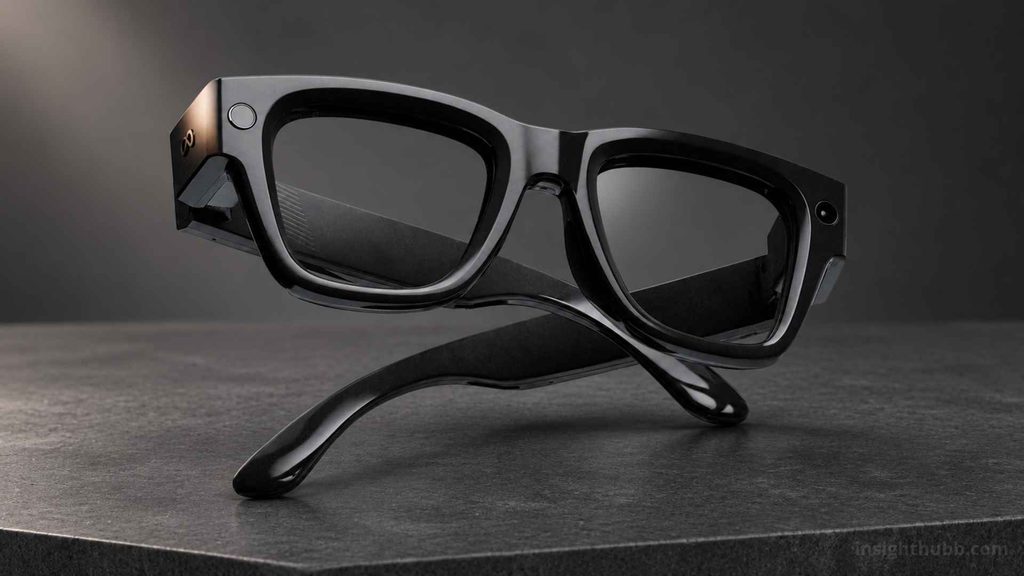
That breadth-first strategy shows up throughout everything Meta announced at the event, from a brand-new camera-free product line to a celebrity collaboration aimed squarely at fashion-conscious buyers who might never have considered smart glasses before.
A Version Built Specifically for the Privacy-Conscious
The most significant new product category is the Ray-Ban Meta Audio line — the company’s first AI glasses built entirely without a camera. Meta is positioning these explicitly for buyers who want hands-free access to Meta AI without the social friction or privacy concerns that come with wearing a camera pointed at the people around them. The audio-only glasses open for preorder immediately and begin shipping October 13, 2026, starting at $349, with prescription lens support included for buyers who need corrective vision.
Removing the camera doesn’t mean removing capability. The glasses still run open-ear audio and full access to Meta AI for voice queries, meaning users can ask questions, get directions, or control music entirely by voice — just without the ability to capture photos or video, a tradeoff Meta is betting a meaningful segment of shoppers will actively prefer rather than see as a compromise.
The Camera-Equipped Line Gets Real Upgrades Too
For buyers who do want the camera functionality, Meta refreshed its standard Ray-Ban Meta glasses with a slimmer physical design, a dedicated action button for quicker access to Meta AI, and battery life extended to up to nine hours — a full hour longer than the prior generation, which Meta had previously positioned as its best smart glasses of the year. New styles round out the lineup, including an Aviator design and a cat-eye frame called Zena, both aimed at broadening the line’s fashion appeal beyond the classic Wayfarer-style shape that has defined Ray-Ban Meta since launch. Meta also confirmed a celebrity partnership with K-pop star Lisa for a custom glasses collaboration, following a similar approach the company took previously with Kylie Jenner.
On the software side, Meta confirmed that its camera-equipped glasses will soon support capturing video in Dolby Atmos spatial audio, along with a dynamic photo feature that snaps multiple shots in quick succession and lets either the wearer or Meta AI pick the best result afterward.
A Much Lighter Approach to Virtual Reality
Beyond eyewear, Meta’s biggest hardware reveal was the Meta VR Glasses, a new headset the company says weighs five times less than the current Meta Quest — a genuinely dramatic reduction that moves the device’s form factor much closer to a pair of large sunglasses than a traditional bulky VR headset. Meta is positioning the VR Glasses primarily as a productivity tool rather than a gaming-first device, with support for holographic avatars that can appear in video calls through apps like WhatsApp and Zoom, complete with spatial audio that places a caller’s voice at the location of their virtual hologram. The Meta VR Glasses are expected to be available next spring, priced at $1,300, and run on Qualcomm’s latest Snapdragon Reality Elite processor with Meta AI built directly into the operating system.
Muse, Meta’s Personal AI Agent, Moves Onto Faces
Threading through nearly every announcement was Muse, the personal AI agent Meta first launched on September 8, 2026. At Connect, Meta confirmed that voice-activated Muse interactions are coming to its smart glasses lineup within the next few months, extending the assistant’s reach beyond phones and computers into a device people wear continuously throughout the day. The pitch is straightforward: Muse can see what the wearer sees and hear what they hear through the glasses’ sensors, responding in real time without requiring anyone to pull out a phone — a more ambient, always-available version of AI assistance than app-based tools typically offer.
Meta also previewed a still-in-development device called Muse Charm, described as a small, constantly connected companion gadget in the spirit of a Tamagotchi, intended to give users access to their Muse agent in a form factor other than glasses — suggesting Meta sees Muse itself as a product line that will eventually span multiple hardware form factors rather than living exclusively inside its eyewear.
Hearing Support Becomes a Built-In Feature, Not an Accessory
One of the more practically significant announcements involved accessibility rather than flashy new hardware. Meta confirmed that hearing enhancement will become available as an add-on for supported AI glasses models later this year in the US, priced at $149.99 — a price point Meta noted is HSA and FSA eligible — or included with a Meta One subscription. The company is also rolling out new audio balance controls, letting wearers shift sound toward one ear or route everything to a single side, a feature with real utility for anyone with asymmetric hearing needs.
What Meta’s Strategy Actually Signals
Meta’s approach at Connect 2026 reads less like a single hero product launch and more like an attempt to make AI glasses feel inevitable through sheer volume and variety — camera or no camera, fashion-forward or classic, hearing-assisted or standard, at price points from $249 up through $1,300 for the VR Glasses. That breadth strategy puts Meta in direct, escalating competition with other companies pushing into the same category this year, and it raises a genuine question worth watching: whether flooding the market with dozens of eyewear styles actually accelerates mainstream AI glasses adoption, or whether a smaller number of genuinely distinctive products would have made a clearer case to skeptical buyers. Either way, with audio-only glasses shipping in just a few weeks and the VR Glasses arriving next spring, 2026 is shaping up as the year Meta finds out.