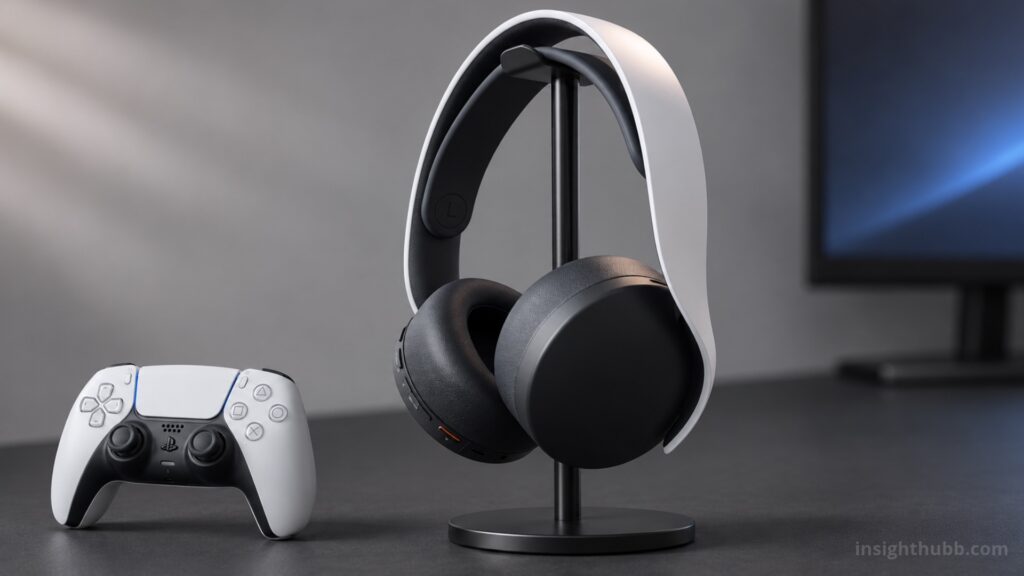
The new PlayStation Pulse wireless headset reached its announced launch date of November 19 in selected markets. Its US recommended price is $99.99, placing it within reach of players considering a dedicated gaming-audio upgrade.
A headset purchase is unusually personal. Sound preferences, room conditions, the shape of the listener’s head, and the way they communicate with friends all influence satisfaction. A list of features can identify possibilities, but it cannot settle every one of those questions.
This assessment examines the published product information and suggests how prospective buyers can evaluate the new headset without mistaking manufacturer descriptions for independent listening results.
The Main Features at Launch
PlayStation specifies custom planar magnetic drivers, PlayStation Link connectivity, Bluetooth support, an integrated microphone with AI noise rejection, and earcups that fold flat. The product page advertises up to 30 hours of battery life, subject to usage conditions.
The standard Pulse should also be distinguished from the forthcoming Pulse Edge, which adds features including active noise cancellation and a detachable boom microphone. Those extras should not be assumed to be present on the less expensive model. Understanding the exact product name is especially useful when comparing listings, photographs, or holiday offers across different retailers.
Audio Quality Is About More Than Strong Bass
A gaming headset can sound immediately exciting while making quieter information harder to follow. For a useful listening test, it helps to choose familiar material with a mixture of voices, ambient sound, and more energetic passages.
The question is whether important details remain understandable without repeatedly changing the volume. In a game, that might mean following dialogue while background effects continue. In music, it could mean hearing a singer clearly within a busy arrangement.
These are listening priorities rather than measured findings about this headset. They help buyers evaluate whether its presentation matches their preferences instead of assuming that a technical component guarantees a particular subjective result.
Spatial Audio Depends on the Complete Setup
Directional sound is valuable when it helps a player understand where an event occurs. However, the experience involves the game, console settings, audio processing, and listener as well as the headset itself.
A sensible first test uses a supported game the player already knows. Familiar surroundings make it easier to judge whether sounds feel consistently placed and whether that placement helps during play.
Changing several settings at once can make a comparison confusing. Adjusting one option at a time provides a clearer understanding of what produced an improvement. The goal is a comfortable, useful sound field, rather than choosing the most elaborate setting merely because its name suggests greater immersion.
The Microphone Deserves Its Own Evaluation
A headset can sound good to its owner while delivering less satisfactory speech to teammates. Communication quality is therefore worth testing separately from game audio.
One useful exercise is to ask a friend how speech sounds while typical background noises occur. A fan, keyboard, or nearby conversation can help reveal whether the voice remains understandable in the intended environment.
Manufacturer descriptions of noise rejection should be viewed as feature claims until performance is assessed under relevant conditions. It is also helpful to know how easily the microphone can be managed during play. A convenient communication routine matters more than a specification that the user rarely understands or controls.
Wireless Convenience Starts With the Right Connection
PlayStation’s support instructions describe connecting the headset to a PS5 using the included PlayStation Link USB adapter, which is paired with the headset out of the box. Compatible computers can also use the adapter, while mobile-device connections use Bluetooth.
The company recommends a front console USB port for the best Link connection by avoiding blockage or interference. Buyers should confirm which connection their intended device requires before assuming that every wireless mode behaves the same way.
That small preparation can prevent an otherwise confusing first setup. It also helps households understand whether a connection is dedicated to a gaming system or shared with another device.
Comfort Is Best Judged Over Time
A few minutes of wear can reveal an obvious fit problem, but longer sessions may expose pressure or warmth that is not immediately noticeable. Glasses, hairstyle, and head movement can also change the experience.
When possible, buyers should check a retailer’s return conditions and evaluate the fit carefully within those terms. Adjusting the headband before judging comfort is important because a poor initial position can distort the impression.
It is useful to separate secure fit from excessive pressure. The headset should remain stable during ordinary movements without making the wearer feel compelled to remove it frequently. That practical balance can matter more than a dramatic design or an appealing color.
Battery Claims Need an Everyday Charging Plan
An “up to” battery figure is a reference rather than a promise that every pattern of use will produce the same result. Volume, connections, and other conditions can affect the experience.
A buyer can think about the length and frequency of their usual sessions, then decide where charging will fit. A predictable routine is often more convenient than relying on the final portion of a battery.
It is also worth planning storage. A headset left where it can be knocked from a desk may have a less satisfying ownership experience regardless of its audio quality. A simple location for charging and storage makes the accessory easier to keep ready.
Who Should Consider the New Pulse?
The new model is relevant to players looking for a dedicated headset that connects with their gaming setup and also supports other everyday listening. The strongest buying case will come from matching those functions to actual needs.
Someone who mainly plays alone in a quiet room may prioritize different features from a person who regularly uses voice chat in a shared space. Comparing those scenarios prevents an unnecessary upgrade or an unsuitable compromise.
The Pulse launch adds a current option to the gaming-accessory conversation. Its value should be assessed through fit, communication, connection reliability, and familiar listening material. A useful purchase is one that makes the player’s normal sessions easier to enjoy, not simply one that adds another specification to the setup.