Lowe’s announced on September 24, 2026, that it has launched a drone delivery pilot program in partnership with DoorDash and Alphabet’s Wing, becoming what the company describes as the first home improvement retailer to offer the service. The pilot is live at a Lowe’s store in Matthews, North Carolina, a suburb of Charlotte, where eligible customers can now have select products delivered by drone in as little as 20 minutes.
Seemantini Godbole, Lowe’s chief information and AI officer, framed the move around a specific, familiar pain point for anyone in the middle of a home project: realizing mid-task that you’re missing one small item. “At Lowe’s, our mission is to solve problems and fulfill dreams for the home,” Godbole said in a statement. “To achieve this mission, we’re removing friction from home improvement and making it easier for customers to enjoy their home.”
How the Ordering Process Actually Works
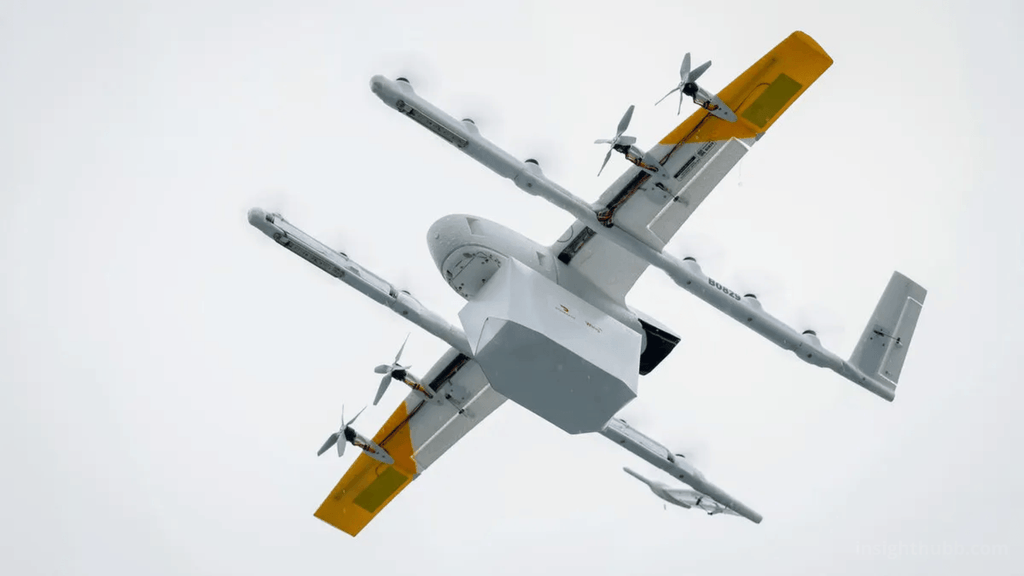
Customers don’t need a separate Lowe’s app or a new account to use the service. Eligible shoppers within the delivery area simply open the DoorDash app, where drone delivery now appears automatically as a fulfillment option for qualifying addresses, alongside a dedicated “Lowe’s by Drone” storefront customers can browse directly. More than 100 products are currently available through the pilot, curated specifically around the kind of small, easily forgotten items that can stall a home improvement project — hand tools, paint supplies, and other everyday household essentials that a shopper might not realize they’re out of until they’re already halfway through a task.
Wing’s drones can carry payloads of roughly 2.5 pounds per flight and operate within a 5-mile radius of the Matthews store, according to Lowe’s. That combination of weight and range limits keeps the service focused on small, urgent items rather than functioning as a replacement for larger home improvement deliveries like lumber or appliances, which will continue moving through Lowe’s existing delivery and truck-based logistics.
Building on an Established Drone Network, Not Starting From Scratch
Lowe’s isn’t asking DoorDash and Wing to build new drone infrastructure specifically for this partnership. The pilot builds directly on top of a drone delivery network the two companies have already established in the Charlotte area, having first launched their partnership in Australia in 2022 before expanding into US markets, including a Dallas-Fort Worth rollout. That existing infrastructure is precisely what allowed Lowe’s to stand up a working pilot relatively quickly, rather than spending years developing its own drone program from the ground up.
DoorDash has also been building out its own independent drone capability in parallel. In July 2026, the company earned Part 135 air carrier certification from the Federal Aviation Administration and launched DoorDash Air, an in-house drone delivery program — though DoorDash has said it intends to keep operating its existing partnership with Wing alongside that new capability rather than replacing one with the other.
A Different Strategy Than Amazon’s Approach
Lowe’s decision to partner with established drone operators rather than build proprietary technology sets it apart from how some of its largest retail rivals have approached the same problem. Amazon has spent years and billions of dollars developing its own in-house Prime Air drone program, handling flight technology, regulatory approval, and fleet operations entirely internally. Walmart has taken a middle path, partnering with multiple drone providers, including DroneUp and Zipline, across its network of stores rather than relying on just one.
By working with DoorDash and Wing instead of building its own fleet, Lowe’s avoids the substantial capital expense and lengthy regulatory approval process that comes with operating drones directly — a tradeoff that trades some long-term control over the technology for a considerably faster path to actually offering the service to customers today.
Part of a Broader AI and Automation Push
The drone pilot fits into a wider pattern of technology investment at Lowe’s beyond logistics. The company’s AI-powered customer assistant, Mylow, along with a companion tool for store associates called Mylow Companion, has answered more than 25 million questions since launching last year, according to Lowe’s. Godbole was careful to frame all of this technology investment as something that should stay in the background of the shopping experience rather than becoming the focus of it: “When associates and customers are interacting with Lowe’s, I really want the technology to disappear, and I want the experience to shine through,” she said.
Godbole also indicated the drone pilot is still in an active learning phase rather than a finished product. “We are observing. We are listening to the feedback from our store associates and from DoorDash,” she said, adding that expansion beyond the North Carolina pilot depends on how the trial performs before Lowe’s commits further.
Why This Small Pilot Is Worth Watching
A single-store pilot covering roughly 100 products within a five-mile radius won’t reshape how most people shop for home improvement supplies overnight, but it does mark a meaningful test of whether drone delivery makes sense for a retail category defined by urgent, small-item needs — the kind of last-minute run to the hardware store that drone delivery is arguably better suited to than a same-day truck delivery. If the Matthews pilot performs well, Lowe’s has signaled it’s open to expanding the program to additional stores, which would make it a genuine template for how mid-sized retailers can tap into drone delivery infrastructure that’s already been built by someone else, rather than waiting years to build their own.