Renault unveiled the 8 Gordini Concept on September 24, 2026, at its flagship Carwalk showroom on the Champs-Élysées in Paris, reimagining one of the brand’s most celebrated performance nameplates as a fully electric, two-seat coupe. The concept will next appear on Renault’s stand at the Paris Motor Show, running October 12 through 18, before eventually joining the permanent collection at Renault Collections, a heritage museum currently under construction in Flins that’s expected to open to the public in roughly 15 months.
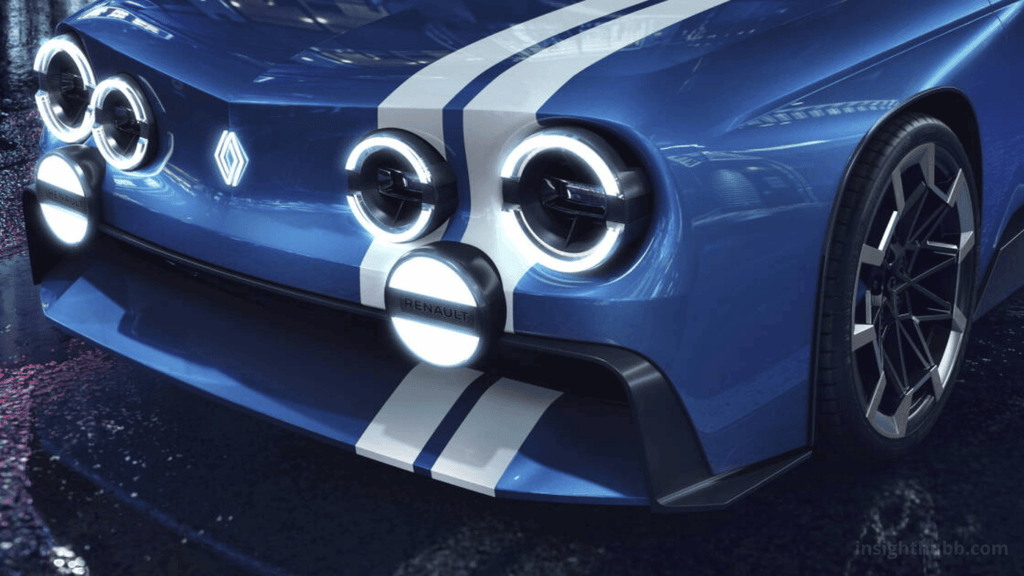
It’s worth being direct about what this car actually is: Renault has explicitly confirmed the 8 Gordini Concept is a one-off design exercise, not a preview of an upcoming production model. Described by the company as an “exploratory project,” it will not be sold, however much its striking styling might suggest otherwise to enthusiasts hoping for a modern Gordini they could actually buy.
The Legend Behind the Name
The original Renault 8 Gordini, affectionately nicknamed “la Gorde,” arrived in 1964 as a genuine oddity for its era — a rear-engine, rear-wheel-drive family sedan tuned by Amédée Gordini, an engineer so skilled at extracting power from small engines that his colleagues nicknamed him “the wizard.” According to accounts of his working methods, Gordini reportedly worked directly from the milling machine rather than a drawing board, dictating cuts to machinists and only sketching formal blueprints afterward. By 1966, Renault had upgraded the car with a five-speed gearbox, pushing output to 110 horsepower and a claimed top speed of 109 mph — modest figures by today’s standards, but genuinely quick for a compact family sedan six decades ago.
That performance pedigree made the 8 Gordini a rally staple that helped train a generation of drivers, including French rallying legend Jean Ragnotti. Its signature double white racing stripes over deep blue paint became one of the most recognizable liveries in French motorsport history, and the concept car’s designers have made sure that detail survives the transition to 2026 essentially untouched.
From 300 Sketches to One Finished Shape
Renault says the concept’s design emerged from an internal competition at Renault Design that drew more than 300 individual sketches, eventually narrowed down to two scale models that were ultimately merged into the final production shape. Rather than simply modernizing the original sedan’s proportions, the design team took a dramatically different structural approach: where the 1964 original was a four-door family car, the new concept is a low, wide, two-door, two-seat coupe measuring just 4.12 meters long, 1.88 meters wide, and 1.27 meters tall.
That squat stance is reinforced by staggered wheels — 19-inch units at the front and larger 20-inch wheels at the rear — a setup designers say was chosen specifically to suggest forward momentum while echoing the rear-wheel-drive character that made the original so engaging to drive. Pronounced wheel arches, a heavily sculpted rear haunch, and a wide rear section complete a look Renault’s designers have compared to a “reverse restomod” — a car that looks like it was aggressively modified for competition rather than simply aged gracefully.
Café Racer Details, Not Just Rally Cues
Beyond its rallying heritage, Renault drew inspiration from an entirely different source: café racer motorcycle culture, the custom-bike movement built around stripping vintage machines down to their essential mechanical elements. That philosophy shows up throughout the concept’s surfacing. The hood now lifts off as a single piece with no visible shut line, borrowing a detail more common on dedicated racing cars than road-going vehicles. The original’s chrome side molding has been reinterpreted as a sculpted crease pressed directly into the bodywork, rather than a separate bolted-on trim piece.
At the front, six circular headlights sit within a sharp, grille-less V-shaped nose — a direct callback to the extra lamps historically fitted to rally-prepared versions of the original 8 Gordini, now integrated into a single modern lighting signature. At the rear, the taillights sit nearly flush with the bodywork, disappearing almost entirely when switched off. The body itself wears a deep, three-layer interpretation of France’s traditional racing blue, executed in carbon fiber, with the Gordini’s twin white stripes used as an organizing design element that carries through into the cabin rather than remaining purely a paint scheme.
A Cabin Built Around Analog Touches
Inside, brushed aluminum replaces most of the plastic surfaces typical of modern concept car interiors, paired with circular digital displays arranged across a deliberately slim dashboard. The bucket seats use cool blue corduroy inserts, a direct nod to the flat, simple seating fitted to the 1964 original, and a red stopwatch-style control sits prominently in the cabin — a small detail that reinforces the concept’s motorsport framing over a purely luxury one.
Power comes from a single electric motor mounted at the rear, producing 266 to 270 horsepower depending on the source consulted, and driving the rear wheels exclusively — a deliberate decision to preserve the rear-wheel-drive character that defined the original car’s driving feel, even as the powertrain itself moves entirely into the electric era.
Part of a Deliberate Heritage Strategy
The 8 Gordini Concept isn’t an isolated nostalgia project — it’s the latest entry in a heritage-revival strategy Renault has pursued deliberately over roughly the past five years. It follows the R17 electric restomod created in collaboration with designer Ora Ïto and the Renault 5 Diamant art car developed with Pierre Gonalons, both one-off design studies rather than production vehicles. That pattern matters for one specific reason: Renault has, on at least one prior occasion, taken a heritage concept further than originally promised — the Renault 5 Turbo 3E ultimately reached limited production despite following a similar “concept only” framing at its own reveal. Whether the 8 Gordini follows that same path remains entirely speculative, but it’s a reasonable point of hope for enthusiasts disappointed by Renault’s insistence that this particular car will remain a single, unsellable example.
What This Concept Really Signals
Renault’s 8 Gordini Concept isn’t meant to be judged as a car anyone can buy — it’s meant to be judged as a statement about which parts of the brand’s 120-year history the company believes are worth actively cultivating rather than leaving in a museum archive untouched. By pairing genuine motorsport lineage with a fully modern electric powertrain, Renault is making a specific argument: that heritage and electrification aren’t in tension with each other, and that a nameplate built on rally-bred character in 1964 can carry that same character convincingly into a battery-powered future. Whether that argument eventually produces something buyers can actually order, as it did with the Renault 5 Turbo 3E, is a question only Renault’s own next moves will answer.