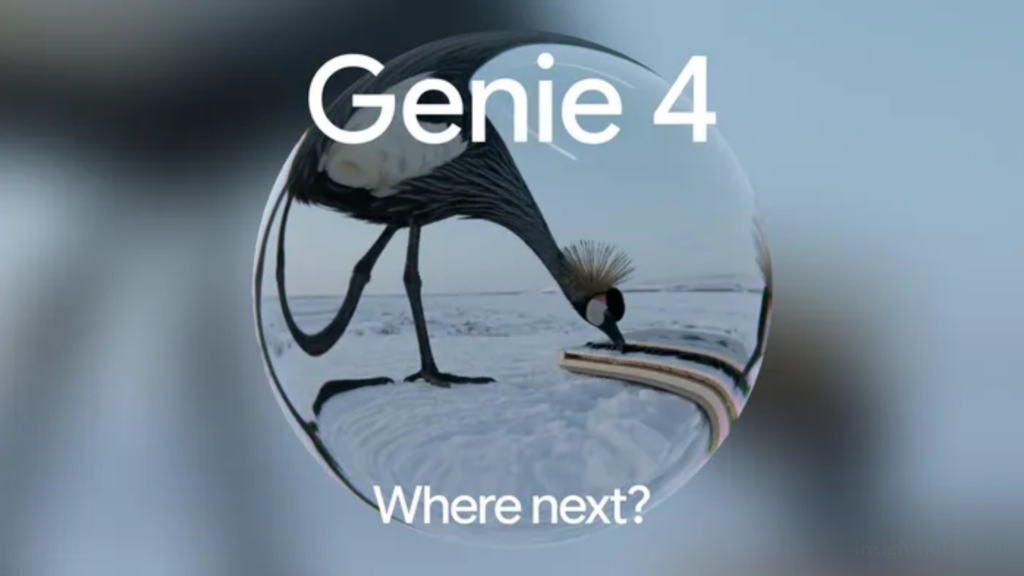
Google introduced an updated Project Genie experience on November 18 and announced developer access to Genie 4 through the Gemini API the following day. The development focuses on environments that users can explore and alter while an experience is taking place.
That makes it a different creative proposition from generating a single image. An interactive environment must respond to choices and preserve enough continuity for the user to understand what is happening.
The announcement is especially interesting for people exploring visual ideas, spatial storytelling, or early interactive concepts. Its practical appeal comes from making experimentation more immediate, while its experimental status remains important when judging the results.
What Google Has Announced
Google says Genie 4 can generate continuous 720p environments at 24 frames per second with native audio. Users can navigate and introduce changes through controls and live prompts.
The Project Genie update includes a creative agent and a community gallery, with access for eligible Google AI Ultra subscribers and a waitlist for AI Pro users. Developer access is available through the Interactions API and AI Studio. Google’s help documentation describes the service as an experimental research prototype and notes limitations involving responsiveness, visual consistency, and adherence to real-world physics. Generated environments should therefore be evaluated according to their intended purpose.
Interactive Generation Changes the Creative Question
A still image asks whether a scene communicates an idea. An interactive experience adds another question: what happens when someone tries to move through it or change it?
That creates opportunities to investigate the relationship between appearance and experience. A space may look welcoming from one viewpoint but become confusing when explored. An event may be visually striking without providing a clear reason to continue.
For a creator, this means the prompt is only the beginning. The interesting work involves observing how the experience behaves and deciding which responses support the original idea. Interaction becomes material to examine rather than a decorative feature added after the scene is complete.
Small Experiments Can Reveal More Than Large Worlds
A focused environment can make evaluation easier. Instead of attempting an entire fictional city, a creator might explore one room, one short route, or a single change in atmosphere.
The limited scope helps identify what is being tested. Is the goal to communicate scale, create a mood, or show how an event changes the setting? Each purpose suggests different observations.
This is a suggested creative workflow rather than a claim about guaranteed model behavior. A smaller experiment can make unexpected results more understandable because there are fewer competing elements. It also allows the creator to refine a question before investing effort in a more complex experience.
Spatial Visualization Needs Clear Boundaries
An exploratory environment can be useful for discussing how a place feels. However, that is different from establishing accurate dimensions, construction requirements, or physical performance.
A design conversation might use a generated scene to compare atmosphere or communicate an arrangement concept. Any decision requiring precision would need an appropriate verified model and supporting documentation.
Keeping that distinction clear protects the usefulness of the tool. It allows imaginative visualization to contribute without asking it to provide evidence it was not designed to establish. Creators can explain whether they are showing an inspiration, a proposed experience, or a technically validated plan so that the audience understands what conclusions are reasonable.
Audio Adds Another Layer of Meaning
Sound can influence how a scene is interpreted before anything visibly changes. A background rhythm, environmental noise, or spoken exchange can make the same visual setting feel different.
For creative testing, it is useful to examine those elements separately. A creator can ask what the scene communicates without sound and what the audio contributes when included.
This approach prevents a compelling presentation from hiding an unclear underlying idea. It also encourages deliberate choices about attention. If every sound competes for importance, the experience may become difficult to follow. A stronger design gives the listener a reason to notice particular events and a clear relationship between what is heard and what is seen.
A Shared Gallery Can Support Learning Through Comparison
Seeing different interpretations of a similar idea can help creators recognize the choices embedded in their own work. Two environments may begin from related prompts yet organize attention in very different ways.
A useful discussion asks what each version communicates and which changes would serve the intended audience. This keeps feedback focused on purpose rather than simply ranking the most impressive-looking result.
When sharing material, creators should also consider whether they have permission to use any reference images they supplied. Original or appropriately authorized inputs make a project easier to discuss and reuse. That practical habit supports collaboration by clarifying what others can legitimately build upon.
Developers Need to Evaluate More Than a Successful Demonstration
For a prototype intended to become part of a product, one engaging session is not a complete evaluation. Developers need to observe repeated behavior and consider what happens when the experience becomes inconsistent.
A clear design can include a defined stopping point and a way to communicate limitations to users. The purpose is to make the experience understandable even when it does not behave exactly as expected.
The project should also have an explicit learning goal. A team may be testing whether people understand an environment or whether a particular interaction is engaging. Naming that goal makes it easier to distinguish a useful finding from an entertaining but inconclusive demonstration.
Why Genie 4 Is an Interesting Development
The update brings attention to a form of generative AI in which people can do more than view an output. They can enter an evolving experience and observe how it responds.
That is a promising creative direction, provided the results are assessed with a clear sense of purpose. An exploratory scene, an entertainment prototype, and a technical simulation require different standards.
For readers curious about the technology, the best starting point is a small idea and a specific question. The value of the experiment comes from what it helps the creator understand, whether that involves spatial communication, storytelling, or interaction. A responsive world becomes meaningful when it provides insight beyond the novelty of watching it appear.