Honda presented the all-new Avancier on November 20, revealing a three-row SUV intended primarily for Asian markets, including Thailand, Japan, and China.
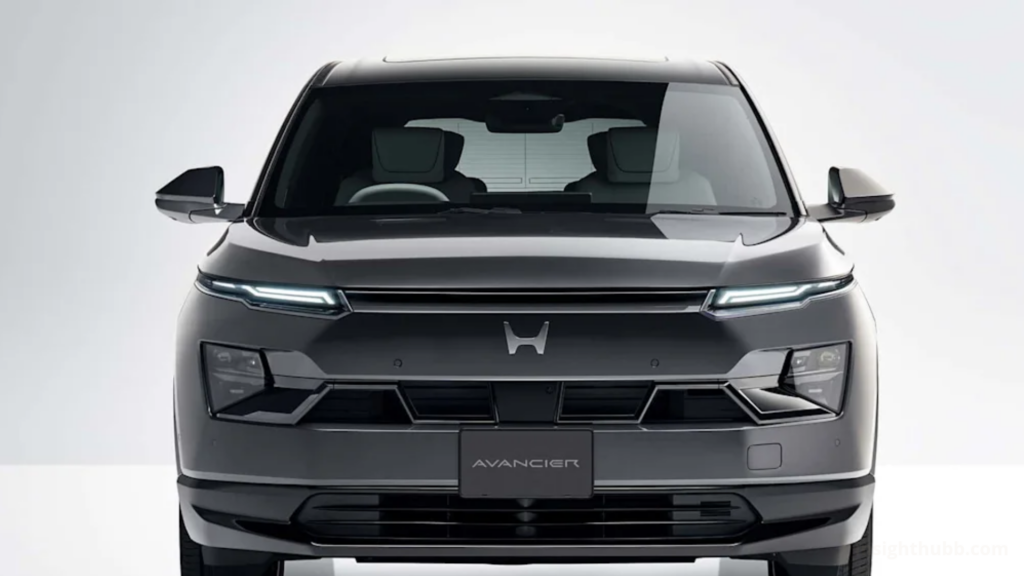
The world premiere places attention on the people traveling together. That makes the model particularly interesting from an interior-design perspective, where passenger access, seating relationships, and control placement can matter as much as exterior styling.
This article examines the announcement rather than reporting a drive. The central question is how a family-oriented cabin can become welcoming in practice, especially when different occupants have different expectations about space, entertainment, and comfort during the same journey.
The Main Elements of Honda’s Proposal
Honda describes the Avancier as the first model using its next-generation Honda Hybrid system and a newly developed platform. The interior includes a column-mounted shifter, a large central display, second-row comfort features, and a panoramic roof extending toward the third row.
The presentation also identifies a 12-speaker Bose system supporting Dolby Atmos. Remote cabin and surrounding-view functions are described as expected features, rather than capabilities that should automatically be assumed available in every version. Local specifications and the eventual production offer will be important when evaluating the exact vehicle sold in each market.
A Family Cabin Should Be Evaluated as a Shared Space
A useful way to inspect a multirow vehicle is to place people in several seats at the same time. An empty cabin can appear spacious while concealing compromises that emerge when occupants adjust their positions.
The relationship between rows matters. A comfortable second-row setting can affect the people behind it, while front-seat preferences influence the space available farther back.
Families can recreate their usual arrangement during a dealership visit. This includes considering the size of regular passengers and how frequently every seat will be used. The exercise shifts attention from a single attractive chair to the overall balance of the cabin as a place people will share.
Access Can Matter as Much as the Seat Itself
The experience of a third row begins before someone sits down. Door openings, the route past another seat, and the places available to hold or step all affect entry.
It is worth observing the complete movement without rushing. A passenger may be comfortable once seated but find repeated entry awkward. That difference matters when the row will be used frequently.
Households should also consider what happens when bags or other belongings are already inside. A convenient demonstration with an empty floor may not reflect a school pickup or a longer outing. The goal is to understand ordinary use rather than rely solely on the number of seats listed.
An Uncluttered Dashboard Still Needs Clear Operation
A visually calm dashboard can create a strong impression of openness. However, fewer visible controls do not automatically mean less effort during use.
Buyers should consider how common tasks are performed and how many steps they require. Adjusting ventilation, finding a setting, or responding to a prompt should be tested as a sequence rather than admired as a graphic.
The most useful interface makes its organization understandable to more than the primary driver. A second household member may only use the vehicle occasionally. A cabin that remains intuitive after time away can be more convenient than one whose clean appearance depends on hiding familiar actions in places that require repeated learning.
Storage Should Follow the Objects People Carry
A family vehicle collects objects that are rarely present in a promotional photograph. Water bottles, charging cables, tissues, snacks, and small bags all need somewhere to go.
Instead of counting compartments, a buyer can think about where each familiar item would sit and whether it remains accessible. A large space may be less useful if reaching into it requires moving several other things.
It is also helpful to consider different passengers separately. A convenient location for the driver may not assist a child or an adult in the rear. Good storage supports the activity of each row and reduces the need to pass objects back and forth during a trip.
Entertainment Works Best When Everyone Can Remain Comfortable
An elaborate audio experience can be appealing, but family journeys involve different preferences. Some passengers want music, others want conversation, and another may prefer quiet.
A useful evaluation includes speech as well as entertainment. Can occupants communicate comfortably? Are adjustments understandable? Does the arrangement allow the person driving to remain focused on the road?
Sound quality is personal and should not be inferred solely from a brand name or speaker count. Familiar material can help buyers form their own impression once the vehicle is available. The broader objective is a cabin that supports several people sharing time together rather than a demonstration centered on one dramatic listening moment.
Hybrid Ownership Needs a Local, Complete Comparison
An international technology reveal creates interest, but a purchase depends on the vehicle actually offered in the buyer’s country. Final equipment, service support, warranty terms, and pricing all belong in the same comparison.
The household’s journeys should also guide the evaluation. Regular passenger load, distance, traffic, and parking conditions provide more useful context than imagining only an ideal road trip.
A practical ownership estimate can include several reasonable scenarios rather than one assumed result. This helps keep the decision grounded while leaving room for the interior qualities that attracted attention in the first place. A family SUV must work as both a vehicle and a shared environment.
Why This Reveal Is Worth Following
The Avancier presentation is notable because it creates a clear conversation about comfort across rows. The most interesting follow-up information will show how those intentions translate into the exact production vehicles and their everyday operation.
Prospective buyers can prepare by identifying their own recurring difficulties: awkward access, misplaced belongings, competing entertainment needs, or controls that only one person understands.
That list makes a future visit more productive. Instead of asking whether the cabin looks luxurious, a household can ask whether it improves the way its members travel together. The strongest outcome would be an interior whose thoughtful arrangement remains useful long after the novelty of the first look has passed.