A research finding can be valuable and still struggle to reach the people who might use it. Understanding that gap is itself a meaningful field of study, especially for researchers beginning their careers.
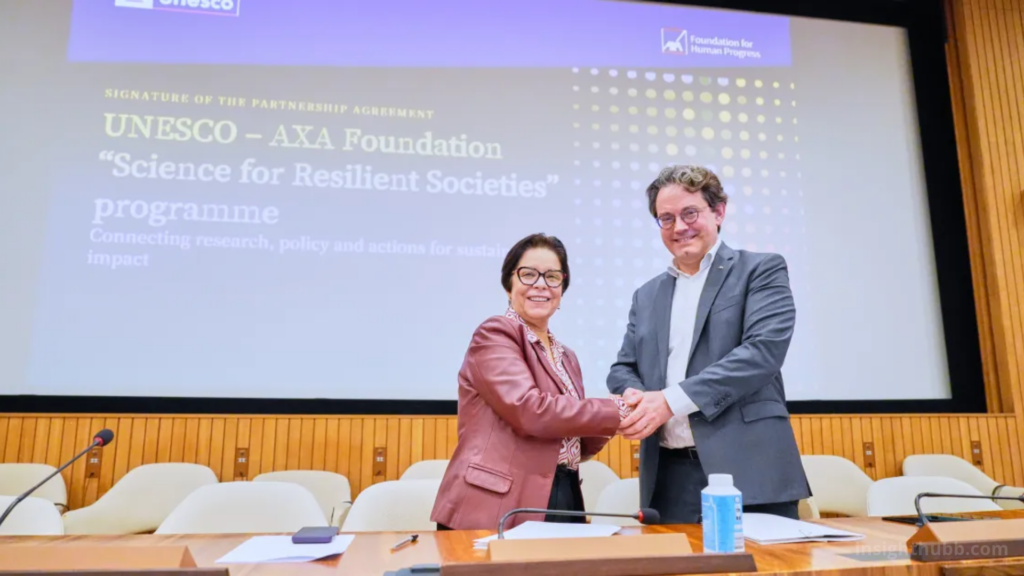
UNESCO and the AXA Foundation for Human Progress announced Science for Resilient Societies on November 18. The program connects support for early-career talent with investigation into how scientific evidence informs decisions.
For students considering research careers, the initiative offers an encouraging example of the variety of work that scholarship can involve. Producing knowledge is one part of the process; communicating it and understanding the institutions around it can be equally important.
What the Program Will Support
The four-year program will fund ten early-career researchers in two cohorts of five, representing UNESCO’s five regions. Each fellowship provides 24 months of support, with academic and institutional mentoring and research placements.
The research areas include health, climate and the environment, socioeconomic development, and emerging technologies. The first cohort is scheduled to begin its fellowships in October 2027. The announcement describes the program’s structure and future timeline; it should not be interpreted as confirmation that applications are currently open. Interested researchers would need to consult the eventual official eligibility and application information.
Research Careers Can Extend Beyond the Laboratory
A student may picture research primarily as conducting an experiment or analyzing a dataset. Those activities remain important, but another set of questions concerns how findings are understood and used.
Who needs the information? What form would help them assess it? Which constraints influence their ability to act? Investigating these questions can connect academic work with the everyday operation of institutions.
This broadens the picture of a scientific career. A researcher can contribute through careful analysis while also learning about communication, organizational processes, and the limits of existing evidence. Those interests do not reduce the importance of technical quality; they help explain how that quality becomes useful outside a specialist audience.
A Clear Question Makes Collaboration Easier
A research project is easier to discuss when its central question is precise. Broad ambitions can provide motivation, but a manageable inquiry creates a foundation for methods and evaluation.
For example, studying why information fails to reach a particular audience is different from assuming that the audience simply needs more information. The obstacle might concern timing, format, access, or the way decisions are organized.
Beginning with an open question allows the research to reveal the problem rather than merely confirm an expectation. It also helps potential collaborators understand what contribution is being requested and what the project can realistically establish within its available time.
Mentoring Is Most Useful When Roles Are Clear
Early-career researchers may benefit from more than one kind of guidance. Advice about a method differs from insight into the needs of an institution or the expectations of a nonacademic audience.
A productive mentoring relationship makes those responsibilities understandable. The researcher should know where to seek feedback on a technical decision and where to discuss questions about context or communication.
Clear expectations also help protect the project’s direction. Frequent feedback can be valuable without turning the work into a collection of unrelated requests. Establishing priorities, meeting points, and the purpose of each conversation gives the researcher a better chance to integrate guidance while retaining a coherent research question.
Communicating Uncertainty Is a Research Skill
An accessible explanation should remain faithful to the strength of the evidence. Making a result easier to understand does not require removing every qualification.
A useful communication identifies what was studied, what was found, and which conclusions remain uncertain. It can also explain how a result might change under different conditions.
This is particularly important when a finding reaches people who will not read the full technical work. They need an honest account of the limits as well as the implication. Early-career researchers can practice that skill by preparing a short explanation for an unfamiliar reader and checking whether the intended meaning survives without specialist terminology.
A Short Brief Should Help the Reader Think
A concise research summary is most valuable when it answers a question the audience recognizes. Beginning with the problem creates a reason to continue reading.
The explanation can then describe the relevant evidence, distinguish findings from interpretation, and identify what remains to be investigated. The goal is to make the reasoning visible rather than simply produce a persuasive conclusion.
For students, preparing such a document can improve the underlying project. If an important step cannot be explained clearly, it may need additional work. Communication becomes part of research quality, helping the author recognize assumptions and decide which information is essential for someone else to understand the argument.
International Exchange Requires Attention to Context
Researchers working across regions may discover that familiar categories do not capture every local experience. An approach that appears straightforward in one institution may require a different design elsewhere.
Useful collaboration therefore includes listening to how people define the problem and what resources are actually available. Shared methods can support comparison, but they need enough flexibility to avoid erasing relevant differences.
This is also a learning opportunity for students. Encountering a different explanation of the same issue can make assumptions more visible. The purpose of exchange is not to declare one setting a universal model, but to develop questions and interpretations that remain meaningful where the work is conducted.
What Students Can Take From This Announcement
Even before specific application opportunities are available, the program offers a useful reminder about preparation. Students can strengthen a research portfolio by defining a manageable question, documenting methods, and practicing clear explanation.
They can also seek opportunities to understand the people or institutions connected with their topic. That experience can reveal practical questions that deserve careful investigation.
The UNESCO and AXA announcement is positive because it recognizes early-career researchers as contributors to a broader knowledge ecosystem. A fellowship can support an individual project, while the skills developed through it can last much longer. Careful inquiry, honest communication, and thoughtful collaboration remain valuable foundations for turning academic work into something others can understand and use.