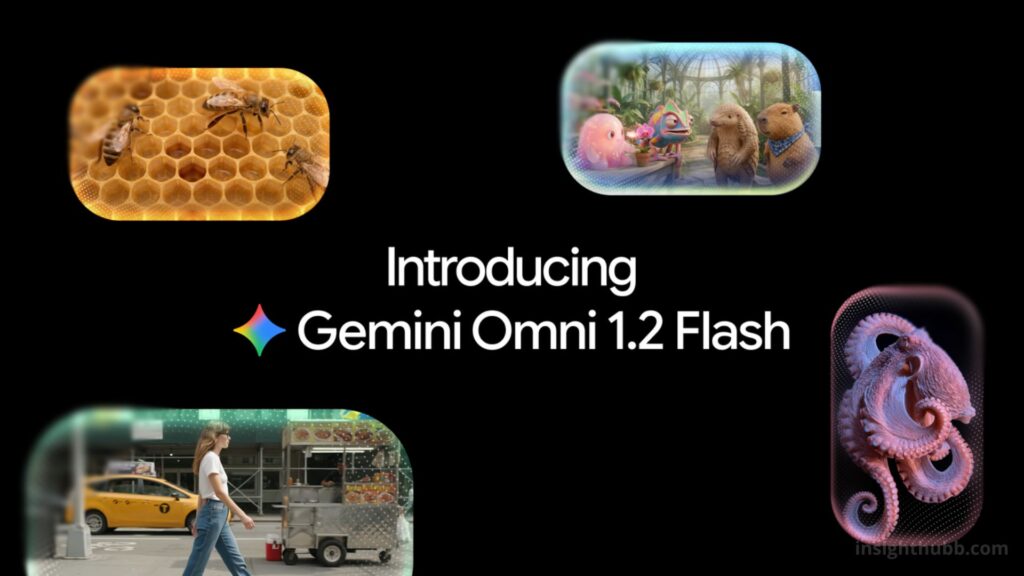
Gemini Omni 1.2 Flash is expanding Google’s short-video generation offering. Announced on November 5, the update supports native clips up to 15 seconds, conversational editing and improved reference following, according to Google. The company lists 720p generation at $0.07 per second, a 30% reduction from the preceding version.
The announcement matters for creators because a short video is a sequence of decisions, not simply a moving image.
A product needs to remain recognizable. A camera movement needs to support the message. The final frame needs to leave the viewer with a clear impression.
Longer generation can create more room for that sequence, but it also creates more material to inspect. The practical value will depend on how consistently the output follows the brief and how much work remains before publication.
Fifteen seconds should begin with one message
A short clip works best when its purpose is clear.
A hypothetical business might want to introduce a new item, show a simple benefit or establish the atmosphere of an event. Trying to achieve all three at once could make the result difficult to follow.
Before generating, the creator could write a single sentence describing what the viewer should understand. That sentence would guide the subject, movement and ending.
The same brief should also identify what must remain accurate. Product shape, packaging and text may be essential to the message.
A focused instruction provides a clearer basis for judging the output than a general request to make something impressive.
Reference images introduce a consistency test
Google says the model can use references involving products, characters, styles and short motion cues.
For a creator, the important question is which details remain stable throughout the clip.
A useful test could use a fictional product with recognizable colors and a simple label. The reviewer could inspect the beginning, middle and end rather than judge only the opening frame.
If a shape changes or text becomes unclear, that could affect whether the clip is usable.
This is a proposed evaluation method, not a claim that the model has passed every consistency test. Manufacturer descriptions establish the intended capability; repeated trials reveal how well it serves a particular project.
Editing should preserve the parts that already work
Conversational editing could be valuable when a clip is close to the intended result but needs one adjustment.
The practical test is whether that change can be made without disrupting successful details.
For example, a creator might want slower movement while preserving the subject’s appearance and the composition. The revised clip should be compared with the original brief, not simply accepted because the requested motion changed.
A useful workflow would keep a small record of versions and the reason for each revision. That makes it easier to choose the best result and avoid losing a successful direction during experimentation.
The objective is controlled improvement rather than endless variation.
The announced price is only part of production cost
At the listed rate, a single 15-second 720p generation would have a base cost of $1.05. That is a calculation from Google’s announced per-second price; it does not include additional attempts, other services or applicable charges.
For a real project, the more useful measure is the cost of a publishable result.
A creator could track how many attempts were needed, how long review took and whether external editing remained necessary. That would provide a clearer comparison with an existing production method.
A low generation price can be attractive, but it should be assessed together with the work required to obtain and finish the desired clip.
A complete review includes every frame
Video errors can appear briefly and still affect the final impression.
A review should therefore include normal playback and slower inspection around important movements. Text, hands, product edges and transitions deserve attention when they carry the message.
The creator should also watch the ending. A clip that begins strongly may finish in a way that makes it difficult to combine with other material.
This is ordinary quality control for generated content. The point is to establish whether the whole sequence remains suitable, not simply whether a few selected frames look convincing.
A clear review process makes the output easier to assess consistently.
Sound and visual timing should support each other
A short video can feel confusing when the visual emphasis and the intended audio message do not align.
Even when the final sound is added separately, the creator should plan where a key phrase or musical change belongs. The generated movement can then leave room for that moment.
A hypothetical product introduction might begin with context, move toward the item and finish with a stable view suitable for a title added during editing.
That structure would give the clip a purpose beyond visual novelty.
The strongest result is one in which the audience can follow the intended progression without needing to replay the video to understand it.
Generated scenes should match the publication’s purpose
Different uses require different levels of literal accuracy.
A conceptual background can allow imaginative interpretation. A clip presented as a demonstration of a real product needs closer attention to what the product actually does.
Creators should define that boundary in the brief and review the output accordingly.
They should also confirm that the source materials they use are appropriate for the project. A clear relationship between the reference, the generated result and the intended claim makes the final content easier to defend editorially.
This is especially important when a polished scene could be mistaken for documentary footage.
Why This Matters
Gemini Omni 1.2 Flash adds flexibility to the production of short generated video.
Its most useful promise is a workflow in which creators can develop a focused idea, revise it deliberately and reach a usable result at a manageable cost.
The announcement provides the feature direction and pricing reference. Direct trials will establish consistency, editing control and the amount of finishing work required.
For creators, a well-chosen test brief is the best next step. One complete, carefully reviewed clip will reveal more than a large collection of impressive but unfinished experiments.