Apple may be preparing to turn AirPods into something far more capable than wireless earbuds. According to recent reports, the company is developing a new model equipped with cameras and artificial intelligence designed to understand the user’s surroundings.
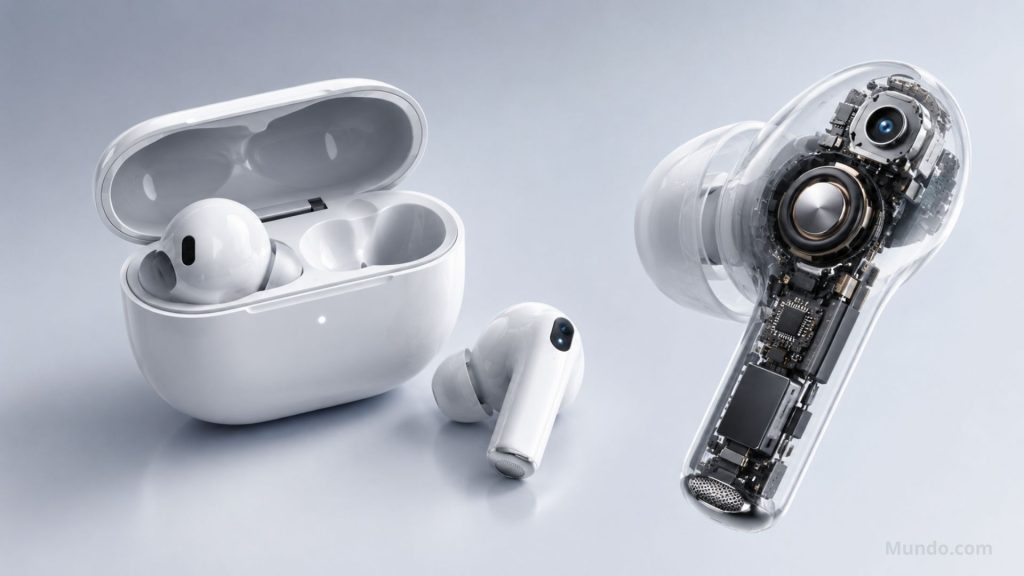
The rumored device is reportedly known internally as B790. References discovered in iOS 27 suggest that Apple may already be preparing the software needed to support the product. However, Apple has not officially announced the AirPods or confirmed their features, release date or price.
If the project reaches consumers, these AirPods could allow Siri to recognize objects, interpret signs and provide contextual assistance without requiring users to take out their iPhones.
The Cameras Would Not Be Used for Traditional Photography
The word “camera” may raise expectations that the AirPods could capture photos or record video. Nevertheless, that does not appear to be the purpose of the technology.
Instead, the cameras would reportedly collect low-resolution visual information that Siri and Apple’s AI systems could analyze. According to information attributed to Bloomberg journalist Mark Gurman, Apple employees have been actively testing prototypes as the product moves closer to an early production stage.
For example, a user could look at several ingredients and ask Siri what meal they could prepare. The AirPods might also recognize a product, identify a nearby location or provide information about an object in front of the wearer.
This approach would give Siri visual context rather than forcing the assistant to depend entirely on spoken descriptions.
How AI-Powered AirPods Could Work
The proposed system would combine visual sensors, microphones, Siri and artificial intelligence. When activated, the AirPods could observe part of the user’s surroundings and use that information to answer questions through audio.
Potential applications may include:
- Identifying objects and everyday products.
- Reading and translating signs or printed text.
- Providing contextual navigation instructions.
- Describing nearby places or landmarks.
- Suggesting recipes based on visible ingredients.
- Supporting users with visual impairments.
- Offering information without requiring an iPhone screen.
Reports indicate that the design could resemble the AirPods Pro, although slightly longer stems may be needed to accommodate the additional hardware. A small LED could also alert people when visual information is being processed.
These details remain unofficial and may change before any commercial release.
Translation and Accessibility Could Be Major Benefits
Real-time translation could become one of the most practical uses for camera-equipped AirPods. A traveler might look at a restaurant menu or transportation sign written in another language and ask Siri to translate it.
The translated information could then be delivered directly through the earbuds. This would create a more natural experience than repeatedly pointing a smartphone camera at signs.
Accessibility may be equally important. Visual intelligence could help users identify products, understand printed instructions or receive spoken descriptions of unfamiliar surroundings.
Researchers are already exploring similar concepts. A 2026 research project called VueBuds demonstrated that cameras integrated into wireless earbuds can support text reading, translation and real-time scene understanding. The experiment also showed how two ear-level cameras could provide useful forward coverage while consuming relatively little power.
Why Apple May Choose AirPods for Visual Intelligence
Smart glasses have become one of the most visible formats for wearable AI. However, AirPods offer Apple a different advantage: they are already familiar to millions of users and naturally support voice-based interactions.
Adding visual awareness could allow Apple to introduce many smart-glasses-style capabilities without asking customers to adopt an entirely new category of device.
The project also fits Apple’s broader investment in AI-powered audio. In January 2026, the company acquired Q.ai, a startup specializing in machine learning technologies capable of improving audio in difficult environments and recognizing whispered speech. Apple did not explain exactly how it would use the technology, but the acquisition reinforces its interest in combining advanced AI with audio devices.
Privacy Will Be an Important Challenge
Wearable cameras inevitably create privacy concerns, even when they are not designed to record conventional photos or videos.
Apple would need to explain when the sensors are active, what information they collect and whether processing takes place on the device or through cloud-based systems. Users would also need clear control over when visual recognition is enabled.
A visible indicator could provide some transparency, but Apple may need additional protections to reassure users and people nearby. The company’s ability to present the technology as private, controlled and useful could determine whether the product gains public acceptance.
Battery life presents another challenge. Cameras and AI processing require additional energy, while AirPods have very limited internal space. Apple would have to balance visual features with comfort, size and listening time.
When Could Apple Release AirPods With Cameras?
Reports suggest that Apple’s prototypes are approaching an early mass-production testing phase. The company may be considering a launch before the end of 2026, potentially alongside other hardware announcements.
Still, no launch window is guaranteed. The product has reportedly been affected by delays involving Apple’s upgraded Siri, which would be central to the visual experience. Apple may postpone the earbuds further if the software is not ready.
There is also no confirmed commercial name. Terms such as “AirPods Ultra” have appeared in online speculation, but Apple has not validated them.
Why This Matters
Camera-equipped AirPods could mark an important change in the evolution of wireless earbuds. Rather than serving only as listening devices, they could become discreet AI assistants that hear questions, interpret surroundings and deliver useful information in real time.
The concept could make translation, navigation and accessibility tools easier to use throughout the day. At the same time, Apple must address privacy, battery life and practical accuracy before visual intelligence can become a convincing everyday feature.
For now, the product remains unconfirmed. However, reports that Apple is actively testing advanced prototypes suggest that the company sees AirPods as a potential gateway to the next generation of wearable AI.