Amazon announced on August 19, 2026, that it plans to grow its Prime Air drone delivery service to nearly 500 cities and towns across the United States by the end of the year roughly a sixfold increase from its current footprint. The company says the expansion will bring ultrafast drone delivery within reach of tens of millions of customers who don’t currently have access to the service.
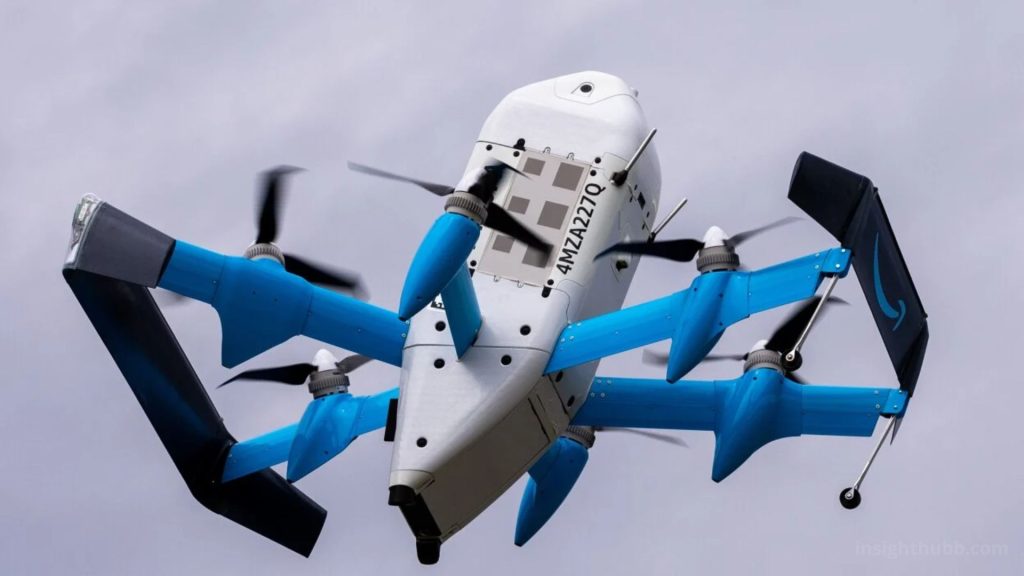
Prime Air currently operates out of 11 sites across seven states, covering suburban areas around Phoenix, Tampa, Kansas City, Omaha, Baton Rouge, Detroit, Houston, San Antonio, and Dallas. The next wave of expansion will bring the service to the metro areas of Chicago, Atlanta, Cleveland, Syracuse, and Boise, with additional locations expected to be announced later in the year. “We’ve already delivered hundreds of thousands of packages to customers by drone this year, and by the end of 2026 we plan to reach customers in nearly 500 cities and towns,” said David Carbon, vice president of Amazon Prime Air.
How Prime Air Actually Works
Each Prime Air delivery site covers roughly 175 square miles, with orders arriving in as little as 30 minutes and typically within an hour. The drones are limited to packages weighing 5 pounds or less, but Amazon says the eligible catalog is still substantial, spanning groceries, electronics, cosmetics, medications, and household products. Prime members get free drone delivery on orders of $50 or more; orders under that threshold cost $2.99 for Prime members and $4.99 for non-members.
Amazon says the drones navigate using onboard cameras and sensors rather than a live video feed monitored by a human operator, and can operate in light rain across a range of temperatures. The company holds Federal Aviation Administration Part 135 certification — the same regulatory framework applied to commercial air carriers — along with waivers allowing flights beyond the direct line of sight of a human pilot, a requirement that would otherwise significantly limit how far and how efficiently the drones could operate.
A Regulatory Track Record With Some Bumps
Prime Air’s expansion hasn’t been entirely smooth. In October 2025, two Amazon drones struck a crane in Tolleson, Arizona, triggering separate inquiries from both the National Transportation Safety Board and the FAA. Notably, Tolleson is among the locations included in this new expansion wave, suggesting Amazon considers the issues from that incident resolved. The company hasn’t detailed publicly what changes, if any, were made to its operations in response to the crane collision.
Beyond individual incidents, drone delivery services more broadly face an ongoing challenge that has nothing to do with the technology itself: community tolerance for daily drone noise. As Amazon and its competitors scale up simultaneously, more neighborhoods will be exposed to regular low-altitude drone traffic for the first time, and how residents respond to that noise remains one of the bigger open questions for the industry’s growth.
Amazon Isn’t the Only One Racing to Scale
Amazon’s expansion is happening alongside aggressive growth from rivals. Alphabet’s Wing has surpassed 1 million commercial drone deliveries and operates in 20 U.S. markets, while drone delivery company Zipline has logged 2 million deliveries across four continents. Walmart, meanwhile, announced its own drone delivery expansion plans two months before Amazon’s latest update, saying it expects to reach 40 million customers by next year. Internally, Amazon has set a target of 1 million Prime Air deliveries for 2026 alone, according to a recording of an internal all-hands meeting reported by CNBC.
What This Means for Shoppers
For customers in one of the newly added metro areas, the practical change is a genuinely faster delivery option for a specific, limited category of lightweight items not a replacement for standard Amazon shipping, but an additional tier for situations where speed matters more than selection. Given how quickly Amazon, Walmart, Wing, and Zipline are all scaling at once, drone delivery is shifting from a novelty available in a handful of test markets to a mainstream option many shoppers will have access to within the next year. Whether that shift changes how people shop day-to-day, or simply adds a faster option for occasional use, will likely become clearer as more of these nearly 500 planned locations actually go live.