Alibaba shares jumped roughly 3% in Hong Kong on September 22, 2026, after the Chinese technology giant used its annual Apsara Conference in Hangzhou to unveil a new AI chip and a sweeping plan to expand its data center footprint. The announcement was significant enough to catch investors’ attention on a day already crowded with major tech and geopolitical news, underscoring how closely markets are now tracking any signal about which companies are winning the underlying infrastructure race behind the AI boom.
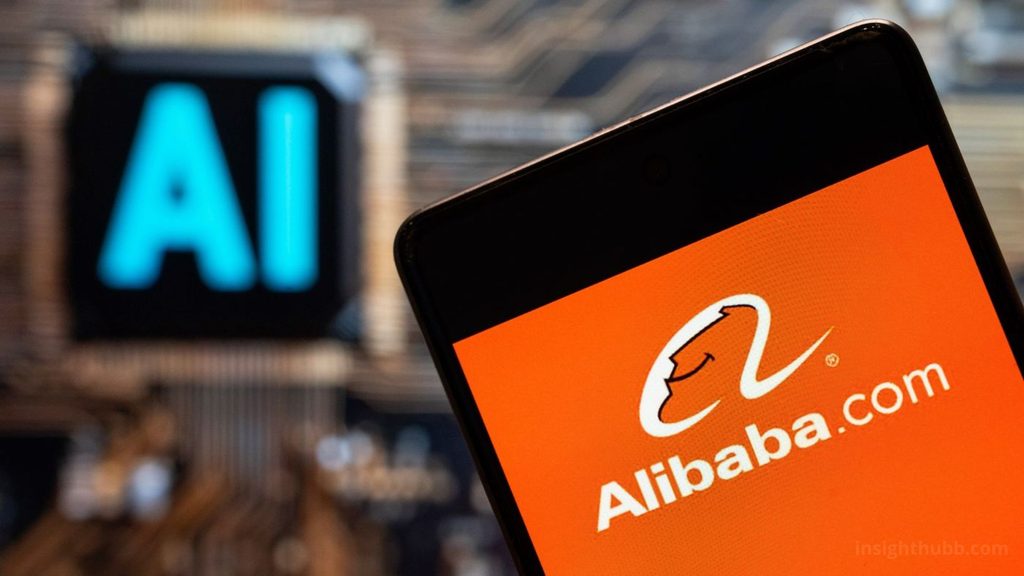
At the center of the reveal is the Zhenwu V900, a new AI accelerator chip from Alibaba’s in-house chip design division, T-Head. The company says the V900 delivers three times the performance of its predecessor, the Zhenwu M890, which Alibaba released just this past May — an unusually fast generational leap even by the accelerated pace of AI hardware development over the past few years.
Built to Scale Into Massive Clusters
Alibaba CEO Eddie Wu said the Zhenwu V900 can be combined into clusters of up to 500,000 units to power the training of frontier AI models — the largest, most capable systems a company builds, which typically require enormous coordinated computing power working in parallel. That scalability is the chip’s real selling point: individual chip performance matters less in this market than how efficiently thousands of chips can be linked together into a single functioning system, since training a leading-edge AI model increasingly depends on that kind of massive, tightly coordinated infrastructure rather than any single component.
Alibaba has positioned the V900 explicitly as a chip meant to compete with Nvidia, the dominant global supplier of AI training and inference hardware. Given continued export restrictions limiting Chinese companies’ access to Nvidia’s most advanced chips, a credible domestic alternative capable of anchoring frontier-model training carries strategic weight well beyond its technical specifications alone.
A Six-Year Runway to 20 Gigawatts
Alongside the chip, Wu laid out Alibaba’s data center ambitions in stark numbers: the company is targeting more than 20 gigawatts of global data center capacity for Alibaba Cloud by 2032, citing what he described as “exponentially rising demand” for AI computing. That figure, while enormous for a Chinese company, is worth putting in context — SoftBank Group, for comparison, has separately outlined plans for a computing center in Ohio alone that could reach 10-gigawatt scale, suggesting Alibaba’s blueprint, however ambitious domestically, still trails some of the largest global buildouts currently being planned.
Wu framed the stakes in sweeping historical terms during his keynote, comparing today’s AI applications to the early days of electric light. “Steam and combustion engines were designed merely to do what horses and laborers were already doing: pumping water, weaving, and hauling,” he said, arguing that the truly transformative uses of both electricity and AI took decades to materialize after their initial, comparatively modest early applications.
Backing the Ambition With Real Money
Alibaba has already committed more than $53 billion in AI-related spending over a three-year period, and the company raised roughly $10.2 billion through a follow-on share offering in Hong Kong this past August, capital widely understood to be feeding directly into this infrastructure push. The company is also reportedly considering listing T-Head, its chip design unit, as a standalone entity to capitalize on intense investor interest in the AI accelerator market — a move that would let Alibaba raise dedicated capital for chip development separate from its broader e-commerce and cloud businesses.
Beyond hardware, Alibaba confirmed that its next large language model, Qwen 4, is currently in training, with Qwen 4.5 and a further Qwen 5 release already planned to follow. That roadmap places Alibaba’s model development timeline on a similar multi-generation cadence to Western AI labs, reinforcing that the company is racing on both the chip and model layers simultaneously rather than picking one over the other.
Timing That’s Impossible to Ignore
The announcement’s timing carries its own significance: it landed just ahead of Chinese President Xi Jinping’s state visit to Washington to meet with President Trump, with AI competition between the two countries expected to feature prominently in those talks alongside trade and tariff discussions. Against that backdrop, Alibaba unveiling a domestically developed chip explicitly positioned as a genuine Nvidia rival reads as more than a routine product announcement — it’s a visible marker of how central chip self-sufficiency has become to China’s broader technology and trade posture heading into high-level diplomatic discussions.
US-listed shares of Alibaba were up about 2.1% Tuesday morning following the news, a milder but still positive reaction that mirrored the stronger jump seen in Hong Kong trading.
The Infrastructure Race Nobody Can Afford to Sit Out
Alibaba’s announcement fits a now-familiar pattern among the world’s largest technology companies: chip development and data center capacity have become inseparable from a company’s broader AI strategy, rather than a background technical detail. For everyday users, the direct effect of the Zhenwu V900 will likely stay invisible — most people will never interact with the chip itself. But announcements like this one shape which companies can afford to train the next generation of AI models at all, which in turn determines how quickly AI-powered features reach the products people actually use. With a 20-gigawatt target set six years out and a chip roadmap already extending toward Qwen 5, Alibaba is signaling it intends to be judged on this race over a multi-year horizon, not a single announcement.