Every school communicator knows the same frustrating reality: the newsletter goes out, and most families never open it. ClassDojo, already one of the most widely used classroom communication platforms in K-12 education, is betting that a partnership with Canva Education can finally change that math — and early engagement numbers suggest it might be working.
From Classroom Tool to Schoolwide Platform
ClassDojo built its reputation as a teacher-to-family communication app used inside individual classrooms, but its latest expansion pushes the platform up a level, into schoolwide and district-wide communication. The new tools are designed specifically for principals and district leaders who need to reach entire school communities at once, not just a single classroom’s worth of families — a distinct challenge that requires different tools than the day-to-day teacher updates ClassDojo was originally built around.
At the center of the expansion is multichannel messaging: schools can now send announcements simultaneously across email, text, voice calls, and the ClassDojo mobile app, ensuring a message reaches families through whichever channel they actually check, rather than relying on a single method that may go unnoticed.
Why the Canva Integration Is the Real Upgrade
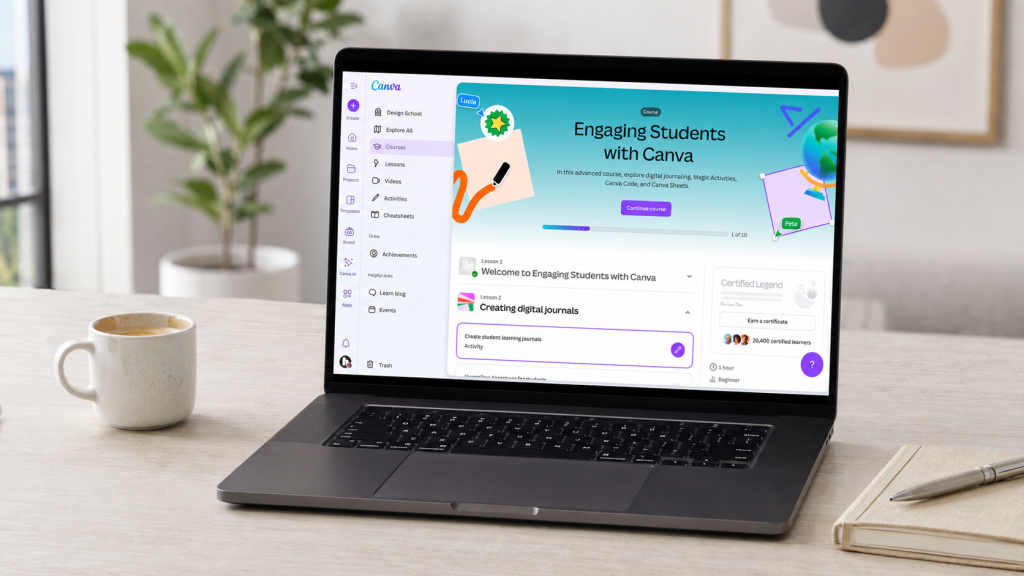
The headline feature of the expansion is a built-in integration with Canva Education, letting school staff design polished, visually engaging newsletters and announcements directly within ClassDojo, without needing separate design software or graphic design skills. Users can create a formatted HTML newsletter in minutes using Canva’s design tools, then distribute it instantly through ClassDojo’s existing communication channels — collapsing what used to be a multi-app, multi-step process into a single workflow.
That matters more than it might initially sound. According to ClassDojo, visual posts see up to 60 percent more engagement than plain text updates, meaning the design quality of a school communication isn’t just cosmetic — it directly affects whether families actually read what’s being sent. For overstretched school communications staff, many of whom have no dedicated design training or budget, that gap between a professional-looking newsletter and a plain text email has historically been a real barrier to effective communication.
Built for Middle and High Schools Too
While earlier ClassDojo tools leaned heavily toward elementary school use cases, the new schoolwide features specifically add capabilities designed for middle and high schools, including secure teacher-to-student messaging — a feature that requires more careful design given the different privacy and safety considerations involved in messaging older students directly rather than only communicating through parents.
The platform also now includes schoolwide engagement dashboards, giving administrators visibility into how well their communications are actually landing: which messages get opened, how quickly, and by what share of the school’s families. That kind of data has traditionally been difficult for schools to track when communication was scattered across email newsletters, paper flyers, and individual teacher apps with no unified reporting.
Breaking Down Language Barriers
One of the more quietly significant features in the rollout is automatic translation, with messages translating into more than 190 languages. For schools serving multilingual family populations — an increasingly common reality in districts across the country — that removes one of the most persistent barriers to effective school-to-home communication, ensuring language differences don’t determine which families stay informed and which don’t.
The Numbers Behind the Pitch
ClassDojo is backing the launch with engagement data from schools already using its schoolwide tools: 80 percent of families read messages the same day they’re received, alongside a 25 percent increase in active families and a 20 percent rise in family-initiated messages. Those figures matter because family engagement has long been recognized as one of the more reliable predictors of student outcomes, and a communication gap between schools and families — whether due to language barriers, message overload, or simply unengaging content — has real downstream effects on everything from attendance to academic performance.
Free Access for the Coming School Year
Perhaps the most notable detail for cash-strapped districts: ClassDojo has confirmed that all of the new schoolwide features will be available at no cost to schools, teachers, and families for the 2026–27 school year. In an edtech landscape where new features often come bundled with premium tiers or per-seat licensing costs, making a full-featured communication and design toolkit free removes one of the biggest obstacles that typically slows adoption of new school technology, particularly for under-resourced districts that might otherwise be priced out.
What It Means for Schools and Families
For families, the practical upshot is straightforward: messages that are easier to notice, easier to understand regardless of home language, and easier to act on. For schools, the ClassDojo-Canva integration offers a rare case of an edtech upgrade that doesn’t require additional training, budget, or software to see a meaningful improvement in one of education’s most persistent challenges — actually getting information home. As more districts adopt the tools heading into the new school year, the early engagement numbers suggest that better-designed, better-distributed communication isn’t just a nice-to-have, it’s a measurable lever for stronger family engagement.