Volkswagen Group’s supervisory board unanimously approved a sweeping restructuring program called Future Plan 2030 on September 3, 2026, which the company itself has described as the most strategically profound transformation in its history. The plan calls for cutting roughly 50,000 additional jobs worldwide, on top of a similarly sized round of cuts already announced in March 2026 — bringing total planned workforce reductions to approximately 100,000 positions by the end of the decade.
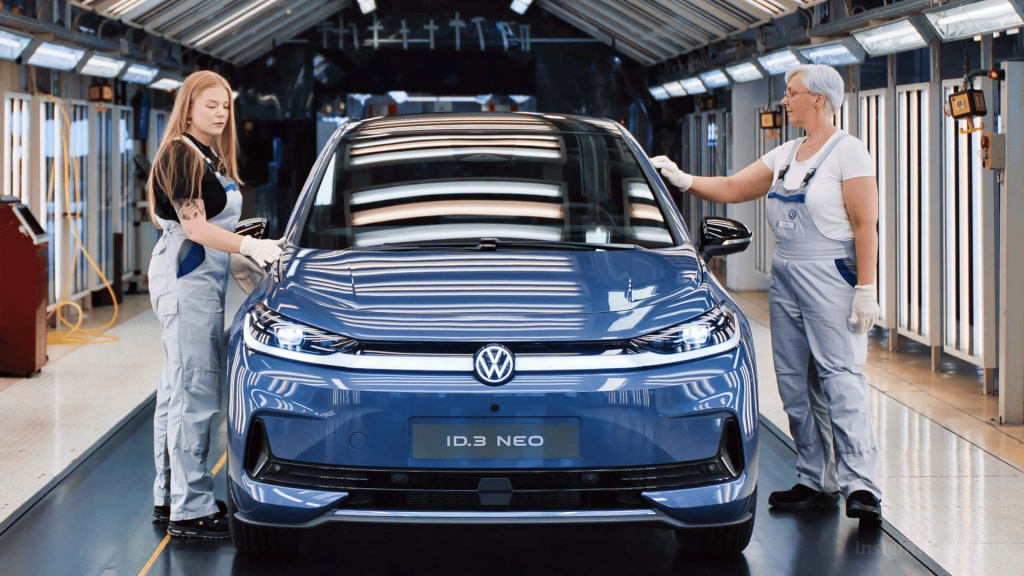
Volkswagen Group is considerably larger than the single Volkswagen brand most people picture: it also owns Audi, Porsche, Skoda, Seat, Cupra, Lamborghini, and Bentley, along with commercial vehicle and financial services divisions. As of the end of 2025, the group employed 662,942 people worldwide. Its German workforce alone has already fallen from 275,000 in 2023 to 254,000 as of June 30, 2026, according to the company’s most recent financial report — a decline that predates this latest announcement and will now accelerate further.
Why Volkswagen Is Making These Cuts Now
The plan follows a brutal financial year for the group. Volkswagen’s operating profit plunged 53.5% in 2025, its worst showing since 2016. Company officials have pointed to two main pressures behind the decline: intensifying competition from Chinese automakers offering cheaper vehicles, and rising tariff costs affecting Volkswagen’s shipments into key markets. According to reporting from Reuters, Volkswagen has also cited European overcapacity of roughly 500,000 vehicles as a structural problem the company needs to address directly rather than simply absorb.
Volkswagen Group CEO Oliver Blume described the supervisory board’s approval as “a strong sign for the future,” framing the cuts as necessary to restore competitiveness rather than a sign of retreat. The company has set a target of reaching 9 million annual vehicle sales and a 9% operating margin by 2030 as part of the plan.
Fewer Models, Far Fewer Variants
Beyond the headcount reductions, Future Plan 2030 calls for cutting the group’s overall model portfolio by roughly 50% by 2035, alongside a 75% reduction in the complexity of the models that remain — meaning far fewer trim levels, engine choices, and optional extras across the lineup. Volkswagen framed this specifically as a move toward “a greater sharing of architecture and components among the brands,” an approach aimed at lowering development and manufacturing costs by standardizing more of what underpins each vehicle. In its official statement, the company said “the prioritized models aim to excel in design and technology” precisely because engineering resources will be concentrated on fewer nameplates rather than spread across a sprawling lineup.
Volkswagen has not yet disclosed which specific models will be discontinued as part of this reduction, leaving buyers and dealers to wait for brand-by-brand announcements as the plan is implemented over the coming years.
What Happens to Seat
The most-discussed casualty of the restructuring is Seat, Volkswagen Group’s Spanish brand with more than 40 years of history. Autocar, which broke the initial story, reported that Seat will be retired entirely before the end of the decade, with its more upmarket spin-off brand, Cupra, continuing on as the group’s sole Spanish nameplate — a change that would make some sense given Cupra has already overtaken its parent brand in sales, delivering 170,100 vehicles in the first half of 2026 compared with Seat’s 129,600.
It’s worth being precise about what’s actually confirmed here, though: Volkswagen Group’s own Future Plan 2030 announcement did not explicitly name Seat, and the brand itself issued a statement pushing back on the narrative, saying it “remains an important part of SEAT S.A. and has a clear product roadmap for the coming years,” including mild-hybrid versions of the Ibiza and Arona planned for 2027. Seat’s statement did leave the door open beyond that point, noting that “beyond the current product cycle, however, the future direction of the SEAT brand remains under assessment.” In short, Seat’s discontinuation is well-sourced but not yet an officially confirmed fact from Volkswagen Group itself.
Which Plants Are at Risk
Volkswagen has named four German factories — Emden, Zwickau, Hannover, and Neckarsulm — as sites where the company says it “cannot currently guarantee a competitive future allocation,” language that stops short of confirming closures but signals real risk for those facilities. The company has said it will explore alternative uses for the sites rather than committing to closures outright, though up to four plant closures remain part of the plan’s stated scope.
What This Means for VW Group Buyers
For current and prospective owners of Volkswagen Group brands, the most tangible near-term effect will be a narrowing of choice — fewer trim levels and powertrain combinations to pick from as the complexity reduction takes hold, even before specific models are discontinued. There’s a potential upside buried in the strategy, too: concentrating engineering and design budgets on a smaller number of models could mean the vehicles that do survive get more thorough development attention than they might have under the group’s previous, more sprawling approach. Given how much remains unresolved — including Seat’s exact fate and which specific models face the axe — buyers with a strong attachment to a particular Volkswagen Group nameplate should watch for brand-specific announcements over the coming months rather than assuming today’s lineup will look the same by 2030.