Plug-in hybrids have a well-documented reputation problem: many owners simply don’t plug them in. With electric-only ranges historically limited to 20 or 30 miles, it’s often been easier for drivers to just run on gasoline and skip the daily charging routine, undermining much of the environmental and cost benefit the technology is supposed to offer. Volvo says it has a fix, and it isn’t complicated — give PHEVs enough electric range that skipping the charger stops being the path of least resistance.
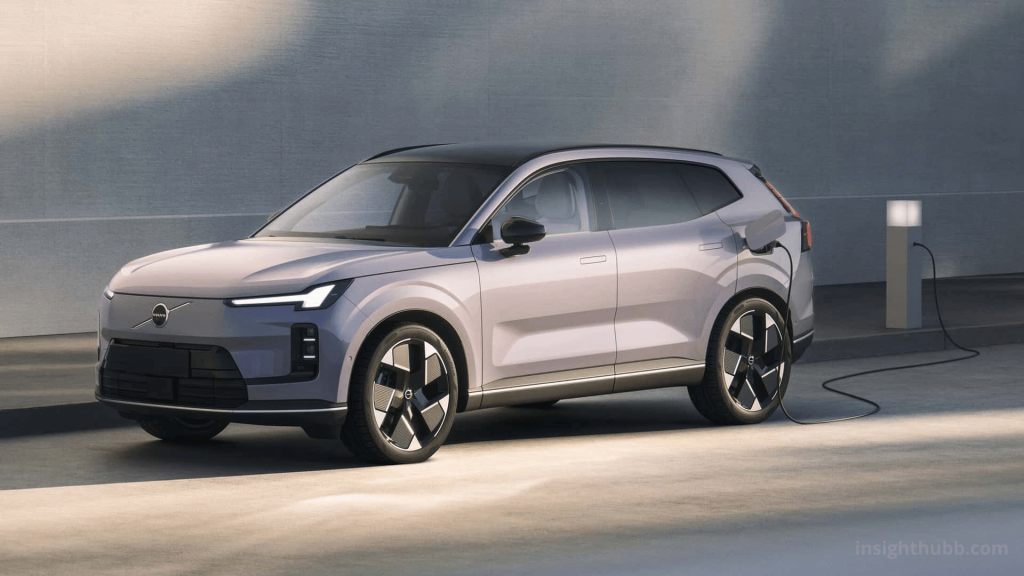
“In the past, when plug-in ranges were very low, drivers rarely charged them,” Nicole Melillo Shaw, Volvo’s UK boss, told Autocar. “Volvo has invested heavily in making sure our hybrids offer a long range so that people can use them as intended. So then it becomes a true stepping stone, and we’ll make sure we have that range available to our customers.”
The XC70 Shows What’s Coming
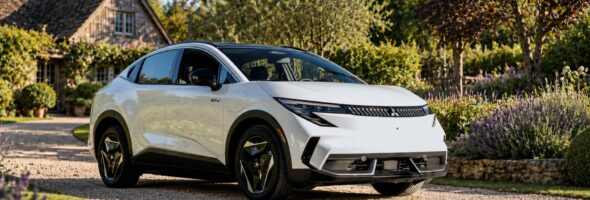
Volvo’s current UK-market plug-in hybrids, offered on the XC60 and XC90 SUVs, top out around 50 miles of electric-only range. The new XC70, already launched in China and planned for a European rollout, points to where the strategy is headed next: it offers a claimed engine-off range of 124 miles, longer than any PHEV currently sold in the UK, according to Autocar — though that figure is based on China’s more generous CLTC testing cycle rather than the stricter WLTP standard used in Europe, so real-world range under UK testing conditions will likely come in lower.
The XC70 pairs a 1.5-liter turbocharged four-cylinder engine with a plug-in hybrid system offering up to 400 horsepower in its all-wheel-drive configuration, built on a lithium iron phosphate battery pack. Volvo hasn’t confirmed exact specifications or a launch date for the European-market version, but the China-market car demonstrates the kind of battery capacity Volvo is now willing to build into a plug-in hybrid — a meaningful jump from the smaller packs used in its existing PHEV lineup.
Why Volvo Isn’t Abandoning Plug-In Hybrids
Volvo’s strategy is notable partly because of how firmly some rivals have moved away from PHEVs entirely in favor of full electrification. Volvo, by contrast, still frames plug-in hybrids as a deliberate “stepping stone” for customers who aren’t ready to commit fully to an EV — but only if the technology is good enough to actually be used the way it’s designed. A PHEV with a genuinely useful electric range can cover the vast majority of a typical owner’s daily driving on electricity alone, while still offering the flexibility of a gasoline engine for longer trips, without requiring access to public charging infrastructure. A PHEV that owners never charge, on the other hand, largely just becomes a heavier, less efficient gasoline car.
The Sales Numbers Behind the Strategy
Volvo’s own UK sales data illustrates why the company is investing in this middle ground rather than pushing straight to full electrification. Volvo’s pure-electric sales in the UK grew significantly, from 4,556 units in 2022 to nearly 18,000 in 2024, but have since dipped to around 9,000 in the first seven months of 2026. Combustion-powered vehicles remain far more popular overall — petrol power accounted for roughly 75% of Volvo’s UK sales so far this year, about 31,000 vehicles, with almost 7,000 of those being plug-in hybrids specifically. For a brand that has publicly committed to an electrified future, those numbers make a strong case for treating PHEVs as a genuine bridge technology rather than a category to phase out.
What This Means for Hybrid Shoppers
For buyers who’ve been skeptical of plug-in hybrids because of their historically short electric range, Volvo’s shift toward 100-plus-mile PHEVs is worth watching closely once the European-market version of the XC70 arrives with confirmed specifications and a WLTP-tested range figure. A plug-in hybrid that can genuinely cover a typical week of commuting and errands on electric power alone, while still offering a gasoline engine for road trips, addresses the exact complaint that has made PHEVs feel like a compromise rather than a genuine stepping stone. Whether Volvo’s approach spreads to its existing XC60 and XC90 plug-in hybrids, and how quickly, will likely depend on how well the XC70’s longer-range battery pack performs once independent reviewers get access to it.