Volkswagen announced the ID. Polo GTI Clubsport Concept on November 20, with a public presentation scheduled for the Essen Motor Show beginning November 27. The timing makes it a current topic for enthusiasts following the relationship between established performance names and electric propulsion. The concept invites a broader discussion than simply asking whether an electric car can accelerate quickly.
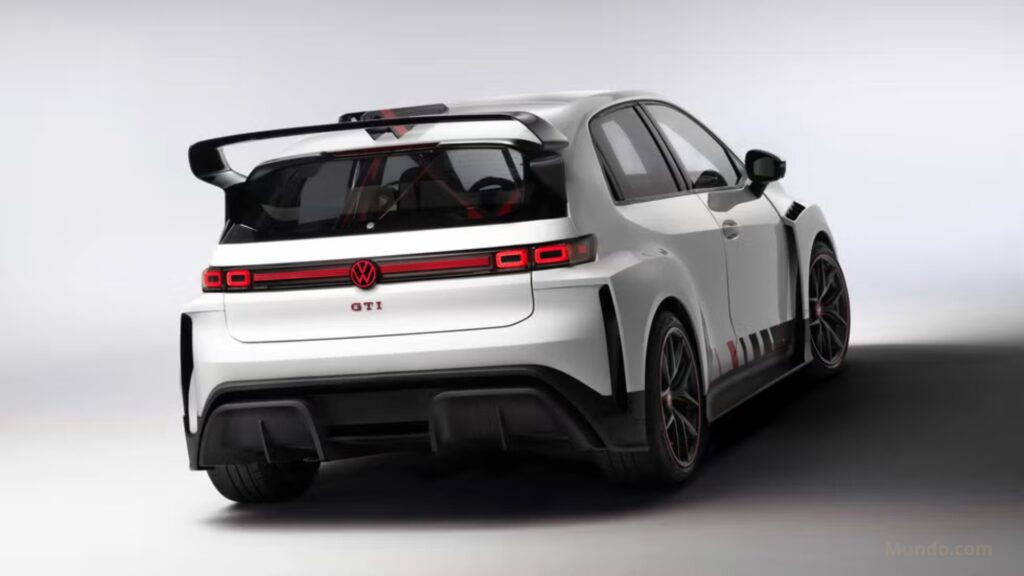
Its interest lies in how a familiar identity is expressed through proportions, controls, and the purpose of the cabin. This is a concept analysis based on the announcement, not a road test or confirmation of a production model available for customers to order.
The Concept’s Announced Configuration
Volkswagen specifies 270 kilowatts, or 367 PS, front-wheel drive, a claimed 0–100 km/h time of 4.7 seconds, and a 240 km/h top speed. The concept includes a two-door body and pronounced aerodynamic elements.
Inside, it uses two Recaro racing seats, five-point harnesses, a rollover bar, and a cockpit without infotainment. These are features of the concept vehicle. They do not establish the equipment, homologation, price, or availability of a future road-going version. The distinction matters because an experimental performance statement serves a different purpose from a vehicle prepared for everyday ownership.
A Performance Identity Needs More Than One Number
Acceleration provides a clear headline, but it cannot describe the complete character of a car. Drivers also respond to how a vehicle turns, slows, communicates grip, and behaves through a sequence of actions.
For an electric performance concept, those relationships are especially interesting because the experience needs an identity beyond immediate response. The important question is what encourages a driver to remain involved after the initial acceleration has become familiar.
A coherent answer could emerge from consistency. Predictable controls and a clear relationship between input and response can make an experience engaging without requiring every moment to be dramatic. That is a useful lens for following the concept’s future development.
Front-Wheel-Drive Performance Is About Managing Several Tasks
In any front-driven performance vehicle, the front tires have important responsibilities. The driver’s experience depends on how the complete system manages those demands across changing conditions.
That makes repeated behavior more informative than one successful launch. A meaningful evaluation would consider how the car responds through corners and transitions, with attention to what the driver can understand and anticipate.
These are principles for assessment, not independent findings about this concept. They help explain why a powerful motor is only one part of a performance package. The way its output is integrated with the rest of the vehicle determines whether the result feels coherent and approachable.
Aerodynamic Design Should Be Read as an Integrated Proposal
Large exterior elements communicate purpose immediately. However, their engineering value cannot be established from appearance alone.
The useful questions concern how the parts work together, at which conditions they matter, and what trade-offs accompany them. An enthusiast can appreciate the visual statement while reserving judgment about measured performance.
This distinction makes concept coverage more informative. Instead of assuming that every dramatic surface proves a benefit, the reader can ask what the design is intended to achieve. Later technical explanations or testing would provide a basis for evaluating those intentions. The appearance starts the conversation; evidence is needed to complete it.
A Minimal Cabin Communicates a Different Set of Priorities
Removing familiar comfort or entertainment features changes what a cabin asks its occupants to do. It can direct attention toward the driving task and make the vehicle’s intended role immediately apparent.
At the same time, minimalism should not be confused with the absence of design. Seating position, visibility, control reach, and the clarity of information remain essential.
A focused interior succeeds when the remaining elements support a clear activity. That idea can be appreciated even by readers who would never want such a layout in a daily car. The concept provides a way to examine how an interior expresses purpose through what it includes and what it leaves out.
Track Equipment Does Not Automatically Suit Everyday Use
A specialized component should be understood within the system for which it is designed. Equipment intended for a particular environment does not necessarily make sense as an isolated addition to another vehicle.
For readers interested in the aesthetic, the useful distinction is between inspiration and application. A concept can suggest an engaging color arrangement or a way to organize visual attention without becoming a modification checklist.
This allows enthusiasts to appreciate the design with appropriate context. The car’s focused presentation has value as an exploration. It does not require every element to be desirable or suitable for commuting, family travel, or an ordinary production interior.
The Most Interesting Comparison Is About Character
An electric interpretation of an established name invites comparisons with earlier experiences. A productive comparison asks which qualities made those experiences memorable and how they might be expressed differently.
That could involve compactness, responsiveness, clarity, or a sense of connection. These are characteristics to investigate, rather than conclusions that follow automatically from a badge.
For an enthusiast, this creates a more engaging discussion than treating technological change as a simple replacement of one power source with another. A performance identity is built from several relationships. The concept’s purpose is interesting insofar as it explores how those relationships could remain recognizable while the underlying technology changes.
What to Watch After the Scheduled Public Presentation
The next valuable information would clarify how the concept’s intentions are evaluated and whether any elements influence future products. A display appearance alone does not settle that question.
Readers can follow the project by separating demonstrated features from future possibilities and by looking for explanations that connect design choices with measurable or observable results.
The ID. Polo GTI Clubsport Concept offers a timely example of automotive experimentation. Its strongest contribution may be the discussion it opens about what makes a performance car engaging. When that conversation includes control, consistency, and interior purpose alongside acceleration, it becomes a richer way to consider the possibilities of an electric hot hatch.