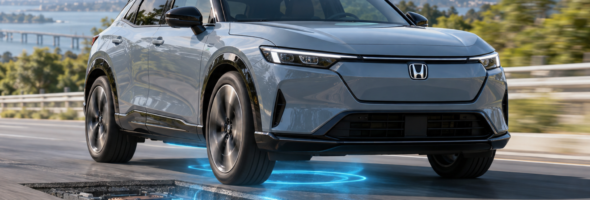
Electric vehicles are getting more attention every year. However, hybrids still play an important role in the car market. One of the clearest examples is the Toyota Hybrid System, a technology that has helped make hybrid cars more common, practical, and efficient.
In 2026, Toyota continues offering several electrified options, including hybrid vehicles, plug-in hybrids, battery-electric vehicles, and fuel-cell vehicles. Toyota describes this as a “power of choice” strategy, giving drivers different ways to reduce fuel use and emissions depending on their needs.
What Is the Toyota Hybrid System?
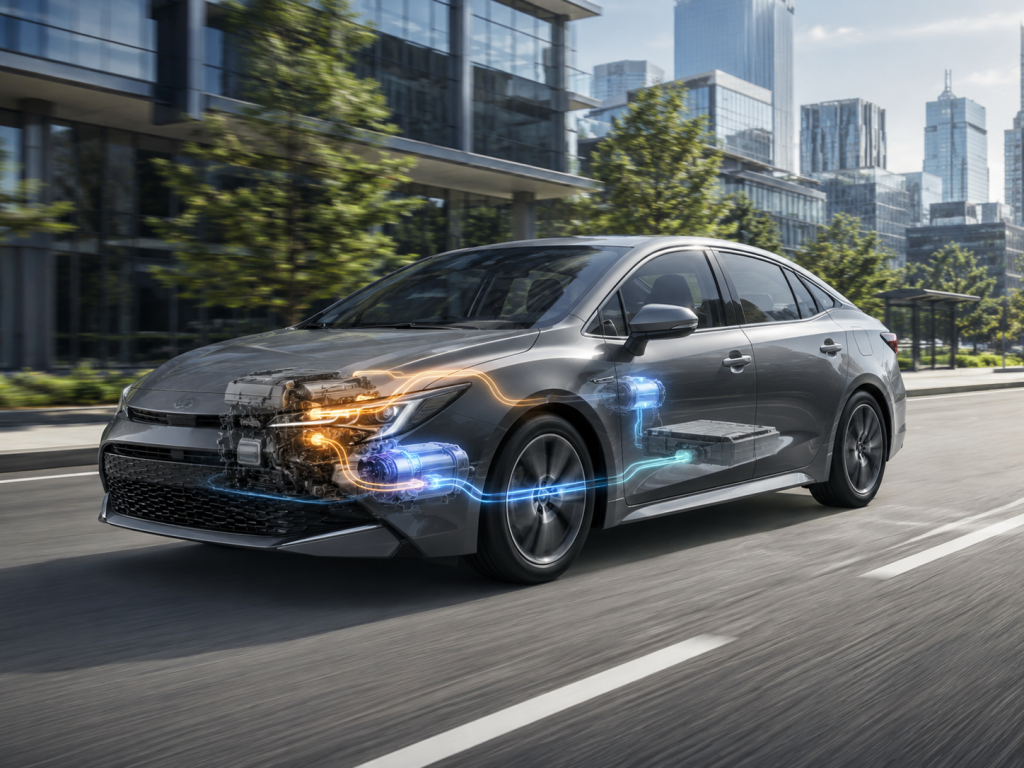
The Toyota Hybrid System combines a gasoline engine with one or more electric motors and a hybrid battery. These parts work together to improve efficiency and reduce fuel consumption.
At low speeds, the electric motor can help move the car. During acceleration, the gasoline engine and electric motor can work together. When slowing down, regenerative braking helps recover energy and send it back to the battery.
This is different from a fully electric car because a traditional Toyota hybrid does not need to be plugged in. The system manages charging while the vehicle is being driven.
Why It Still Matters in 2026
The Toyota Hybrid System still matters because not every driver is ready for a fully electric vehicle. Some people do not have easy access to home charging. Others may live in areas where public charging stations are still limited.
For those drivers, a hybrid can be a practical middle point. It offers better fuel economy than many traditional gas vehicles while keeping the convenience of filling up at a gas station.
Toyota hybrids are also useful for city driving. Stop-and-go traffic gives the system more chances to use electric power and recover energy through regenerative braking.
Fuel Economy Is a Big Advantage
Fuel efficiency remains one of the strongest reasons to consider a Toyota hybrid. The 2026 Toyota Prius is one of the most efficient non-plug-in hybrids, with EPA-rated combined fuel economy of up to 57 mpg in its front-wheel-drive LE version.
Other Toyota hybrid models also focus on efficiency. For example, the Toyota Camry Hybrid and Corolla Hybrid are among the 2026 hybrids highlighted for strong fuel economy in EPA-based rankings.
This matters because fuel savings can make a real difference for daily commuters, families, and drivers who spend a lot of time on the road.
How It Helps Drivers
The main benefit is lower fuel use. A hybrid can reduce how often a driver visits the gas station, especially in city conditions.
Another benefit is range. Unlike a full EV, a hybrid does not depend on charging infrastructure. This can make long trips easier for drivers who are not ready to plan routes around charging stations.
Toyota hybrids can also offer smoother driving. The electric motor helps at low speeds and during acceleration, while the gasoline engine supports longer trips.
Pros of the Toyota Hybrid System
The biggest advantage is practicality. Drivers get improved efficiency without changing their routine too much.
Another strong point is variety. Toyota offers hybrids in different body styles, including sedans, SUVs, and family vehicles.
The system also supports lower tailpipe emissions compared with many traditional gasoline-only cars. In addition, regenerative braking can help reduce some brake wear because the electric motor assists during slowing.
Cons and Limitations
The Toyota Hybrid System is not the same as driving a full EV. A traditional hybrid still uses gasoline and still produces tailpipe emissions.
It also has a smaller electric-only driving ability than a plug-in hybrid or battery-electric vehicle. For drivers who want to avoid gasoline almost completely, a full EV or plug-in hybrid may be a better fit.
Another point is price. Hybrids can cost more than similar gas-only vehicles, although fuel savings may help balance the cost over time.
Final Thoughts
The Toyota Hybrid System still matters in 2026 because it gives drivers a practical bridge between traditional gasoline cars and fully electric vehicles.
It offers strong fuel economy, easy daily use, and better efficiency without requiring home charging. For many people, that balance is exactly why hybrids remain relevant.
As electric infrastructure grows, full EVs will continue expanding. But for now, Toyota hybrids still offer a smart and realistic option for drivers who want better efficiency with fewer changes to their driving routine.