BMW M GmbH, the German automaker’s performance division, confirmed the first technical details of what its shift to full electrification will look like. Starting in 2027, BMW M models will go fully electric for the first time, built on the Neue Klasse architecture, with a configuration that promises to redefine what performance means in an electric car: four independent motors, one for each wheel.
BMW M eDrive: The Heart of the Shift
The system behind this new generation is called BMW M eDrive, built on the Gen6 electric platform within the Neue Klasse family, but developed specifically for the brand’s high-performance versions. Unlike other electric performance cars that rely on one or two motors, every fully electric BMW M Neue Klasse model will use two electric drive units — one on the front axle and one on the rear — each equipped with an independent electric motor per wheel.
It’s worth clarifying that, even though each wheel has its own motor, these aren’t in-wheel motors — they’re internally mounted units that each drive a wheel individually. This four-motor setup isn’t a complete surprise: BMW had already previewed the concept with its “Vision Driving Experience” test vehicle, unveiled in February 2025, which featured a similar drivetrain configuration.
Millisecond-Level Torque Control at Every Wheel
The real breakthrough of this system lies in how power is managed. The “Heart of Joy” central computer — the same electronic brain that debuts in the BMW i3 — can control each of the four drive units individually, adjusting torque and power at each wheel within milliseconds. That allows for near-instant force distribution based on road conditions, both during acceleration and regenerative braking.
The entire process is coordinated through the “BMW M Dynamic Performance Control” system, designed, according to the brand, to combine all the advantages of classic rear-wheel drive with those of all-wheel drive, without sacrificing either.
A Detachable Front Axle: The Nod to Rear-Wheel Drive
One of the details most celebrated by brand enthusiasts is that the front axle can be fully decoupled. This lets the car run in a purely rear-wheel-drive mode, geared toward driving enjoyment and true to BMW M’s historic identity, or switch on all-wheel drive when conditions demand it — also improving energy efficiency on long highway drives by reducing system friction.
Over 100 kWh Battery and 800-Volt Architecture
The high-voltage battery in these future M models will exceed 100 kWh in capacity, built on an 800-volt architecture that enables competitive charging times and can sustain the power peaks these high-performance vehicles demand. The cell chemistry, BMW says, was specifically modified to withstand thermal stress generated during intense track use — a common challenge for high-performance EVs under sustained demand.
The M Concept Neue Klasse: The Visual Preview
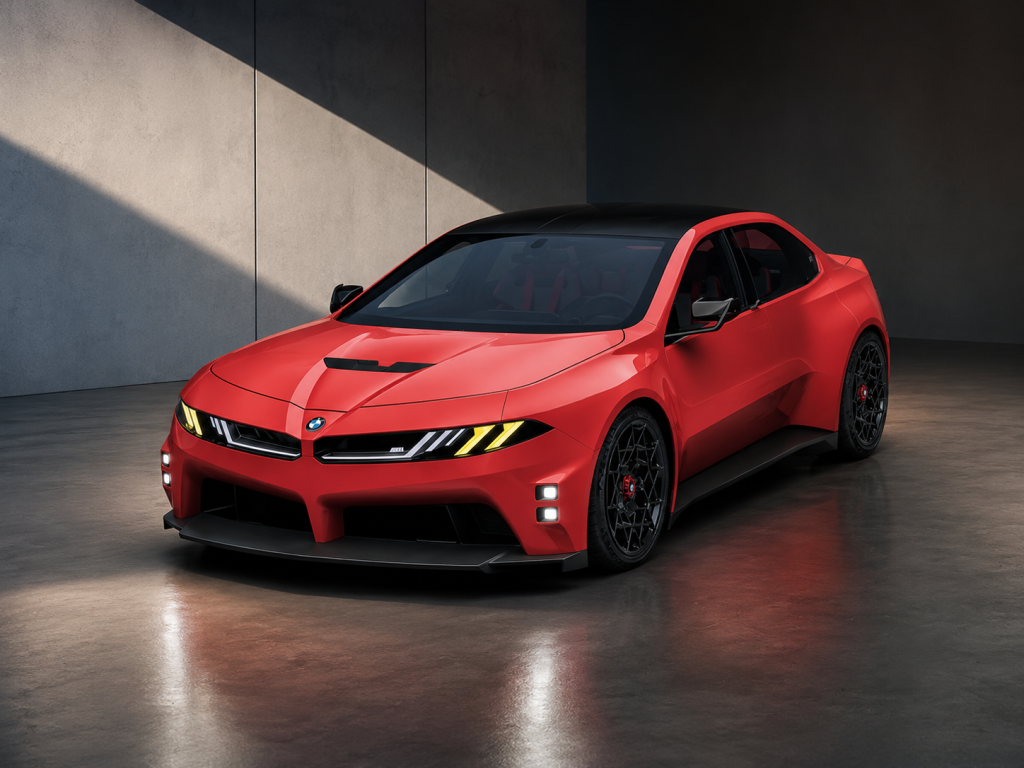
At this year’s 24 Hours of Le Mans, BMW unveiled the M Concept Neue Klasse, a prototype many interpret as a direct preview of the future electric M3 — though that name isn’t official yet. The concept keeps the aggressive character typical of M models: widened wheel arches, a shark-inspired front end, a distinctly sporty silhouette, and a rear end capped by a pronounced ducktail spoiler. The yellow daytime running lights also hint at a possible special high-performance variant within the lineup.
Simulated Gear Shifts and Sound: The M Experience Isn’t Lost
BMW has been emphatic that going electric with M shouldn’t mean losing the driving experience that has defined the brand for decades. That’s why these models will feature preset driving modes, simulated gear shifts, and a sound design built specifically to recreate familiar sensations for BMW M drivers — similar to what the brand already implemented in the i3 with its S+ Shift system, a philosophy comparable to what other automakers are doing in the sector.
Franciscus van Meel, CEO of BMW M GmbH, said these models are meant to set a new benchmark within the high-performance segment, carrying M’s DNA into the electric realm without giving up the driving experience that has historically defined it.
Sustainability on the Track, Too
BMW M is also introducing materials in this new generation that cut CO₂ emissions in manufacturing by up to 40%, including natural fibers replacing components traditionally derived from more polluting processes — bringing sustainability even into the brand’s most performance-focused models.
Market Arrival
The first fully electric BMW M models, built on the Neue Klasse architecture, will arrive starting in 2027, marking a new era for the German brand’s most recognized performance division.