Rivian and Lucid have been mentioned in the same breath for years. Both are American EV startups founded a few years after Tesla, both went public in 2021, and both began deliveries within weeks of each other that fall. The Rivian R1T pickup and the Lucid Air sedan both won acclaim from reviewers for their performance and technology. And both companies have since burned through billions of dollars chasing the same difficult goal: becoming sustainable, profitable automakers.
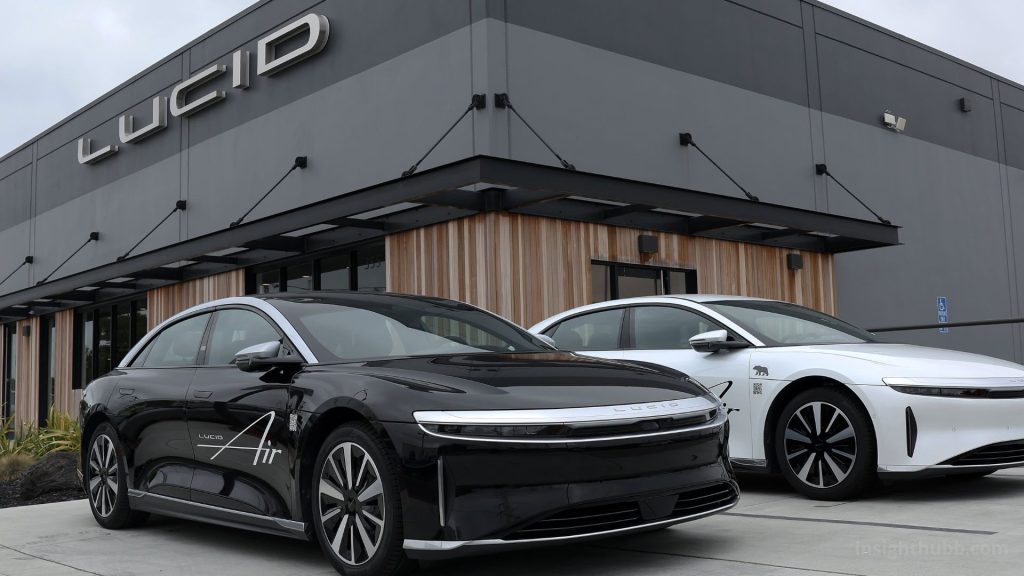
Their second-quarter 2026 earnings, reported within days of each other in late July and early August, made clear just how differently that story is now unfolding for each company.
Lucid’s “Operational Reset”
Lucid’s quarter amounted to a public reckoning. New CEO Silvio Napoli, in his first earnings call as chief executive, was unusually direct about the company’s problems. “We have not executed consistently, we miss commitments, launched products before they were ready, underinvested in service, responded too slowly to quality issues, and allowed complexity to slow decisions down,” he told investors.
The company announced a broad “operational reset” built around $1.4 billion in targeted cash-flow improvements for the remainder of the year, including deep job cuts, lower capital spending, and a deliberate cut to production at its Arizona plant so it can work down existing inventory. Lucid’s revenue did grow to $405 million for the quarter, but its net loss widened to more than $1 billion. The company says its roughly $3 billion in liquidity gives it a runway into 2027.
The most consequential piece of news, though, was what Lucid didn’t say outright in its press release: the delay of the Cosmos, its upcoming sub-$50,000 crossover and the company’s first vehicle built on a new midsize platform. Originally slated to launch before the end of 2026, the Cosmos is now expected to begin production in the second half of 2027 at Lucid’s AMP-2 plant in Saudi Arabia. Napoli said the delay was deliberate — an attempt to avoid repeating the software and quality issues that hampered the launches of both the Air sedan and the Gravity SUV.
Rivian’s Steadier Scale-Up
Rivian’s quarter told a different story. The company kicked off customer deliveries of its smaller, cheaper R2 crossover in June, and its finances are trending in a healthier direction: $1.66 billion in quarterly revenue and a net loss of $837 million, both improvements over the same quarter a year earlier. Rivian also raised its full-year delivery guidance to between 65,000 and 70,000 vehicles, up from roughly 42,000 vehicles sold last year.
Part of Rivian’s advantage traces back to product sequencing. Where Lucid launched with an expensive four-door sedan — an impressive car, but one aimed at a limited market — Rivian came out of the gate with a pickup truck and SUV, vehicle types Americans buy in far greater numbers. Rivian also moved faster to broaden its lineup, following the R1T with a commercial van sold to Amazon and then the R1S SUV within about a year, while Lucid’s second vehicle, the Gravity SUV, didn’t arrive until late 2024 and ramped up slowly.
Rivian has one additional advantage Lucid doesn’t: a technology joint venture with the Volkswagen Group, which generated roughly $300 million in revenue for Rivian in the second quarter alone and comes with billions more in stock purchases and debt financing from VW.
Neither Company Is in the Clear
Rivian’s stronger quarter doesn’t mean the company is safe. It still expects to lose money this year and needs to successfully scale the R2 into a weaker overall EV market. Nor is Lucid necessarily out of the race — its underlying technology remains among the most advanced in the industry, and Saudi Arabia’s Public Investment Fund has repeatedly stepped in with cash infusions over the years, including a Saudi prince’s purchase of a 5% stake in the company last month.
What This Means for EV Shoppers and Investors
For buyers, the immediate impact is limited — existing Lucid and Rivian owners aren’t affected by these financial maneuvers, though the Cosmos delay means shoppers hoping for an affordable Lucid crossover will be waiting considerably longer than originally promised. For anyone watching the EV startup space more broadly, this quarter marks a clear divergence: Rivian is now focused on scaling a proven product lineup, while Lucid is rebuilding its operational foundation before it can chase the same kind of growth. Both remain rare examples of American EV startups that reached production without collapsing — but for the first time in years, they’re no longer running comparable races.