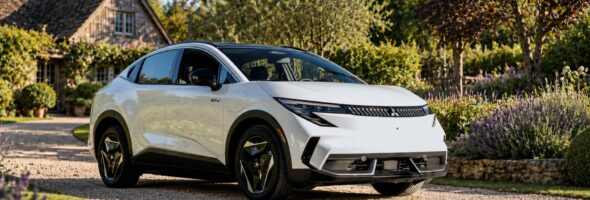
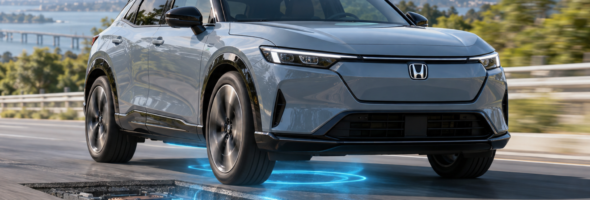
Mercedes-Benz CEO Ola Källenius doesn’t usually give personal test drives to journalists. But according to an exclusive interview published by Autocar on August 22, 2026, Källenius flew from Stuttgart to Helsinki specifically for the launch of the new C-Class Electric, and after fielding questions from a group of reporters, took Autocar on a private 45-minute drive through the Finnish countryside himself. The gesture reflects how much weight Mercedes is putting behind this particular car — and how personally invested Källenius is in proving that electric Mercedes models can still feel like genuine Mercedes models.
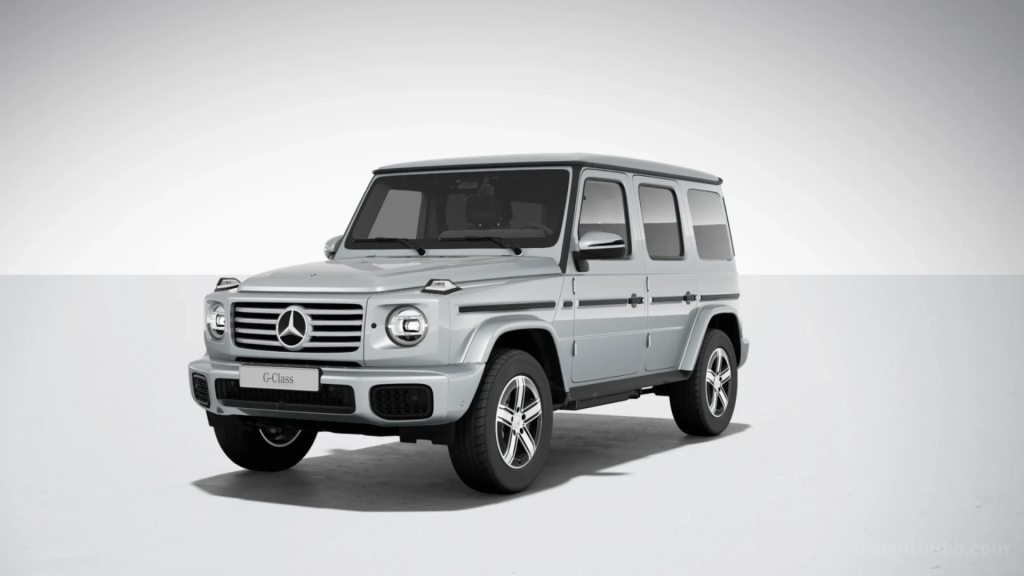
That’s a meaningful thing for Källenius to be selling, given his own background. Before becoming CEO in 2019, he spent years leading Mercedes-AMG, the brand’s performance division built around loud V8 and V12 engines — making him, by his own description, something of a “petrol head” tasked with convincing similarly minded enthusiasts to get excited about electric power.
Bridging the Gap for Traditional Car Fans
“For traditional car nuts it feels like you’re learning a new language,” Källenius acknowledged to Autocar, referring to the shift from debating engine displacement to discussing inverters and computer chips. His answer isn’t to downplay that shift, but to make the new technology feel just as engaging in its own right. During the Finnish drive, Källenius pointed out how quiet and composed the C-Class Electric felt at 50 mph — and was interrupted, notably, by the car’s own voice assistant chiming in about the exhilaration of high-speed autobahn driving, an unplanned moment that captured the balancing act Mercedes is attempting between old-school driving feel and new-school software.
Källenius has also addressed a frequent American complaint about modern EV interiors: the shift from physical buttons to touchscreens. “Intuition is the key,” he said, pointing to the C-Class Electric’s steering wheel, which still uses physical controls for the most frequently used functions even as the dashboard leans heavily on large digital displays.
What’s Coming for Performance Fans
For enthusiasts unconvinced that an electric Mercedes can deliver genuine performance thrills, Källenius pointed to what’s coming next. “For the hardcore performance fans, we’re going to launch this year a whole new high-performance, electric AMG car. That will blow your mind,” he said. He also addressed one of the most common criticisms of EVs among driving enthusiasts — the lack of engine sound — more directly than most executives tend to: “And if you want it to sound like a V8, you can do that too,” referring to Mercedes’ synthesized sound systems that can simulate combustion-engine audio through the car’s speakers.
Notably, Källenius has also committed to keeping the brand’s V12 engine, which powers the Mercedes-Maybach S-Class, available “for the foreseeable future,” suggesting Mercedes’ electrification push isn’t meant to fully replace combustion power across the lineup, at least not yet.
The C-Class Electric Itself
The car at the center of this interview is a genuine technical departure from its gasoline counterpart. Despite being marketed simply as “C-Class,” the electric version sits on Mercedes’ new MB.EA platform, built specifically for electric mid-sized models, and is mechanically unrelated to the combustion-powered C-Class sold alongside it. The launch version, the C400 4Matic, uses two motors producing up to 483 horsepower and 590 lb-ft of torque, drawing from a 94kWh battery. Mercedes says a single-motor variant will offer up to 497 miles of range, though that figure trails the rival BMW i3’s claimed range on paper. Independent testing by Autocar found real-world efficiency translating to roughly 350 miles of range in typical driving conditions.
What This Means for Skeptical Buyers
Källenius’s approach amounts to a direct answer to a specific, vocal segment of car buyers: those who love cars for how they sound, feel, and respond, and who have been slow to warm to electric power as a result. Rather than arguing that those preferences don’t matter, Mercedes’ strategy under Källenius is to preserve as much of that emotional experience as the technology allows — synthesized engine sound, tactile steering wheel controls, and a genuinely quick electric AMG model aimed squarely at performance enthusiasts. Whether that’s enough to convert longtime combustion loyalists remains to be seen, but it’s a notably different pitch than simply asking buyers to accept quieter, more efficient driving as its own reward.