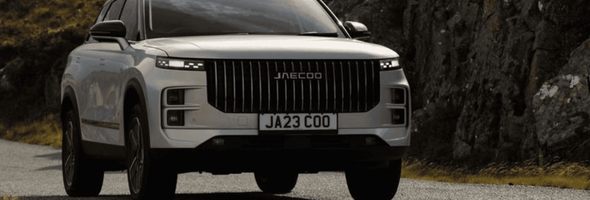
Jaguar pulled the covers off the production Type 01 in New York on October 6, 2026, the first new car from the British brand since its radical reinvention as an electric-only luxury marque. Jaguar has not sold a new car in the UK since it halted sales in November 2024, so the reveal carried far more weight than a typical model launch. Autocar counted the wait at roughly 674 days from the Type 00 concept’s debut to this production car.
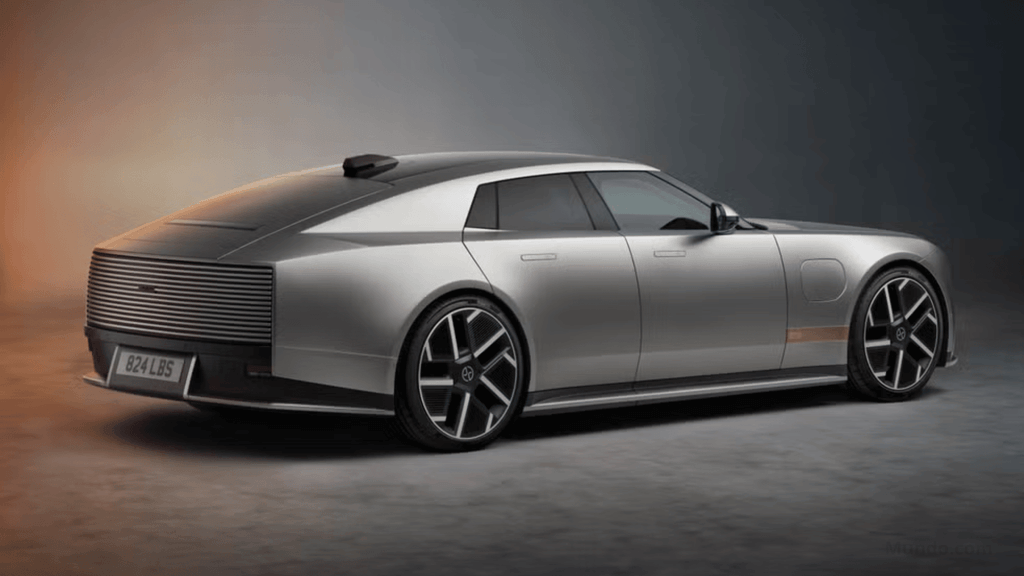
Robb Report describes the Type 01 as the most powerful, most aerodynamic, and most technologically advanced car Jaguar has ever built. It is a four-door, four-seat grand tourer, about 5.2 meters (206.4 inches) long and roughly 1.4 meters (55 inches) tall, and it follows the shape of the Type 00 concept closely, including its very long hood, which looks especially unusual on an electric car with no engine to fit under it.
The Performance and Charging Numbers
Three electric motors, one on the front axle and two at the rear, produce up to 1,015 horsepower (the metric figure is quoted as 1,030 PS) and 1,365 Nm of torque, or about 1,007 lb-ft. Jaguar quotes a 0-60 mph time of 3.2 seconds and a top speed of 150 mph. Those are strong numbers, but Jaguar is clearly pitching the car as a grand tourer rather than a drag-strip special, a point Forbes made by noting that the Type 01 offers big power without gimmicks.
The car runs on an 850-volt electrical architecture with a battery of roughly 118 kWh usable, supporting charging at up to 350 kW. Jaguar says a compatible fast charger can add 200 miles of range in 13 minutes. The brand targets up to 450 miles of range on the European WLTP cycle and expects up to 400 miles under the US EPA method, with sustained highway driving at a constant 75 mph good for up to 320 miles. For markets using metric figures, Jaguar’s Canadian announcement cites an estimated maximum of 644 kilometers with 21-inch wheels.
A caveat matters here. Forbes reports that Jaguar’s charging and range figures remain provisional because homologation, the official regulatory testing process, is not yet complete. Treat the numbers as manufacturer targets until independent testing arrives.
What It Costs, Market by Market
Pricing is where the Type 01 makes its boldest statement. In the UK, Jaguar says the car starts at £130,000, which Bloomberg’s summary converts to about $172,500. That lands between the £120,000 entry point and the roughly £140,000 average that Jaguar’s management had previously signaled.
In the US, Robb Report reports a starting price of $130,500. The magazine notes that Jaguar’s average US transaction price has been around $60,000 to $70,000, so the Type 01 roughly doubles the price of the brand’s typical sale. In Germany, electrive reports a starting price of €165,000, while Jaguar’s Canadian announcement points to an expected starting figure of around C$178,000 for the top version. Jaguar has not detailed trim levels or options in its initial release, and the company expects most buyers to spend more once personalization is added.
A Cabin Built Around Craft, Not Just Screens
Jaguar revealed the Type 01’s interior in August, and the production car largely sticks to that concept-inspired layout. A central spine divides the cabin into four distinct zones. Electrifying’s first look at the production car notes that the concept’s real brass and travertine stone have given way to brass-effect anodized aluminum and colors inspired by the stone, while wool-blend textiles are paired with either leather or Jaguar’s alternative, Ultrafabrics NeoGrain. It is a practical compromise: the look of the concept, with materials that suit series production.
Because the Type 01 has no conventional rear window, a camera feed handles rear visibility, with the image shown on a screen near the windshield, according to reports on the interior reveal. Colors shown at launch included Visionary Silver and Compelling Blue.
Made in Britain, and Proud of It
Jaguar is emphasizing that the Type 01 is designed, engineered, and built in the United Kingdom. Jaguar boss Rawdon Glover told Electrifying that British credentials matter more as Chinese brands expand, a theme that fits the wider market shift visible in UK sales figures this year. Jaguar says about 150 prototypes have covered more than 700,000 miles of testing around the world.
The car sits on Jaguar’s own electric architecture, which the company has said shares nothing with the electric Range Rover, even though both brands belong to Jaguar Land Rover. Glover has described the GT as the opening move in a wider range of electric luxury models, and Autocar has reported that a large saloon and an SUV could follow on the same platform, though those plans are not officially confirmed.
When You Can Actually Buy One
Orders are expected to open in early 2027, with first customer deliveries planned for the second half of that year. Forbes cautions that deliveries are expected no earlier than mid-2027. That means anyone excited by the reveal has a long wait ahead, and early buyers will be committing to a car that few independent reviewers will have driven in finished form.
Where the Type 01 Sits in the Market
Jaguar is deliberately aiming above mainstream premium brands. Auto Express positions the Type 01 “a little above Porsche, a little below Bentley,” while Autocar says Jaguar sees it between brands like BMW and Mercedes-Benz and top luxury names such as Bentley and Aston Martin. Direct comparisons include the electric Range Rover, which also costs well into six figures in the US, and other flagship electric GTs from European rivals.
The Real Test Starts When Reviewers Get Behind the Wheel
Jaguar has delivered a reveal that matches the drama of the concept: huge power, rapid charging, and a cabin unlike anything else in the segment. What it has not yet delivered is proof. Pricing that doubles the brand’s typical transaction, provisional range figures, and a delivery window more than a year away leave plenty of room for doubt. Whether buyers will pay Bentley-adjacent prices for a Jaguar, and whether the Type 01 drives as well as it looks, will only become clear when independent testing begins and the first customers take delivery. Until then, this is a bold statement of intent rather than a finished verdict.