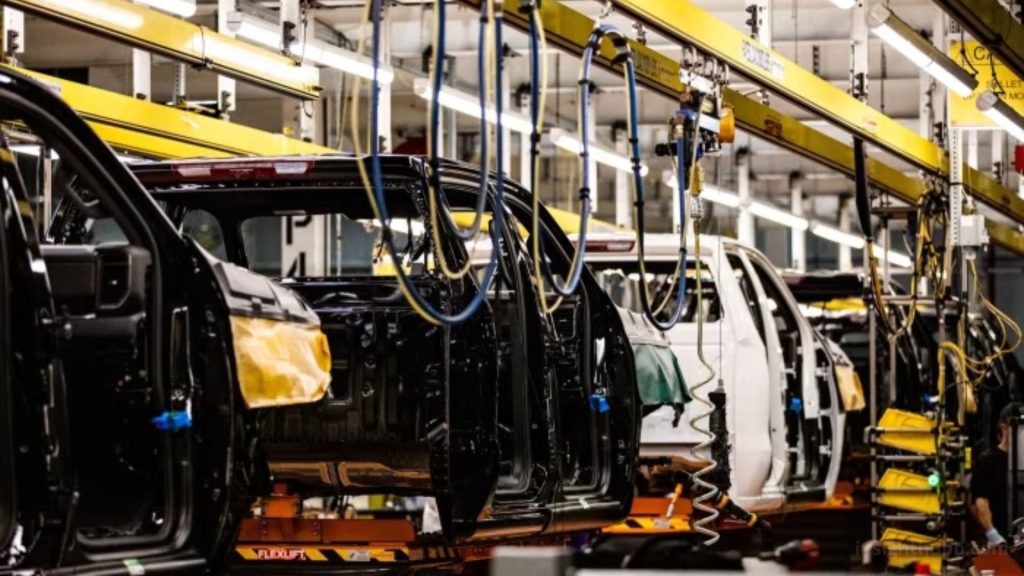
General Motors disclosed a new supply chain financing arrangement worth up to $4.5 billion on August 11, 2026, in a securities filing, aimed squarely at preventing the kind of production-halting parts shortages that have plagued automakers throughout the 2020s. The deal comes years after the semiconductor shortage forced GM and other manufacturers to idle plants and, in some cases, ship vehicles without certain features installed, to be completed later once parts became available.
The arrangement centers on a company called Procura Auto Parts, which specializes in sourcing rare or critical automotive components. Under the deal, a bank syndicate led by JPMorgan Chase and Banco Santander will fund Procura to prepay select GM suppliers for parts before GM actually needs them for production. Suppliers then store that inventory until GM calls for it.
How the Financing Actually Works
The mechanism is more financial engineering than traditional purchasing. GM doesn’t pay for the parts upfront. Instead, the automaker issues what are called irrevocable payment undertakings, or IPUs — formal promises to reimburse Procura once GM actually uses the inventory in production, with a final repayment deadline of August 6, 2029. GM has a 12-month window, starting August 7, 2026, to issue these IPUs against the facility.
Because the payments are structured this way, they don’t count against GM’s adjusted automotive free cash flow until the automaker actually purchases and uses the inventory, typically recorded within 90 days of purchase. GM will pay interest on outstanding IPUs at the Secured Overnight Financing Rate plus 1.55% annually, along with a smaller annual fee on any unused portion of the facility. In effect, GM gets guaranteed access to critical parts while keeping more cash on hand for longer than a traditional prepayment arrangement would allow.
What Parts Are Actually at Risk
GM has not disclosed which specific components the deal is designed to protect, but the categories of parts that have caused the most disruption in recent years are well known across the industry: semiconductor chips, dynamic random access memory (DRAM), rare-earth materials used in motors and magnets, and wire harnesses. Several of those categories are under renewed pressure again in 2026 — memory chip prices, in particular, have surged industry-wide as manufacturers redirect production capacity toward AI data center hardware, a squeeze that has already pushed up prices for laptops and other consumer electronics.
GM framed the deal broadly, saying it’s designed to guard against disruptions from extreme weather, natural disasters, cyberattacks, and sudden demand spikes, in addition to the chip and materials shortages that have dominated headlines in recent years. The move also follows a broader industry pattern of automakers reassessing where they source components from, partly in response to U.S. tariffs and an ongoing push to reduce reliance on Chinese suppliers.
Part of a Broader Financial Turnaround
The parts deal arrived alongside a strong quarterly report from GM. The company raised its full-year 2026 EBIT-adjusted guidance for the second time this year, to a range of $14 billion to $16 billion, and lifted its adjusted automotive free cash flow outlook to between $9.5 billion and $11.5 billion. GM North America posted a 42.7% jump in adjusted EBIT to $3.4 billion, driven largely by strong demand for full-size trucks and SUVs, including the ramp-up of the redesigned Chevrolet Silverado and GMC Sierra pickups. Executives also pointed to improving EV profitability and growing OnStar Digital revenue as supporting factors behind the more optimistic outlook heading into 2027.
What This Means for Buyers
For car shoppers, a supply chain deal like this doesn’t show up directly on a window sticker, but it addresses something that has affected buyers indirectly for years: parts shortages have meant longer waits for specific trims, delayed deliveries, and in some cases, vehicles missing features at delivery that had to be retrofitted later. A more secure parts pipeline, if it works as intended, should mean fewer of those disruptions reaching dealer lots and customer driveways. It’s a reminder that a lot of what determines whether a specific truck or SUV is actually available when a buyer wants it happens well upstream, in financing arrangements and supplier contracts most car shoppers never see.General Motors disclosed a new supply chain financing arrangement worth up to $4.5 billion on August 11, 2026, in a securities filing, aimed squarely at preventing the kind of production-halting parts shortages that have plagued automakers throughout the 2020s. The deal comes years after the semiconductor shortage forced GM and other manufacturers to idle plants and, in some cases, ship vehicles without certain features installed, to be completed later once parts became available.
The arrangement centers on a company called Procura Auto Parts, which specializes in sourcing rare or critical automotive components. Under the deal, a bank syndicate led by JPMorgan Chase and Banco Santander will fund Procura to prepay select GM suppliers for parts before GM actually needs them for production. Suppliers then store that inventory until GM calls for it.
How the Financing Actually Works
The mechanism is more financial engineering than traditional purchasing. GM doesn’t pay for the parts upfront. Instead, the automaker issues what are called irrevocable payment undertakings, or IPUs — formal promises to reimburse Procura once GM actually uses the inventory in production, with a final repayment deadline of August 6, 2029. GM has a 12-month window, starting August 7, 2026, to issue these IPUs against the facility.
Because the payments are structured this way, they don’t count against GM’s adjusted automotive free cash flow until the automaker actually purchases and uses the inventory, typically recorded within 90 days of purchase. GM will pay interest on outstanding IPUs at the Secured Overnight Financing Rate plus 1.55% annually, along with a smaller annual fee on any unused portion of the facility. In effect, GM gets guaranteed access to critical parts while keeping more cash on hand for longer than a traditional prepayment arrangement would allow.
What Parts Are Actually at Risk
GM has not disclosed which specific components the deal is designed to protect, but the categories of parts that have caused the most disruption in recent years are well known across the industry: semiconductor chips, dynamic random access memory (DRAM), rare-earth materials used in motors and magnets, and wire harnesses. Several of those categories are under renewed pressure again in 2026 — memory chip prices, in particular, have surged industry-wide as manufacturers redirect production capacity toward AI data center hardware, a squeeze that has already pushed up prices for laptops and other consumer electronics.
GM framed the deal broadly, saying it’s designed to guard against disruptions from extreme weather, natural disasters, cyberattacks, and sudden demand spikes, in addition to the chip and materials shortages that have dominated headlines in recent years. The move also follows a broader industry pattern of automakers reassessing where they source components from, partly in response to U.S. tariffs and an ongoing push to reduce reliance on Chinese suppliers.
Part of a Broader Financial Turnaround
The parts deal arrived alongside a strong quarterly report from GM. The company raised its full-year 2026 EBIT-adjusted guidance for the second time this year, to a range of $14 billion to $16 billion, and lifted its adjusted automotive free cash flow outlook to between $9.5 billion and $11.5 billion. GM North America posted a 42.7% jump in adjusted EBIT to $3.4 billion, driven largely by strong demand for full-size trucks and SUVs, including the ramp-up of the redesigned Chevrolet Silverado and GMC Sierra pickups. Executives also pointed to improving EV profitability and growing OnStar Digital revenue as supporting factors behind the more optimistic outlook heading into 2027.
What This Means for Buyers
For car shoppers, a supply chain deal like this doesn’t show up directly on a window sticker, but it addresses something that has affected buyers indirectly for years: parts shortages have meant longer waits for specific trims, delayed deliveries, and in some cases, vehicles missing features at delivery that had to be retrofitted later. A more secure parts pipeline, if it works as intended, should mean fewer of those disruptions reaching dealer lots and customer driveways. It’s a reminder that a lot of what determines whether a specific truck or SUV is actually available when a buyer wants it happens well upstream, in financing arrangements and supplier contracts most car shoppers never see.