BMW unveiled the next-generation 3 Series on the evening of September 29, 2026, in the US, with the reveal landing early the following morning in Europe. It’s the automaker’s best-known nameplate, but the car breaking cover looks almost nothing like the model it replaces. BMW has adopted its Neue Klasse design language for the sedan, the same visual overhaul already introduced on the fully electric i3 earlier this year — meaning the combustion-powered 3 Series and its electric sibling now share a coherent design identity for the first time, rather than looking like two unrelated products wearing similar badges.
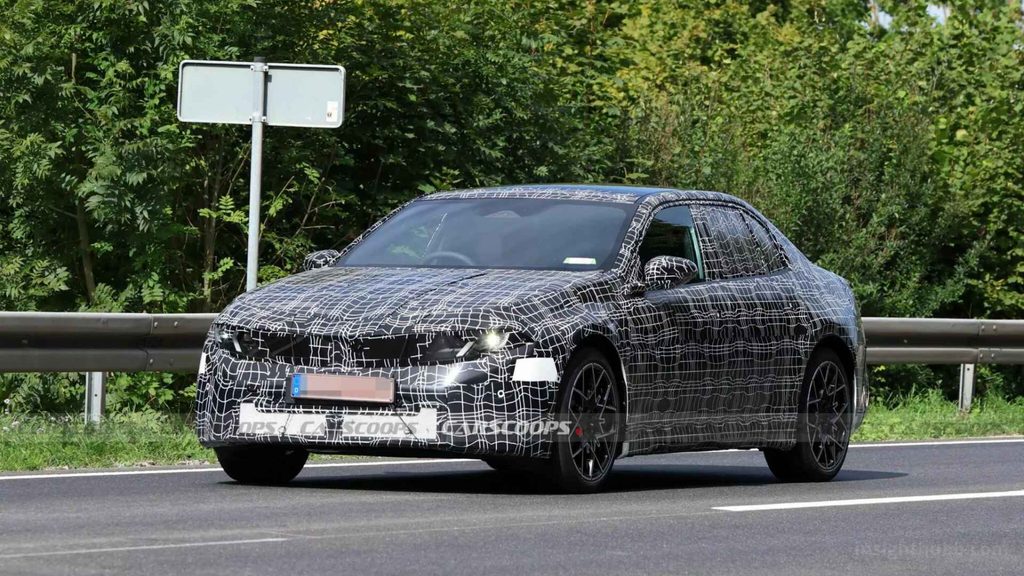
The most immediately noticeable shift is at the front. BMW has moved away from the oversized kidney grilles that have defined much of its lineup over the past decade, replacing them with slimmer, wider openings that flow seamlessly into the headlights rather than sitting as a separate, standalone element. Those headlights themselves carry two diagonal slashes serving as daytime running lights, a signature already established on the i3 and now carried over to its gas-powered counterpart.
A Genuine Engineering Shift, Not Just New Sheet Metal
Beyond the styling, BMW has confirmed the new 3 Series will use recycled materials for roughly a quarter of its overall construction — a meaningful sustainability commitment for a mainstream sport sedan, and one that suggests BMW is treating environmental material sourcing as a standard engineering requirement across its lineup rather than a feature reserved for electric models alone.
Production is also shifting in a historically significant way. For the first time in the 3 Series’ history, the sedan will not be built at BMW’s original Munich plant, the facility that has produced every generation of the car since it debuted. Manufacturing is instead moving to BMW’s Dingolfing plant, a change that reflects both capacity planning across BMW’s German manufacturing network and the practical reality of retooling a historic factory to build a car built around substantially different underlying architecture and materials.
Three Distinct Buyers, One Platform
What makes this generation of the 3 Series notable from a product-strategy standpoint is how directly BMW is using it, together with the i3, to cover multiple types of buyers who have historically wanted very different things from a BMW sedan. Fully electric buyers get the i3. Plug-in hybrid shoppers get a PHEV variant of the new 3 Series. And enthusiasts who still want a traditional, rear-wheel-biased driving experience get the combustion-powered range, including a genuine M Performance flagship.
That flagship, the M350 xDrive, pairs a turbocharged inline-six engine with 443 horsepower — and, notably, a dedicated drift mode that can disconnect power to the front axle entirely, turning the all-wheel-drive sedan into a temporarily rear-wheel-drive car on demand. It’s a deliberate nod to BMW’s performance heritage at a moment when many rivals have moved toward all-wheel-drive-only performance sedans without offering drivers that kind of manual override over how power gets delivered.
Completing a Family, Not Just Launching a Car
BMW product planners appear to be thinking about the i3 and the new 3 Series as two expressions of a single family rather than as separate, independently developed vehicles. That’s a subtle but important shift in how the brand is approaching its core sedan lineup — rather than treating the electric variant as an afterthought bolted onto an existing gas-powered platform, or as a completely separate design study, BMW built both cars around the same Neue Klasse visual and technical philosophy from the outset. Buyers cross-shopping the two should notice a level of design and interior consistency between them that hasn’t always been present in prior generations of parallel gas-and-electric BMW model pairs.
Betting on a Divisive New Look
BMW’s own messaging around the reveal has acknowledged, at least implicitly, that the new design direction carries real risk. Moving away from the oversized kidney grille — a design element BMW leaned into heavily, and controversially, over the past several years — represents a genuine reversal, and reporting ahead of the reveal specifically flagged that the new look “may prove to be controversial” among longtime BMW buyers who’ve grown accustomed to the brand’s recent styling language. Whether the slimmer grille and diagonal headlight treatment become the new signature look for BMW’s mainstream lineup, or get walked back in a future update the way some past design experiments have been, will likely depend heavily on how the buying public responds over the car’s first full sales year.
What This Reveal Signals for BMW Shoppers
For anyone currently shopping a 3 Series, or waiting to see how BMW’s broader Neue Klasse rollout would extend beyond its dedicated electric models, this reveal answers a real question: the new design language isn’t confined to EVs, and buyers who prefer a traditional combustion or plug-in hybrid powertrain won’t be left behind visually or technologically as BMW’s product lineup evolves. Given the shift in manufacturing location, the recycled-material commitment, and the drift-capable M350 xDrive, this generation reads as a genuine reset for one of BMW’s most important nameplates rather than an incremental refresh — and buyers deciding between the 3 Series and the i3 will now be choosing between two vehicles built from a shared design and engineering foundation rather than two unrelated products.