Aston Martin has told the world, in unusually blunt terms, that it is in no hurry to go electric. CEO Adrian Hallmark said in an interview with Autocar, published on October 2, 2026, that the British luxury marque will not launch its first battery-electric car until 2033 at the earliest, and that the true window sits somewhere between 2033 and 2035. Asked whether 2031 was possible, Hallmark ruled it out, according to Motor1’s coverage of the same interview.
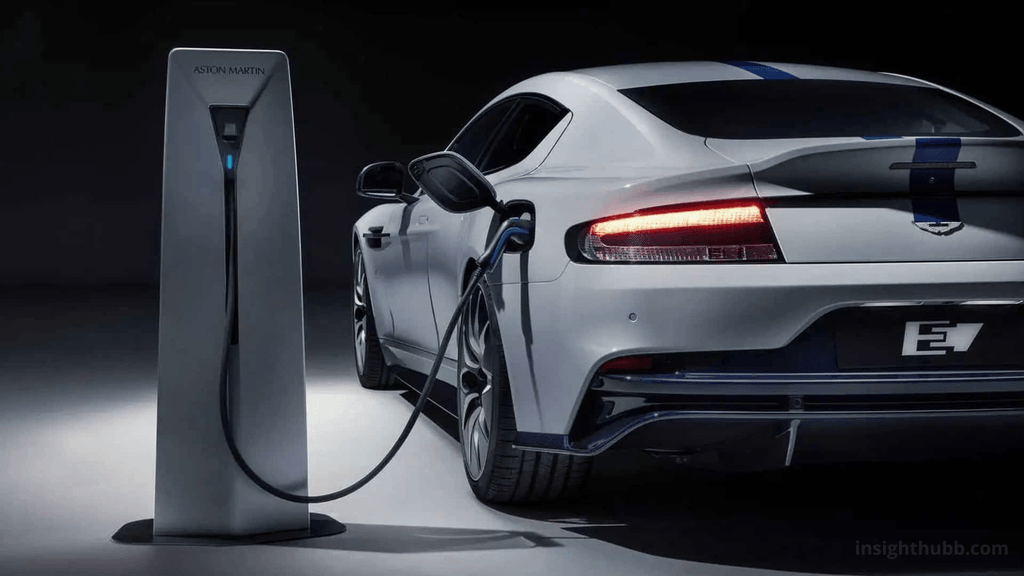
The comments came as Aston opened its new Q London showroom in Mayfair, and they mark yet another step back from earlier promises. Under the company’s previous management, the first Aston Martin EV was targeted for 2027. Hallmark, who joined Aston from Bentley in September 2024, had himself suggested a 2030 launch earlier in his tenure. That target has now slipped again, and as Autocar notes, the company no longer has a fixed launch date at all, only a window.
The Reasoning: Law First, Customers Second
Hallmark’s explanation is notable for how little it dresses up the decision. “We only need BEVs to be compliant for legislative reasons [in certain markets] just before 2035,” he said. In other words, Aston Martin sees no commercial or regulatory reason to bring an electric model to market until rules in key regions effectively require one.
He also argued that waiting carries its own advantage. “Looking at BEVs in the future, even if [we launch our first in] 2033, we’ve got three years where we can keep looking, keep thinking and keep evaluating different technologies and how they’re changing, and the markets and the legislation,” Hallmark told Autocar. Motor1 adds that the pace of change in customer demand, battery and motor technology, regional markets, and legislation is making long-term product commitments harder for the whole industry, and that Aston’s own EV spending is currently described as low-level, focused on research and study rather than production tooling.
Not Anti-EV, Just Not in a Rush
Hallmark was careful to frame the decision as a delay rather than a rejection. Robb Report quotes him saying Aston Martin is “not BEV deniers but BEV delayers,” and that the company understands electric cars are the future. Evidence of that, according to the reporting, is a supply agreement with Lucid, the American EV maker that also took a 3.7% stake in Aston Martin. That deal remains in place, though Hallmark said the longer timeline means the technology Aston ultimately receives will differ from what it originally signed up for, since electric hardware will have moved on by the early 2030s.
Another line from the interview has traveled widely: “Aston now feels like a normal company.” For a brand that spent years in financial turbulence and ambitious, frequently revised product plans, that is a telling description of the current posture. It is a business choosing steadiness over a rushed electric debut.
The Real Headline for Enthusiasts: V8 and V12 Through 2035
For buyers who care about engines, the more important statement may be about what is staying. Hallmark said Aston has a plan to keep both engines alive and compliant for the entire period. “We have a roadmap to keep the bigger and smaller engines alive and compliant all the way through to the end of that period,” he said, referring to the V12 and V8 respectively.
Keeping those engines legal will likely require some electrification. Hallmark told Autocar that hybrid systems will probably be needed, but “probably not plug-in, because we don’t need it; we don’t need the 200kg penalties.” That is a pointed comment about weight. Plug-in hybrid systems add batteries and motors, and Aston’s engineers appear to prefer lighter, simpler mild-hybrid style assistance where regulations allow. The brand already sells the Valhalla hypercar with a plug-in hybrid V8, but that car is a low-volume halo rather than a template for the rest of the range.
Today’s lineup shows what is at stake. The Vanquish uses a V12 and is expected to remain in production into the mid-2030s, while the DBX SUV uses a V8 sourced from Mercedes-AMG, a supply relationship that gives Aston access to a modern, compliant engine without developing one itself. On October 1, Autocar also reported the reveal of a new DBX GT, a V8-powered version of the SUV with softer suspension and a more luxurious cabin aimed at long-distance comfort, a sign that Aston’s near-term energy is going into combustion-powered luxury rather than electric development.
A Sharp Contrast With Rivals Racing Ahead
Aston’s position stands out because other premium brands are making very different bets. Some have pushed fully electric flagships to market, while others have restructured entire lineups around platforms that can accept multiple powertrains. Aston, by contrast, is explicitly committing to an internal-combustion-first strategy for the rest of the decade. Whether that looks prescient or stubborn will depend on how quickly EV demand and legislation evolve over the next several years, and Hallmark himself acknowledges those variables are uncertain.
The approach carries obvious risk. If regulations tighten earlier than expected in major markets, or if rivals build strong electric luxury franchises that Aston cannot match with a late entry, a 2033 debut could look slow. At the same time, a late start allows Aston to buy proven technology from partners such as Lucid rather than funding a costly development program from scratch, which matters for a smaller manufacturer with limited capital compared with the giants it competes against.
What Aston Martin’s Patience Means for Buyers
For anyone considering an Aston Martin today, the message is reassuring if you prefer a traditional powertrain: the V8 and V12 are not going away anytime soon, and the company intends to keep them legal well into the next decade. For buyers who wanted an electric Aston, the wait is now very long, and nothing in Hallmark’s comments suggests a surprise acceleration. The practical takeaway is that Aston Martin has chosen its lane: combustion-powered luxury for the foreseeable future, with an electric car arriving only when regulators, technology, and customers have all caught up with each other.