When the UK’s September new-car registration figures landed in early October, the headline wasn’t a familiar British or European badge. The best-selling new car in the country was the Jaecoo 7, a compact SUV built by Chinese automaker Chery. According to preliminary figures from the Society of Motor Manufacturers and Traders (SMMT), roughly 10,800 Jaecoo 7s were registered in the month, putting it ahead of the Tesla Model 3, which took second place with 9,929 registrations, and the Ford Puma, which finished third with 6,958.
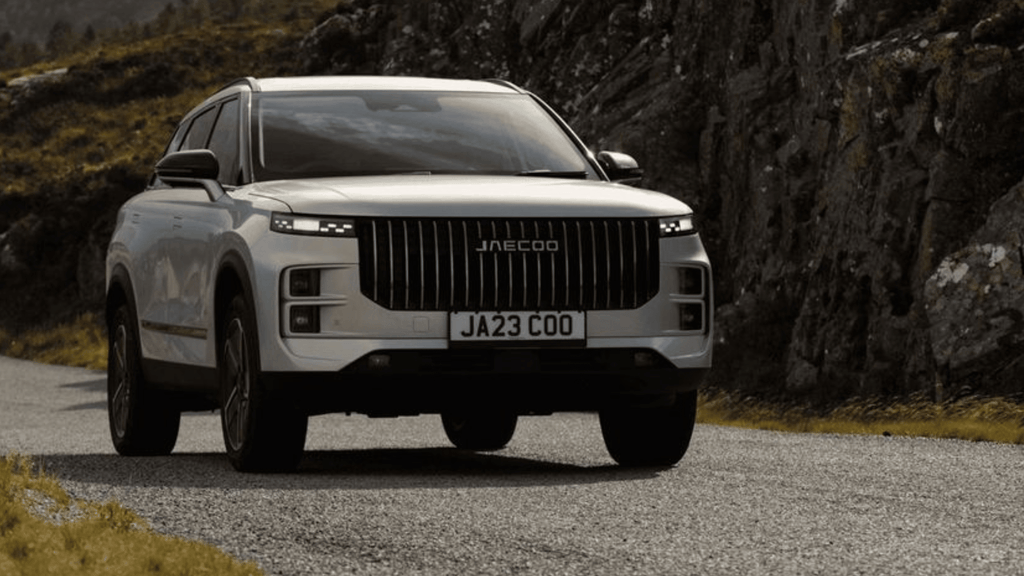
It is the second time this year the Jaecoo 7 has led a monthly chart. The first was March, when it recorded about 10,064 sales. Those two months, March and September, are the biggest of the British car-buying calendar because new number plates are issued, so topping both is a stronger statement than winning a quiet month in the middle of the year. The achievement is also remarkably quick: the Jaecoo 7 only went on sale in the UK in January of last year.
Chinese Brands Now Hold Nearly a Quarter of the Market
The Jaecoo 7’s win is part of a much bigger shift. Chinese brands as a group took about 23% of UK new-car registrations in September, up from roughly 21% in August, according to figures reported by Autocar and Bloomberg. The group includes MG, BYD, GWM, and Chery’s brands, Jaecoo and Omoda. Jaecoo alone captured 4.3% of the market, while Jaecoo and Omoda together reached about 6.4%, with almost 22,300 vehicles sold in the month.
BYD was the second-best-selling brand overall in September, with 20,140 registrations, moving ahead of Kia on 18,399. Tesla, recovering from a weak run last year, took about 4.5% of the market with almost 16,000 sales. For context, The Wall Street Journal reported that Chinese brands accounted for close to one in six new cars bought in Britain during the first half of 2026, a larger share than anywhere else in Europe apart from Norway.
A Strong Month for the Whole Market
The Chinese surge landed in a healthy overall market. UK new-car registrations rose about 12% from a year earlier to roughly 350,500 units, the SMMT said, marking a tenth consecutive month of growth and the strongest September since 2017. That matters because it shows Chinese brands are not simply taking share from a shrinking pie. They are growing alongside a market that is itself expanding.
The powertrain mix tells its own story. Battery-electric vehicles made up 28.3% of September registrations, up about five percentage points from a year earlier, while plug-in hybrids reached 17%, up 4.8 points. Conventional hybrids were the only electrified category to lose ground, slipping 4.2 points to 13.1%. Buyers were also helped by the government’s Electric Car Grant, which is worth £3,750 on a new fully electric passenger car priced below £37,000, along with unusually wide model choice and heavy discounting.
Why the Jaecoo 7 Works for British Buyers
The Jaecoo 7’s recipe is not complicated. It is a mid-size SUV, the body style British buyers favor, and the version most people choose is a plug-in hybrid. Wikipedia’s summary of SMMT data notes that the plug-in version accounted for about 70% of Jaecoo J7 sales in 2025, and reporting on the latest results says Chery’s UK range leans heavily toward plug-in hybrids, with only a small slice fully electric and nearly a quarter using combustion engines. Plug-in hybrids give buyers short electric commutes without range worries on longer trips, a compromise that has proven especially popular as charging confidence still varies.
Pricing and equipment do the rest. The model has been described by some critics as a “Temu Range Rover,” a nickname that reflects its upscale styling at a lower price rather than any official positioning. Jaecoo itself is a sub-brand of Chery International created to sell SUVs in export markets, and it registered 28,232 cars in the UK in 2025, which SMMT data identified as the fastest-growing mainstream automotive brand in the country over the past decade.
The Year-to-Date Race Is Still Close
The September win does not mean the Jaecoo 7 is the UK’s best seller for 2026 overall. Over the first nine months of the year, the Ford Puma still leads with 42,926 registrations, while the Jaecoo 7 sits second on 39,473 after overtaking the Kia Sportage during September. That gap of roughly 3,450 cars is small enough that a strong finish to the year could change the leaderboard, though October and November are traditionally quieter months than September.
What This Means for Established Brands
For European, Japanese, and Korean manufacturers, the lesson is uncomfortable. A brand that barely existed in the UK two years ago is now outselling the market’s longtime favorites in its busiest months. Chinese companies are also pushing outward because of weak conditions at home: BYD’s global September sales reached 463,561 units, up 17% year on year, with exports more than doubling as domestic demand softened, according to Quartz’s summary of reporting. That combination, strong supply plus a motivated export push, suggests pressure on incumbents is unlikely to ease soon.
Britain Is the Test Case Everyone Else Is Watching
The UK has become the clearest preview of what happens when Chinese cars face few barriers and buyers are open to trying them. Other European markets are moving more slowly, and the contrast is striking, since Chinese brands held a much smaller share of the German market in August. Whether Britain’s experience repeats elsewhere will depend on tariffs, local rules, and how quickly dealer networks and service reputations mature. For British shoppers, the practical takeaway is simple: Chinese plug-in hybrids and EVs are now a mainstream choice rather than a niche one, and comparing them against familiar rivals on price, warranty, and charging needs is no longer optional for anyone shopping the family SUV segment.