Mitsubishi has officially revealed the 2027 Eclipse Sportback EV, its first fully electric vehicle for the North American market in years. The new model is set to go on sale in the United States in late summer or early fall of 2026.
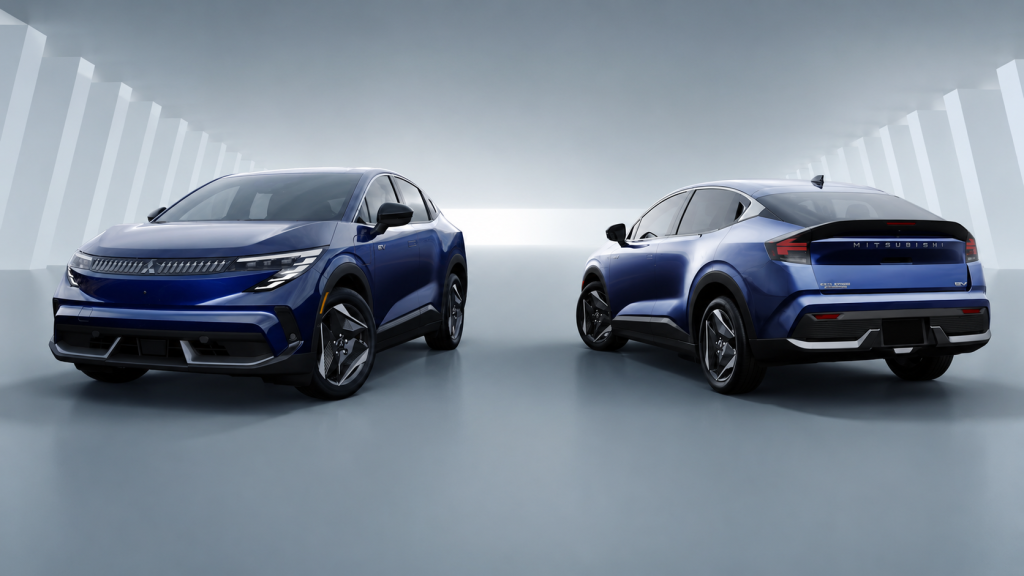
The Eclipse Sportback revives a nameplate that first appeared on U.S. roads in 1990. Unlike the sporty coupe that originally made the name famous, the new Eclipse arrives as a subcompact electric crossover with a sleek, coupe-inspired roofline. It represents a significant step forward for a brand that has largely stayed out of the U.S. EV conversation until now.
Built on the Nissan LEAF — and Proud of It
The 2027 Mitsubishi Eclipse Sportback is essentially a redecorated version of the current Nissan LEAF. Mitsubishi has made no attempt to hide this, stating plainly in its press release that the model is “based on the highly touted new-generation Nissan LEAF.”
This kind of platform sharing between Mitsubishi and Nissan is not new. The two brands are strategic partners through an alliance that also includes France’s Renault, and they have exchanged designs before — most recently when Nissan launched a plug-in hybrid Rogue that shares its underpinnings with the Mitsubishi Outlander PHEV.
What Mitsubishi has done is dress up the shared platform with its own identity. The Eclipse Sportback features a unique front fascia with the Triple Diamond branding prominently displayed. At the rear, it replaces the LEAF’s taillights with a pair of opposing L-shaped markers, and the bumper has been fully redesigned. The C-pillar trim and side skirts also differ slightly, and the vehicle wears a set of sporty alloy wheels exclusive to this model.
What the Specs Could Look Like
Mitsubishi has not yet released official powertrain details, pricing, or driving range figures for the Eclipse Sportback. The company says full specifications will be announced “in the near future.” However, given the shared platform, industry observers widely expect the Eclipse Sportback to carry similar — or identical — specs to the Nissan LEAF.
The Nissan version of the same car uses a 75 kWh battery capable of up to 303 miles of range, with pricing starting at $31,535. Performance testing of the 2026 LEAF showed a 0–60 mph time of 6.9 seconds, with a single front-wheel-drive motor producing 214 horsepower and 261 pound-feet of torque.
Whether Mitsubishi will offer different trim levels, a smaller battery option, or any pricing advantage over the LEAF remains unclear at this stage.
Part of a Bigger Electrification Plan
The Eclipse Sportback is more than just a standalone product launch. It is a key element of Mitsubishi’s Momentum 2030 business plan, which includes electrification as one of its four main pillars alongside a renewed product lineup, a modernized retail model, and a strengthened dealer network. The company has committed to introducing at least one new or significantly updated vehicle each year through fiscal year 2030. The Eclipse Sportback will be followed in early 2027 by an all-new rugged, off-road variant of the Outlander SUV.
Mitsubishi’s electrification journey actually dates back to the 1970s, when the company began developing fully electric vehicles in Japan — though its presence in the U.S. EV market has been minimal for years.
What This Means for Buyers
The 2027 Eclipse Sportback will enter a growing segment of affordable electric crossovers in North America, competing alongside vehicles like the Chevrolet Bolt EV and the very Nissan LEAF it is built upon. Its main advantage may be brand differentiation — offering buyers who prefer Mitsubishi’s styling and dealer network an EV option that was previously unavailable.
The interior has not been shown publicly yet, and official pricing has not been announced. Based on the information available, buyers interested in the Eclipse Sportback should expect a vehicle that closely mirrors the LEAF in performance and technology, with a distinct exterior identity and Mitsubishi’s own warranty and service structure. More details are expected ahead of the on-sale date later this year.