Mercedes-Benz didn’t just want to build another electric sedan for 2026 — it wanted to build the most efficient one on the road, full stop. The result is the CLA250+ with EQ Technology, a compact luxury EV that skips the horsepower arms race in favor of something rarer in the segment: genuine, class-leading efficiency. And the numbers back up the ambition.
An aerodynamic shape built for one purpose
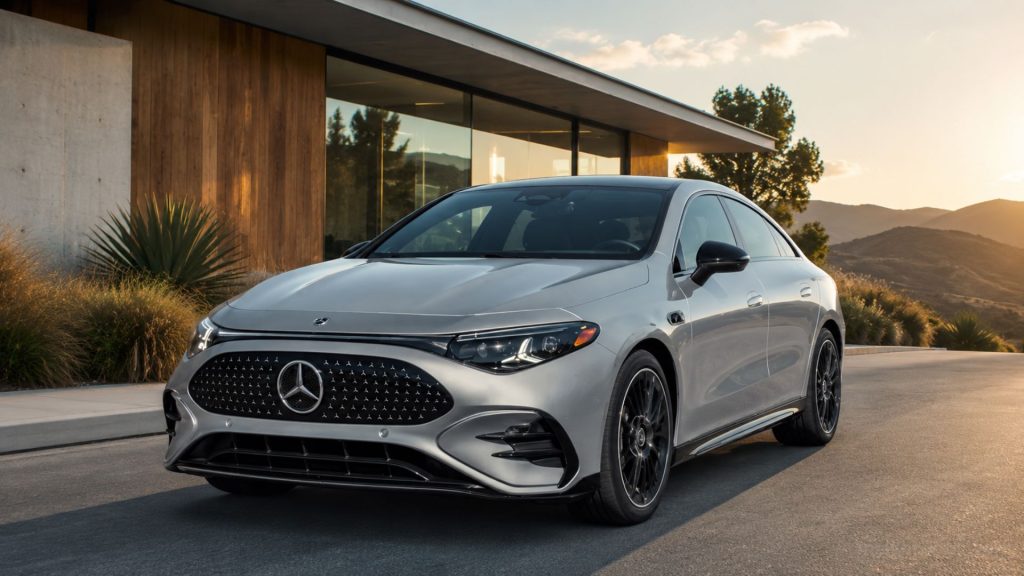
The CLA’s silhouette isn’t just stylish — it’s functional. The sedan achieves a drag coefficient of just 0.20, making it one of the slipperiest production cars ever built. That figure matters more than it might seem at first glance. Every fraction of a point shaved off drag translates directly into extra miles per charge, and Mercedes leaned on know-how from its record-breaking Vision EQXX concept car to get there, including a two-speed gearbox and an intelligent brake regeneration system that squeezes out every possible mile.
The payoff shows up in the spec sheet. The CLA250+ posts an official consumption figure of roughly 5.7 miles per kWh, a number that outperforms most small electric hatchbacks, let alone sedans of this size. That’s not a marginal improvement over the segment average — it’s a meaningfully different approach to what an efficient EV can look like.
Range that puts Tesla on notice
The headline number is range, and it’s where the efficiency obsession really pays off. The rear-wheel-drive CLA250+ delivers an EPA-estimated 374 miles on a single charge, drawn from an 85-kWh battery pack. For context, that’s enough range to make most Tesla Model 3 configurations look conservative by comparison — and it’s precisely why outlets testing the car have framed it as a direct shot across Tesla’s bow in the efficiency conversation the California brand has long dominated.
The all-wheel-drive CLA350 4Matic trades some of that range for performance, coming in at an EPA-estimated 312 miles thanks to its second motor and 349-horsepower total output. It’s the classic range-versus-power trade-off, but even the AWD variant remains competitive against rivals that don’t offer anywhere near the same efficiency credentials.
Charging built for where the grid is headed
Efficiency isn’t just about squeezing more miles from the battery — it’s also about getting energy back in quickly. Both CLA variants ride on an 800-volt architecture and can charge from 10 to 80 percent in a claimed 22 minutes on a DC fast-charger. Starting in 2026, Mercedes will factory-fit an 800V/400V converter as standard, meaning CLA owners won’t be stuck choosing between compatibility with older 400V infrastructure and access to the newest ultra-fast 800V chargers. That’s a meaningful advantage as public charging networks continue their uneven transition to higher-voltage hardware.
How it drives
Efficiency-focused engineering doesn’t have to mean a boring driving experience, and testers who’ve spent time behind the wheel back that up. The CLA250+ accelerates from 0 to 60 mph in a claimed 6.6 seconds, which feels brisk in daily driving even if it’s not the headline number Mercedes leads with. Cabin quietness stands out as a strength, with testers noting they could hold a conversation without raising their voices even above 100 mph. The tech suite is similarly ambitious, with over-the-air updates extending to driver-assistance systems and AI-based infotainment integration.
One quirk that’s drawn mixed reactions: the synthetic “driving sound” profiles meant to simulate an engine note. Testers have found the effect artificial and, over time, more annoying than immersive — though it can be switched off entirely for drivers who’d rather ride in silence.
Pricing and where it lands
Mercedes priced the CLA250+ to compete, not just to impress. The RWD CLA250+ starts at $48,500, while the AWD CLA350 4Matic starts at $51,050. Both are also offered in Exclusive and Pinnacle trims, with the top-tier Pinnacle package adding a Superscreen display and three-pointed-star lighting accents. At those prices, the CLA250+ sits close to the average new-car transaction price in the U.S. — a notable feat for a Mercedes-badged EV with genuinely competitive range figures.
The bottom line
The 2026 Mercedes-Benz CLA250+ isn’t trying to out-muscle the electric sedan competition. It’s trying to out-think it — and largely succeeding. Between the 0.20 drag coefficient, the 374-mile range on the base trim, and 800V charging architecture built for where the infrastructure is heading, Mercedes has made a serious case that efficiency, not raw power, is the real battleground for the next generation of EVs. Tesla built its reputation on exactly that kind of engineering discipline. With the CLA250+, Mercedes is proving it can play — and win — that same game.