Not every version of a car tells the same story, and that’s especially true of the Ford Mustang Mach-E. Step up to a Premium or GT model and Ford’s electric SUV comes across as a genuinely engaging, well-equipped EV. Drop down to the base Select trim, though, and a different picture emerges — one where Ford’s cost-cutting decisions become a lot more visible, even if the fundamentals of what makes the Mach-E good are still there underneath.
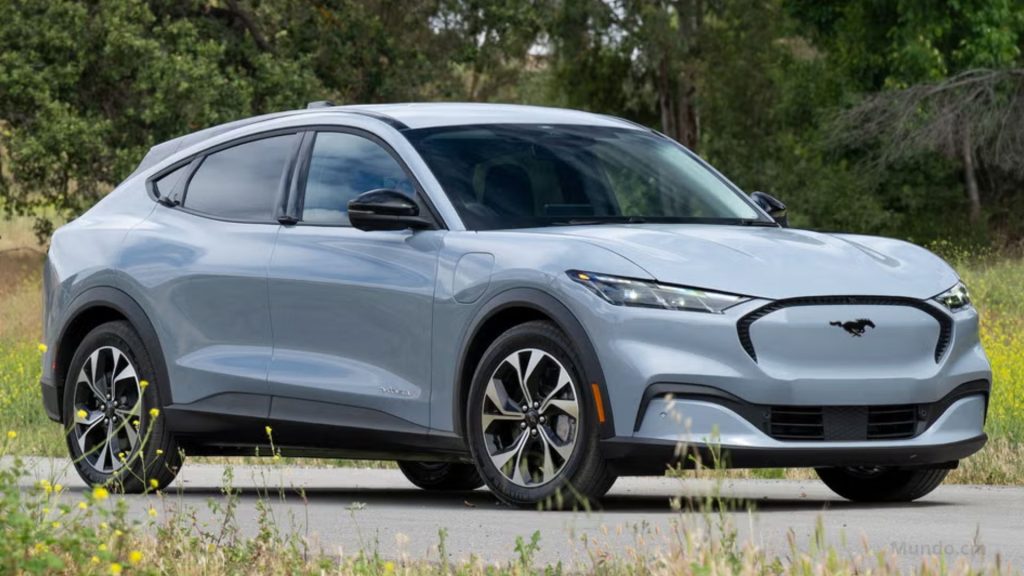
What You Actually Get for $37,795
The 2026 Mach-E Select starts at $37,795 with rear-wheel drive and Ford’s standard-range 73-kWh battery, making it the most affordable entry point into the Mach-E lineup by a wide margin. That base configuration is rated for 260 miles of EPA-estimated range, dropping to 240 miles if buyers step up to the eAWD dual-motor setup for an additional $3,000. A pricier extended-range battery option is also available on the Select, pushing range up to roughly 300 miles with all-wheel drive.
Standard equipment on the Select is reasonably generous for an entry-level trim: synthetic leather seating, a 10.2-inch digital instrument cluster, the same 15.5-inch vertical touchscreen found across the rest of the lineup, wireless Apple CarPlay and Android Auto, a power-adjustable driver’s seat, dual-zone automatic climate control, and keyless entry. Where the Select trim starts to show its cost-cutting is in the features that quietly move from standard to optional at this level — Ford’s BlueCruise hands-free driving system, the wireless smartphone charging pad, the 360-degree camera system, and front parking sensors are all extras here, even though they come bundled on pricier trims.
Performance: Enough Power, Not the Whole Story
Even in its least powerful configuration, the Mach-E Select doesn’t feel like a car that’s been stripped of its personality. The single-motor rear-wheel-drive version produces around 264 to 272 horsepower depending on battery size, enough for a 0-to-60-mph run in the mid-6-second range in independent testing — quick enough to never feel like the “cheap” model of the lineup, even if it’s well off the pace of the 480-horsepower GT and Rally trims sitting above it. Stepping up to the dual-motor eAWD version of the Select bumps output to roughly 325 horsepower and noticeably sharpens acceleration, at the cost of a few miles of range.
Where the base powertrain shows its limits is less about outright speed and more about the overall EV experience. In real-world testing, the Mach-E has consistently ranked among the slower-charging options in its class at public DC fast-charging stations, and the Select’s standard 73-kWh battery means road-trippers will be stopping to charge more often than owners of extended-range models or key rivals like the Tesla Model Y and Hyundai Ioniq 5, both of which offer longer legs on a single charge in their comparable trims.
Driving Manners: Where the Mach-E Still Shines
Regardless of trim, the Mach-E’s chassis tuning remains one of its strongest selling points. Reviewers consistently describe the handling as taut and controlled, with quick steering response and minimal body lean through corners — traits that trace back to Ford’s decision to have European engineers calibrate the suspension rather than leaning on a softer, more traditional American SUV setup. The ride is firm and can get busy over rough pavement, but it stays composed rather than crashing through impacts the way some rivals do.
The one-pedal driving mode, standard across the lineup, uses regenerative braking to slow the car whenever the driver lifts off the accelerator, and it works well enough that most owners will find themselves rarely touching the brake pedal in everyday driving. Three selectable drive modes — Whisper, Engage, and Unbridle — let owners dial in how aggressively the car responds to throttle input, with the more aggressive setting adding a synthesized motor note through the speakers for anyone who wants a bit more drama during acceleration.
Interior and Practicality
Inside, the Select trim carries over the same basic layout as the rest of the lineup: a slim, wide digital gauge cluster mounted atop the dashboard, and a dominant 15.5-inch vertical touchscreen that handles the bulk of the car’s climate, audio, and vehicle settings, similar in spirit to Tesla’s own minimalist approach. Materials are reasonable for the price, with some harder plastics in lower-touch areas but an overall sense that the cabin is built to hold up over time.
Cargo space is competitive within the segment, if not class-leading: 29.7 cubic feet behind the rear seats and up to 59.7 cubic feet with the second row folded flat, putting it roughly on par with the Chevrolet Blazer EV and slightly ahead of the Ioniq 5, though well short of the Model Y’s cavernous 72 cubic feet. A small frunk adds extra lockable storage up front, though for 2026 Ford made that space optional on lower trims rather than including it standard as before — a small but telling example of the kind of trim-walk cost-cutting that defines the Select experience.
The Verdict
The 2026 Mustang Mach-E Select does what a base trim is supposed to do: it gets buyers into the car for meaningfully less money while preserving the things that make the Mach-E worth considering in the first place — genuinely fun handling, a spacious and well-built cabin, and enough power to never feel like an afterthought. But the trade-offs are real and worth going in with eyes open. Shorter range, slower charging relative to some rivals, and a list of features that quietly become optional extras all add up to a car that makes the most financial sense for buyers who mainly drive around town and don’t need to stretch its range on long trips. For most shoppers, the smarter move within the Mach-E lineup is still to spend a bit more on the Premium trim, which restores several of the Select’s cut features and pairs more naturally with the extended-range battery that makes the Mach-E genuinely road-trip-capable.