Samsung has launched The Frame hospitality display in Australia, extending its art-inspired television concept to hotels and premium commercial spaces. Announced on October 26, the HL03H model combines a 4K QLED display with an anti-glare panel and a wall mount designed for a close-fitting installation.
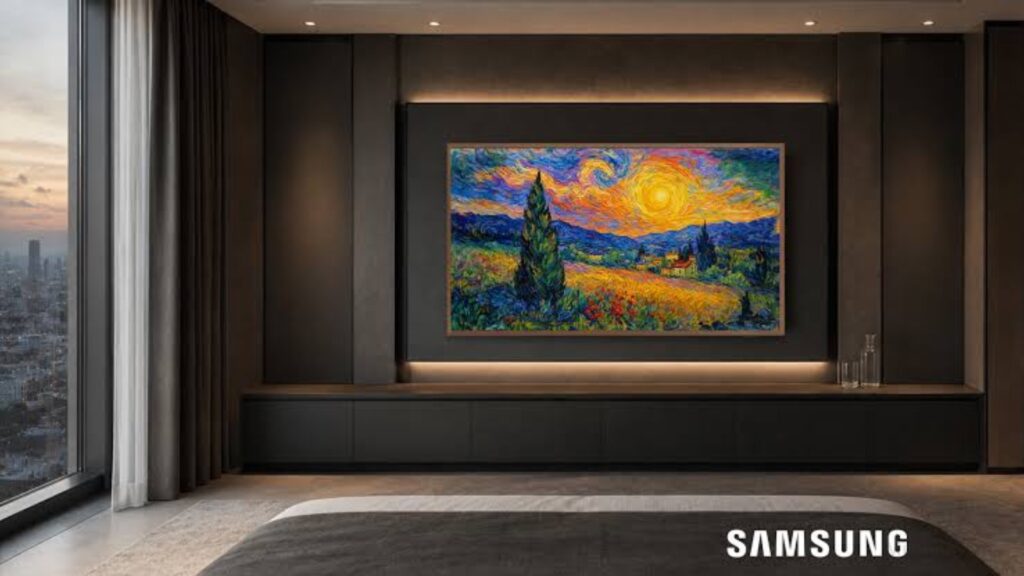
The announcement addresses a familiar interior design challenge. A television can be an important amenity while also occupying a prominent place in a carefully arranged room.
For accommodation providers, the question goes beyond picture quality. A display needs to suit the interior, remain understandable to guests and fit the property’s operating routines.
The hospitality version of The Frame brings those considerations into the same purchasing decision.
What Samsung has introduced
Samsung says the HL03H integrates its key connection components into the display, removing the need for a separate One Connect Box. Optional magnetic bezels provide appearance choices. Collection Hub can show selected artwork, photography or brand imagery, while Generative Wallpaper offers AI-generated backgrounds. Samsung Newsroom Australia
These features give hotel operators several ways to consider the screen within a room.
The most interesting question is whether those options produce a coherent result. A display should work with the scale, lighting and materials around it. Adding decorative content does not automatically establish that relationship.
A useful evaluation would place the proposed installation within the complete room design, considering what a guest sees upon entering, sitting down and preparing for sleep.
Casting is part of the guest experience
The model supports Google Cast and Apple AirPlay through an on-screen QR code. Samsung says no separate login is required for the connection and that device connection information is automatically deleted at checkout. Samsung Newsroom Australia
That makes the connection process an important part of any demonstration.
A hotel guest should be able to understand the instructions without already knowing the television’s interface. The route from opening the room door to watching familiar content should be clear.
For a property evaluating the system, the best test would involve someone unfamiliar with the setup. Staff could observe where that person hesitates, what they expect to happen next and whether the instructions answer their questions.
Such a trial would reveal more about usability than a demonstration performed entirely by a trained representative.
An art-inspired display still needs thoughtful placement
Our assessment is that The Frame’s strongest design opportunity lies in making the television a deliberate part of the room composition.
Consider a hypothetical boutique hotel with warm lighting, natural textures and a restrained palette. A screen mounted at an awkward height could interrupt that atmosphere even if its frame matches the furniture.
Placement should therefore begin with viewing needs. Guests need a comfortable sightline from the intended seating or bed position. Decorative balance matters, but the installation also has to support normal television use.
A mock-up would help a property assess both requirements before committing to a full rollout.
The display’s apparent size should also be judged from the entrance and across the room. An installation that looks balanced in a close-up photograph may feel different within the actual space.
Content choices can shape the room’s identity
Artwork selection deserves the same attention as other decorative decisions.
A property could develop a small collection that reflects its setting, architectural style or visual identity. For example, an imagined coastal retreat might choose quiet landscape photography, while a city hotel could favor graphic compositions.
These are possible curatorial approaches rather than claims about Samsung’s supplied content.
The goal should be consistency. A collection with unrelated colors and styles could make the screen feel disconnected from the surroundings.
Operators would also need to establish who chooses the images, who approves changes and how those choices remain consistent across rooms. A straightforward process would help preserve the intended appearance as staff and seasonal priorities change.
Installation should be evaluated as a complete job
Removing a separate connection box may affect how an installation is planned, but a property should still examine the full process.
Where will power come from? How will the display be accessed for maintenance? Can the mounting position be adjusted if furniture changes? What happens when a unit needs replacement?
These questions are useful for comparing proposals because they connect the purchase to the room’s longer-term operation.
A pilot installation in one room could expose issues before they are repeated across an entire property. The pilot should include normal housekeeping access and a maintenance review, alongside the visual assessment.
It would also provide a reference for documenting the preferred installation standard.
A hotel television should be easy to recover
An often-overlooked part of hospitality technology is what happens when a guest becomes confused.
A clear home screen and understandable controls can help, but staff also need a simple recovery procedure. A front-desk team should know how to return the television to a familiar state and explain the next step.
A property could test common situations during its evaluation: changing sources, stopping a casting session, returning to television content and preparing the room for the next arrival.
The aim would be to establish how the setup behaves during ordinary use, including moments when the guest takes an unexpected route through the menus.
What the announcement does not establish
The Australian launch announcement reviewed here does not provide a complete public price list or enough information to calculate a property-wide installation budget.
Accommodation providers would need a commercial quotation covering the relevant display configuration, installation and support arrangements.
This article is an analysis of the announced product rather than a hands-on review. Picture performance, interface responsiveness and the complete guest connection experience would require direct testing.
Why This Matters
The Frame hospitality display offers Australian accommodation providers another way to combine entertainment with room design.
Its practical value will depend on the complete installation: suitable placement, carefully chosen visuals, understandable controls and a connection process that guests can follow.
For hotels considering the model, a well-documented pilot room would provide a useful next step. It would show whether the product’s design and entertainment features work together in the setting where they matter most: an actual guest stay.