NVIDIA just stopped being “only” a graphics card company. At Computex 2026, the company unveiled the RTX Spark, its first-ever system-on-a-chip built specifically for Windows laptops and compact desktops — and the announcement was big enough to knock billions off Intel, AMD, and Qualcomm’s market value in a single day.
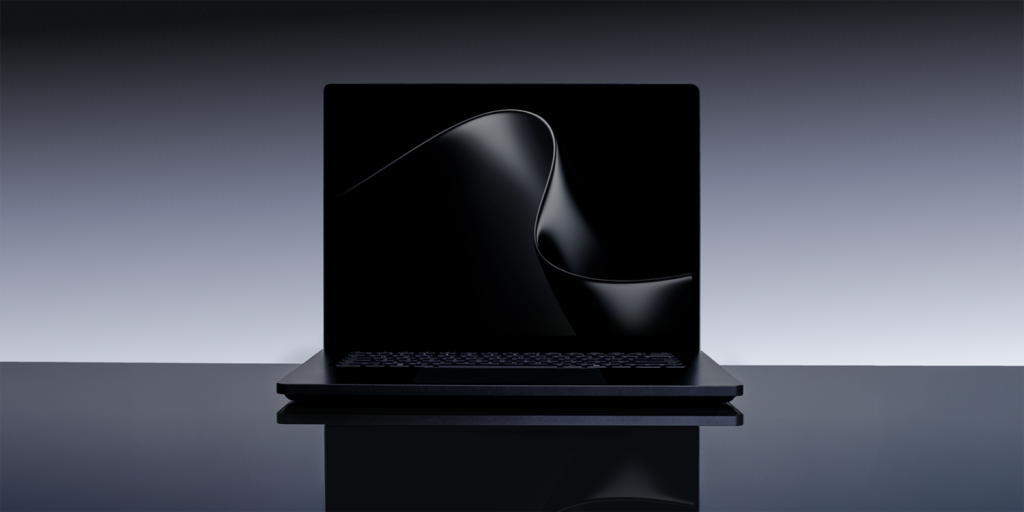
If you’re shopping for a new laptop later this year, here’s what RTX Spark actually is, which laptops are getting it, and whether it’s worth waiting for.
What is RTX Spark, exactly?
RTX Spark (internally codenamed N1X) fuses a CPU, a GPU, and memory onto a single chip package, the same basic approach Apple uses with its M-series silicon. Instead of a separate processor and graphics card each pulling from their own memory pool, RTX Spark uses unified memory shared between CPU and GPU — which NVIDIA says removes a major bottleneck in laptop performance.
Under the hood, the flagship configuration packs a 20-core ARM-based NVIDIA Grace CPU co-developed with MediaTek, a Blackwell-architecture RTX GPU with 6,144 CUDA cores, and up to 128GB of unified memory. NVIDIA is pitching three big use cases:
- Local AI: running AI models with up to 120 billion parameters and context windows up to 1 million tokens entirely on-device, no cloud required.
- Creative work: 12K video editing, rendering 3D scenes larger than 90GB, and accelerated tools in Adobe Premiere and Photoshop through a new NVIDIA-Adobe partnership.
- Gaming: NVIDIA claims AAA titles running above 100 fps at 1440p, with the help of DLSS 4.5 and frame generation. Forza Horizon 6 and 007 First Light were used in early demos.
NVIDIA says RTX Spark’s GPU performance roughly matches a discrete RTX 5070 laptop graphics card, while its AI throughput — close to 1,000 TOPS — dwarfs Qualcomm’s Snapdragon X2 (around 80 TOPS) and Apple’s M-series Neural Engine (around 38 TOPS). Apple still holds an edge in memory bandwidth and single-core CPU performance, according to early benchmark comparisons.
Which laptops are getting it?
This isn’t a single laptop — RTX Spark is a chip platform that multiple manufacturers are building around. NVIDIA confirmed that more than 30 laptop models and roughly 10 desktops will launch with RTX Spark inside, starting this fall, from six manufacturers in the first wave:
- Microsoft Surface Laptop Ultra — a high-end Surface positioned as a direct, Windows-based answer to the MacBook Pro
- ASUS ProArt P16 and P14 — creator-focused laptops with 4K OLED displays up to 1600 nits brightness
- Dell XPS 16 Creator Edition — a Tandem OLED display with TrueBlack HDR 600 certification
- HP OmniBook Ultra 16 and OmniBook X 14 — HP is calling these the thinnest RTX Spark laptops, with the 16-inch model measuring just 15.73mm thick
- Lenovo Yoga Pro 9n — a 16-inch creator laptop with an OLED display
- MSI Prestige N16 Flip AI+ — a 16-inch 2-in-1 convertible with a 99.9Whr battery and stylus support
Acer and Gigabyte are expected to join with their own models later. Most of the laptops shown so far cluster in the 14- to 16-inch range, aimed squarely at the premium thin-and-light category rather than budget machines.
How much will RTX Spark laptops cost?
NVIDIA hasn’t published official pricing, and that’s worth repeating before any number gets treated as fact. The most-cited estimate, from a Morgan Stanley report following Computex, points to flagship N1X configurations starting around $2,899, with cut-down N1 variants starting closer to $1,799. NVIDIA’s own enterprise-grade DGX Spark workstation starts at $3,500, which gives a rough sense of where the high end of this lineup is likely to land.
In short: this is shaping up to be a premium category from day one, competing directly with high-end MacBook Pro configurations rather than mainstream laptops.
When can you actually buy one?
NVIDIA says RTX Spark laptops and compact desktops arrive in fall 2026. Specific country-by-country release dates haven’t been announced yet, and independent, real-world benchmarks from shipping units don’t exist yet either — everything published so far comes from NVIDIA’s own claims and hands-on previews at Computex.
Should you wait for one?
If your laptop needs are mainstream — browsing, office work, light photo editing — RTX Spark isn’t built for you, and the price tags reported so far confirm that. But if you’re a developer, AI tinkerer, or creator who’s been eyeing a MacBook Pro purely for its unified-memory performance, RTX Spark is the first serious Windows-based alternative built the same way. The smart move right now is to wait for actual shipping units and independent reviews this fall before deciding between an RTX Spark laptop, a Snapdragon X2 machine, or Apple’s latest M-series MacBook.