Google officially unveiled its Pixel 11 lineup on August 12, 2026, at a “Made by Google” event held in New York City and hosted by comedian Trevor Noah. The launch covers four new phones — the standard Pixel 11, the Pixel 11 Pro, the larger Pixel 11 Pro XL, and the foldable Pixel 11 Pro Fold — alongside the new Pixel Watch 5 and a Bluetooth item tracker called Pixel Tag. Preorders opened the same day, with the phones set to ship and reach store shelves on August 20, 2026.
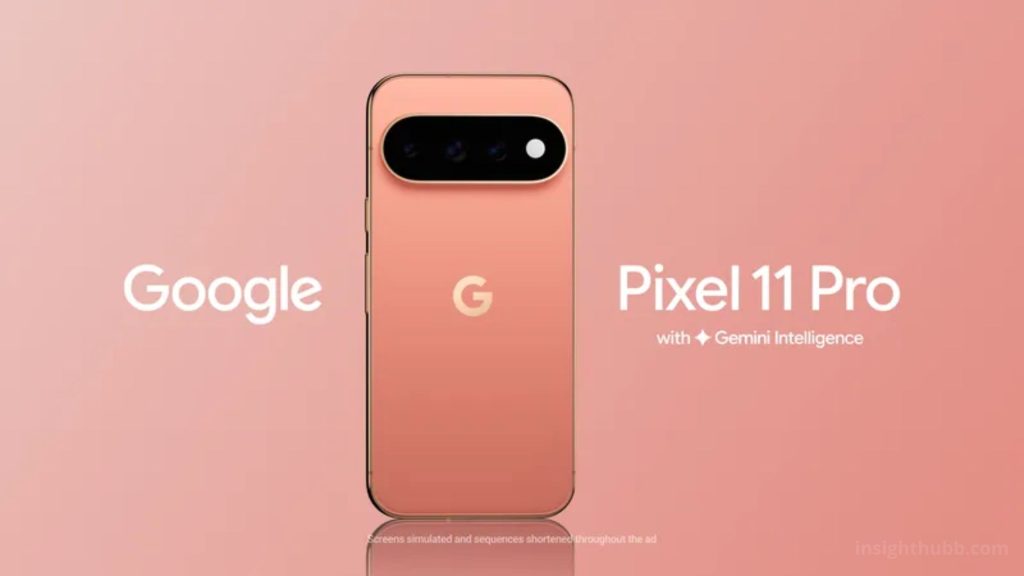
The base Pixel 11 starts at $899 with 256GB of storage, up from the Pixel 10’s $799 starting price. The Pixel 11 Pro starts at $1,099, the Pixel 11 Pro XL at $1,299, and the Pixel 11 Pro Fold tops the lineup at $1,899. Notably, Google has also dropped the 128GB storage tier entirely this generation — every model now starts at 256GB, which partly explains, though doesn’t fully offset, the roughly $100 price increase seen across every model compared with last year’s Pixel 10 series.
What’s New Inside: The Tensor G6
The headline upgrade is Google’s new Tensor G6 processor, the company’s first chip built on TSMC’s 2-nanometer manufacturing process, a jump from the 3-nanometer process used in the Tensor G5. Google says the new chip delivers 25% faster web browsing and 15% faster app launches compared with its predecessor, along with 50% more compute power for the on-device Tensor Processing Unit that handles AI features like Gemini Nano. The Tensor G6 is paired with Google’s Titan M3 security chip, which adds support for post-quantum cryptography during secure boot — a forward-looking defense against future code-breaking techniques, even though such attacks aren’t a practical threat yet.
One notable hardware change: Google has switched to a new modem supplier for this generation, moving away from the Samsung-made modems used in recent Pixel chips in favor of a MediaTek modem instead.
Cameras, Displays, and a New Notification Light
Camera hardware varies meaningfully across the lineup. The standard Pixel 11 uses a 48-megapixel main sensor, a 13-megapixel ultrawide, and a 10.8-megapixel telephoto lens with 5x optical zoom, supporting up to 30x digital “Super Zoom.” The Pixel 11 Pro and Pro XL step up to a 50-megapixel main camera, a 48-megapixel ultrawide with macro focus, and a 48-megapixel 5x telephoto lens, with Google claiming up to 120x “Pro Zoom” using AI-assisted upscaling. Google also introduced a new AI photography feature called Magic Capture, designed to automatically select the best frame from a burst of shots.
Display sizes range from 6.3 inches on the standard Pixel 11 and Pixel 11 Pro up to 6.8 inches on the Pro XL, with peak brightness reaching 3,600 nits on the larger model — about 20% brighter than last year’s Pixel 10 Pro XL, according to independent measurements. The Pro models also introduce a new hardware feature called HiLight, a small LED strip next to the rear camera module that glows in customizable colors to indicate incoming calls, messages, or active Gemini interactions, similar in spirit to notification lights found on some other recent flagship phones.
Google also showed off a sign-language transcription feature built with its DeepMind team, called SL2T, integrated into Gboard’s Live Transcribe tool — letting the phone convert sign language into text in real time, a genuinely novel accessibility feature not commonly found on competing phones.
The Price Hike Nobody Asked For
The roughly $100 increase across the lineup puts the Pixel 11 series in more direct price competition with Samsung’s and Apple’s flagship phones than in previous years, at a moment when Google is already facing pressure following Samsung’s recent Galaxy Z Fold 8 and Flip 8 launches. Google is leaning heavily on its seven-year software and security update commitment — matching the industry-leading support window Samsung and Apple have also moved toward — as part of its case that the higher price reflects longer-term value rather than just higher margins.
What Buyers Should Know Before Upgrading
For anyone currently using a Pixel 9 or older, the Tensor G6’s move to a smaller manufacturing process should translate into a real, noticeable improvement in both performance and battery efficiency, not just a marginal spec-sheet bump. For Pixel 10 owners, the upgrade case is less clear-cut — Google’s own comparisons show the year-over-year gains are real but incremental, and the removal of the 128GB storage tier means anyone who preferred a smaller, cheaper configuration will need to pay more regardless of which model they choose. As with any launch-day announcement, independent battery life and camera testing will take a few more weeks to materialize once devices ship on August 20, so buyers on the fence may want to wait for hands-on reviews before preordering.