Elon Musk has turned Starlink’s long wait for approval in India into a very public fight. Over several days this week, the SpaceX and Tesla chief used his X account to accuse Mukesh Ambani, chairman of Reliance Industries and one of the world’s richest people, of blocking the satellite internet service to protect his telecom business.
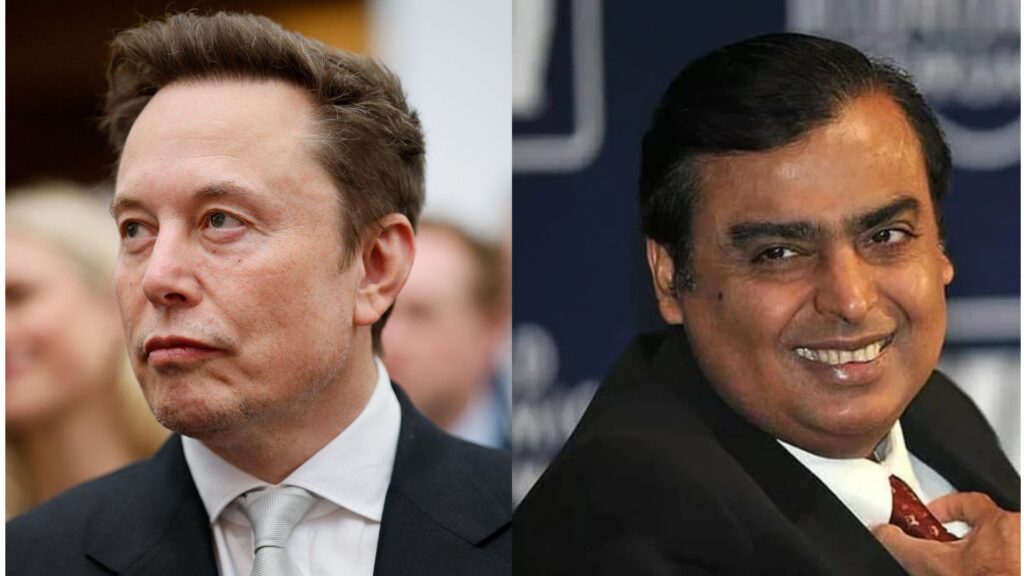
India’s government has pushed back, calling the allegations baseless and insisting that Starlink is being treated the same as its rivals. Here’s what happened and why it matters.
What Musk Said
The dispute escalated quickly. On Wednesday, October 7, Musk said Starlink’s launch in India was being blocked by “certain oligarchs,” without naming anyone.
A day later, he named his target. “Is Ambani the real boss of India?” Musk asked on X, adding that Starlink is licensed in “over 165 countries,” according to Outlook India.
On Friday, October 9, he went further. In a post reported by TechCrunch, Musk argued that Starlink could connect unconnected areas, expand children’s learning and help small businesses reach customers around the world. He then addressed Ambani directly: “Naturally, you would prefer to maintain your monopolistic exploitation of the great people of India.” He also mockingly referred to Ambani as India’s “prime minister.”
Reliance Jio, Reliance’s telecom arm, did not immediately respond to TechCrunch’s request for comment.
Politics Enters the Chat
The feud quickly spilled into Indian politics. Rahul Gandhi, the opposition Congress party leader, responded to Musk with a jab of his own: “Welcome to India, Elon. Wait till you discover the other guy.”
Musk replied: “Thank you, Rahul. This is indeed troubling.”
The exchange gave the dispute far more attention in India than a typical licensing delay would receive.
How the Government Responded
India’s Ministry of Communications rejected Musk’s claims. In a statement released through the Press Information Bureau on Thursday, it described the allegations of discrimination as “baseless and misconceived.”
The ministry said India has a “fair and non-discriminatory authorisation framework” for all telecom services, including satellite internet. It added that Starlink and two other licensed satellite operators are going through security assessments before they can receive spectrum, and that all three are at “broadly the same regulatory stage.”
Once an operator completes that security review, it can apply for spectrum assignment, the ministry said.
On Friday, Telecom Minister Jyotiraditya Scindia added that India “does not allow a monopoly in any sector.”
Where Starlink Actually Stands
Starlink has already cleared several key regulatory hurdles in India, but it still doesn’t have the government’s final go-ahead to begin commercial service. The remaining step is the security assessment, followed by the assignment of spectrum, the radio frequencies satellite services need to operate.
Spectrum has been a flashpoint before. Starlink wanted spectrum to be assigned administratively, meaning the government would allocate it directly. Jio pushed for an auction, where companies would bid for the frequencies. In the end, New Delhi sided with Starlink’s preferred approach and chose administrative allocation, according to TechCrunch.
That history complicates Musk’s argument. On the biggest policy fight so far, the government went his way.
A Complicated Relationship
The rivalry is also less clear-cut than Musk’s posts suggest. In 2025, Starlink signed distribution agreements with both Reliance Jio and Bharti Airtel, India’s two largest telecom operators, to offer its service once approvals came through.
At the same time, both telecom giants have their own satellite plans. Jio has a joint venture with Luxembourg-based satellite operator SES, while Airtel is a major shareholder in Eutelsat OneWeb. That makes them partners and potential competitors to Starlink at the same time.
Why India Matters So Much
India is the world’s most populous country and has more than a billion internet users, but large rural areas still lack reliable broadband. Laying fiber cables to remote villages, mountain regions and islands is slow and expensive.
That’s where satellite internet comes in. Starlink uses thousands of satellites in low Earth orbit, much closer to the ground than traditional communications satellites. That allows faster speeds and lower delays, and customers only need a small dish and a power source to get online. For a country of India’s size, that could help connect places that land-based networks have struggled to reach. That makes it one of the biggest potential markets for satellite internet anywhere.
Musk’s other businesses have also found India challenging. Tesla launched in the country in 2025, but steep import duties pushed the Model Y’s launch price to nearly twice its U.S. price. According to data cited by Electrek and TechCrunch, Tesla registered just 699 vehicles in India in its first 12 months of deliveries.
What Happens Next
For now, Starlink’s fate in India depends on the outcome of the security assessment, not on social media. If the government’s account is accurate, Starlink and its two rivals should move to the spectrum stage at roughly the same time.
What’s less clear is whether Musk’s public campaign will help or hurt. By accusing a powerful businessman and, indirectly, the government of favoritism, he has raised the pressure on regulators to move quickly. But he has also turned a technical licensing process into a political fight, in a country where Starlink still needs official approval to switch on.