Artificial intelligence is becoming a common study tool. Students use it to summarize texts, explain difficult topics, organize notes, and prepare for exams.
However, using AI too much can create a problem. If students only copy answers, they may finish tasks faster but learn less. The OECD warns that generative AI can improve performance on a task without always producing real learning gains when it is used without clear educational guidance.
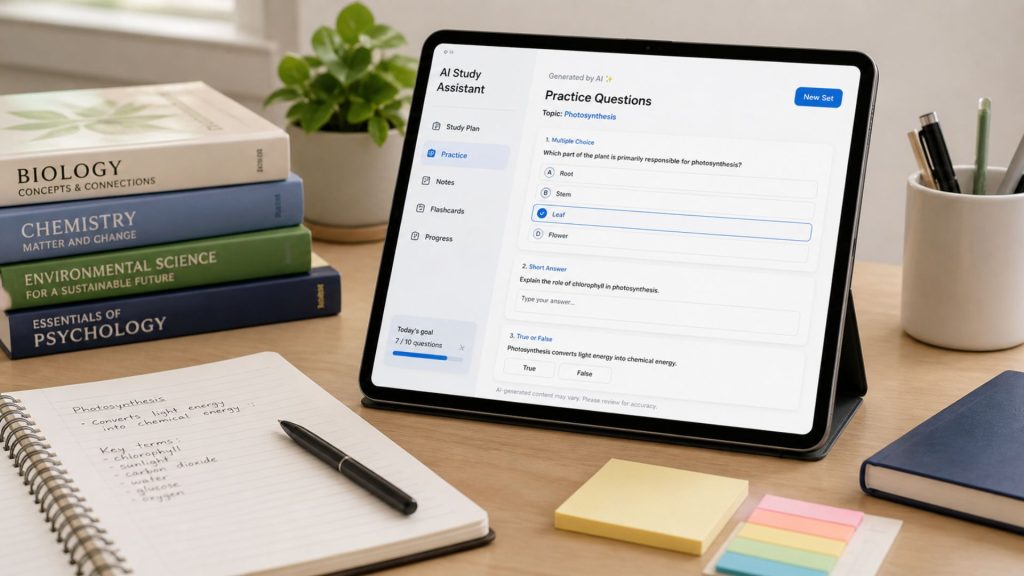
Use AI as a Study Assistant
AI works best when students use it as support. For example, it can explain a topic in simpler words, suggest study questions, or help compare different ideas.
Still, students should always write their own final answers. This helps them understand the topic and practice independent thinking.
Ask Questions, Do Not Just Copy Answers
A good way to use AI is to ask questions such as:
“What are the main arguments?”
“What evidence supports this idea?”
“What are the weak points in this answer?”
“How can I explain this in my own words?”
This method helps students analyze information instead of only receiving it.
Check Information With Reliable Sources
AI can make mistakes. Because of this, students should compare AI responses with books, class notes, academic articles, or trusted websites.
UNESCO has emphasized that AI in education should protect human agency and genuinely benefit learners. That means students should remain active thinkers, not passive users.
Keep Critical Thinking Active
Before accepting an AI answer, students should ask:
Is this information accurate?
Does it answer the question?
What evidence is missing?
Can I explain it without AI?
These questions help students build stronger reasoning skills.